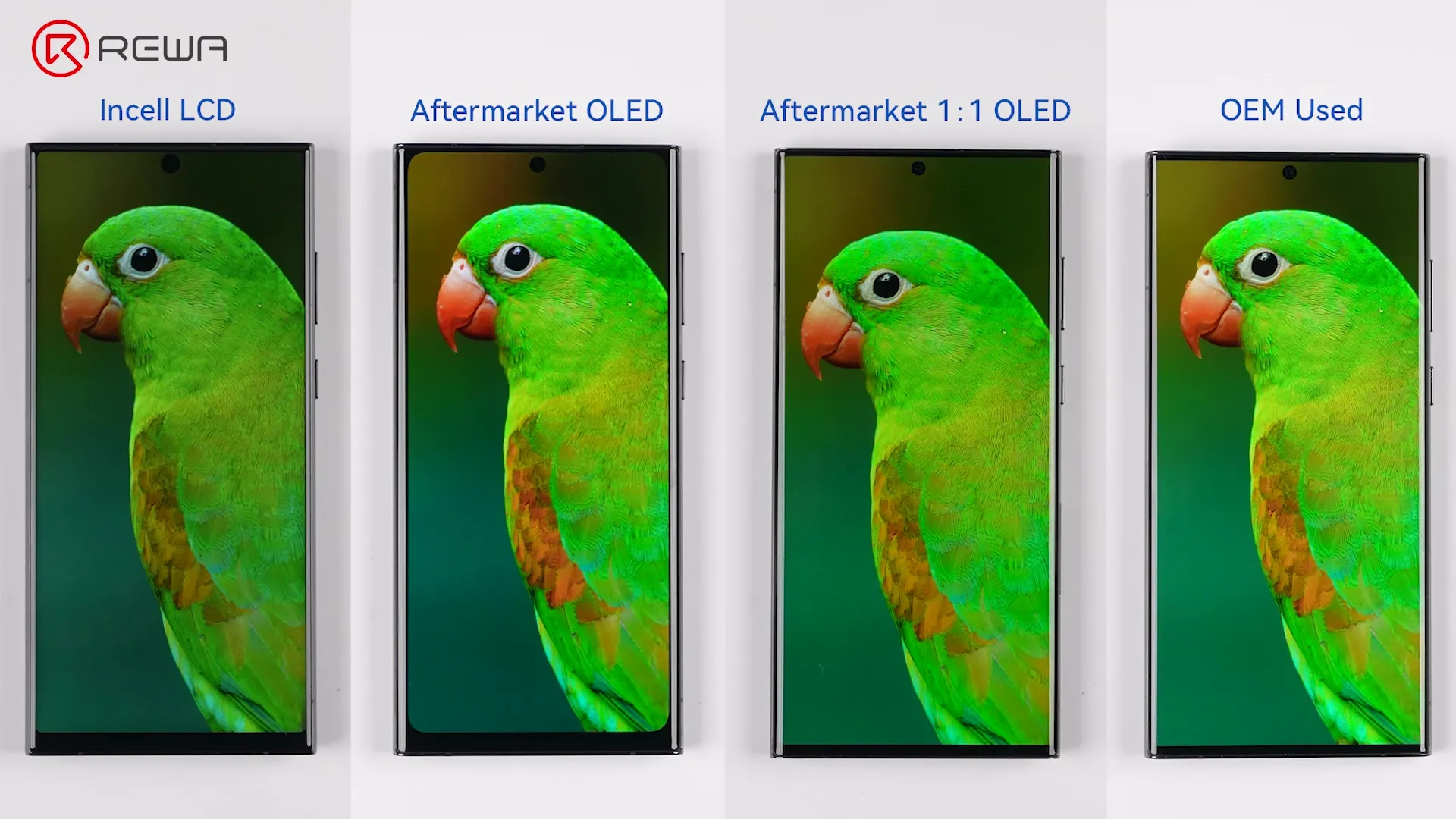
For years, Samsung aftermarket screens were often associated with poor display quality, missing functions, and unreliable performance. Many repair shops treated them as low-cost emergency solutions rather than serious alternatives to OEM displays.
Driven by advances in OLED manufacturing, panel engineering, and aftermarket supply chains, nowadays Samsung aftermarket screens have evolved into highly capable repair solutions for different business scenarios. For repair shops, distributors, refurbishing facilities and buyback businesses, understanding the differences between screen grades is critical.
In this article, we break down the evolution of Samsung third-party screens — from basic Incell LCDs to advanced 1:1 OLED displays — and explain which option best fits different repair needs and budgets.
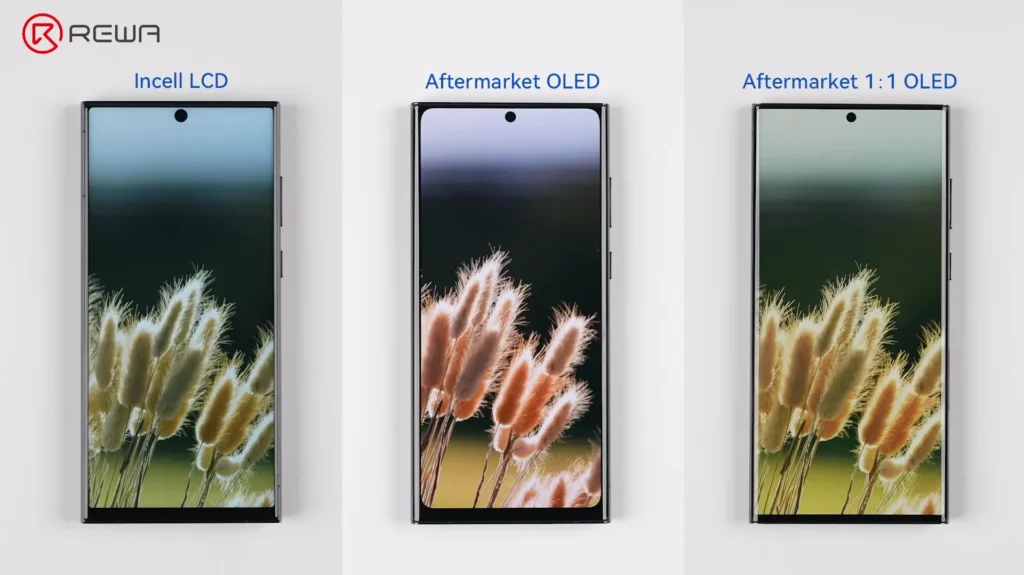
Budget Repair Option: Incell LCD Screens
The earliest mainstream Samsung third-party screens focused primarily on affordability and functionality recovery. For many repair scenarios, Incell LCD screens still serve an important purpose today.
Widely used for:
- Budget repairs
- Data recovery
- Temporary replacement
- Low-cost resale preparation
However, their limitations are clear due to the fundamental LCD structure. Unlike OLED panels, Incell LCD displays cannot support self-emitting pixels. As a result:
- True blacks appear grayish
- Power efficiency is lower
- Contrast performance is weaker
- AOD functionality becomes limited or unavailable
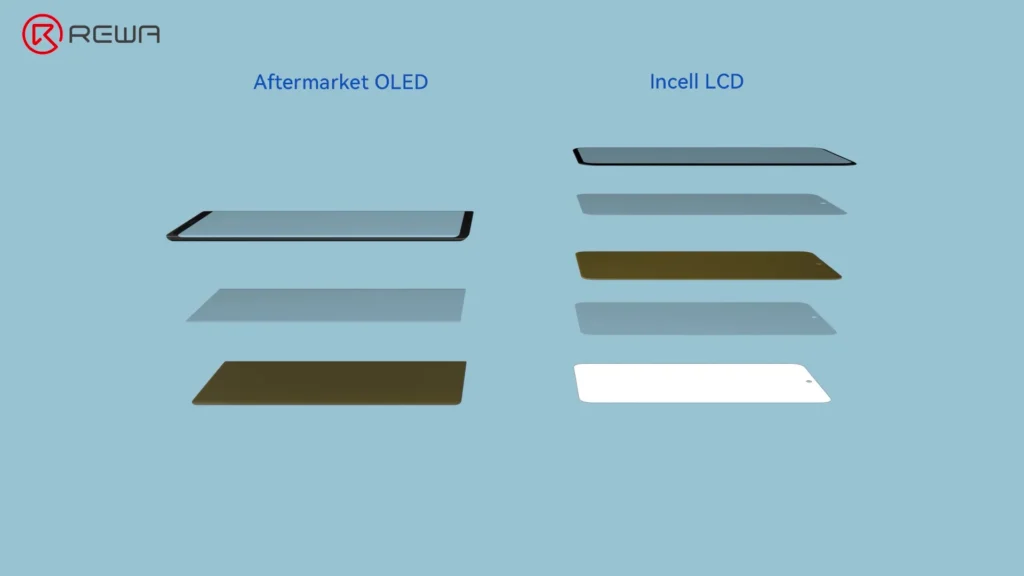
More importantly, Incell structures cannot properly support Samsung’s under-display fingerprint sensor technology. This is one of the biggest compromises for users accustomed to flagship Samsung devices.
Physical construction is another challenge. Due to IC packaging and panel design limitations, Incell LCD screens often feature:
- Wider bezels
- Thicker chins
- Smaller viewing areas
- Less precise frame fitting
Mainstream Repair Option: Aftermarket OLED Screens
As market demands increased, the aftermarket industry reached a major turning point: the rise of aftermarket OLED screens. This generation significantly improved both visual quality and feature compatibility.
Because OLED technology closely mirrors OEM display architecture, these screens deliver major improvements in:
- Black depth
- Brightness & contrast ratio
- Color saturation & color gamut
- Under-display fingerprint sensor
- S Pen responsiveness
- Ambient light sensor function
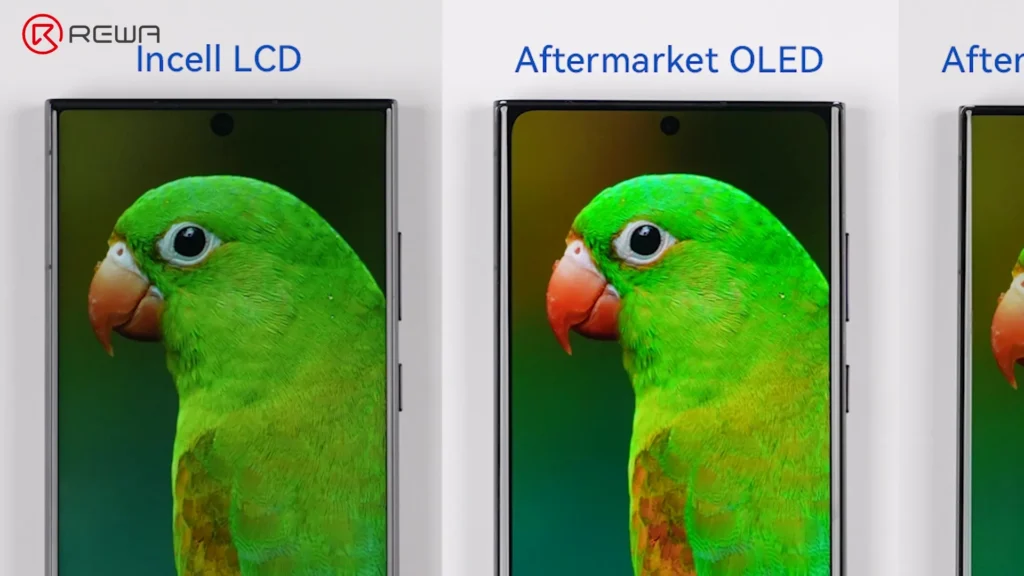
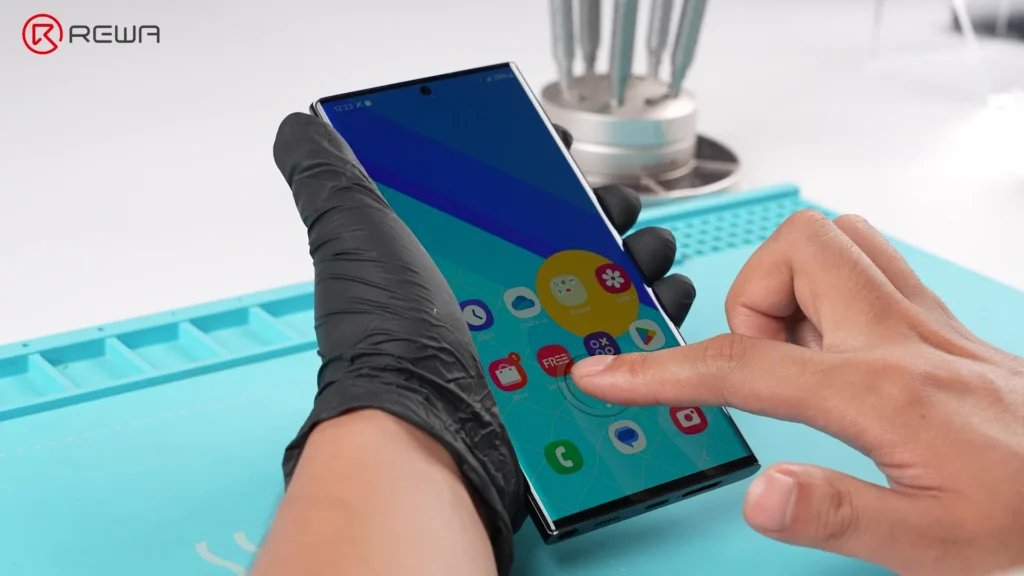
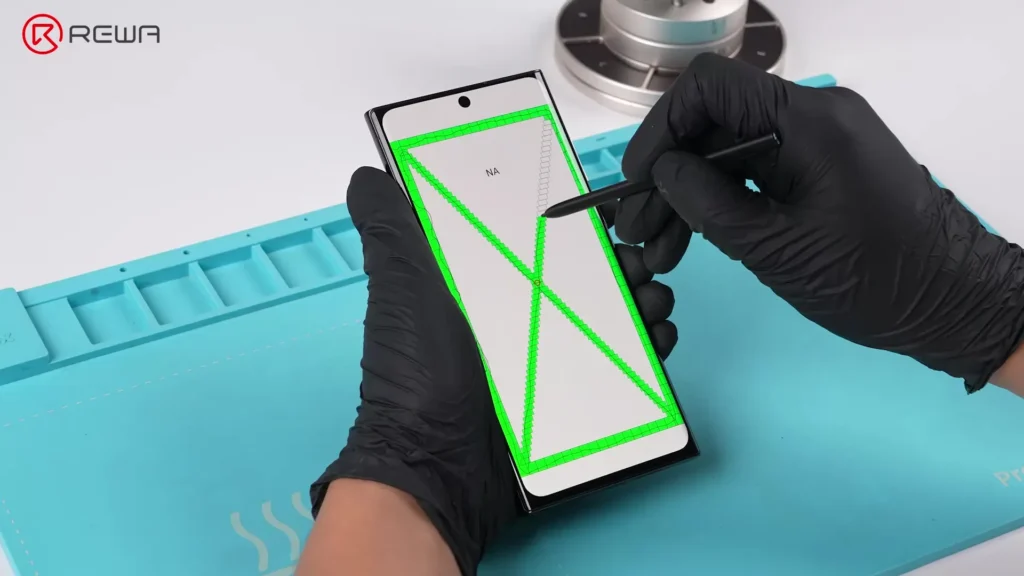
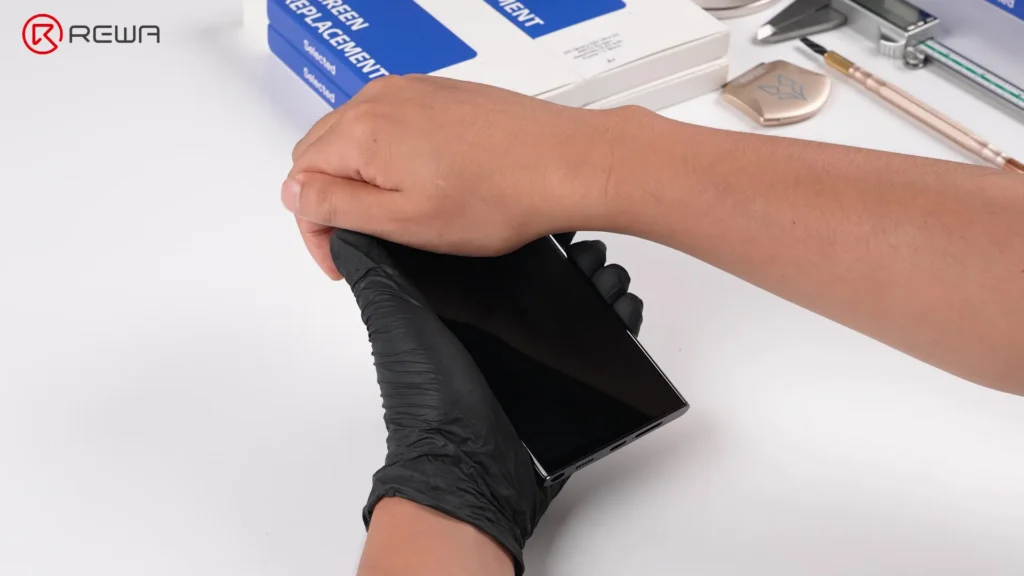
For repair customers, the experience immediately feels more “premium,” meanwhile the OLED screens became the sweet spot between performance and cost.
However, early aftermarket OLED generations still had one noticeable compromise: the viewing area. Compared to original Samsung displays, this slightly reduced the active viewing area and created subtle visual differences around the corners and borders.
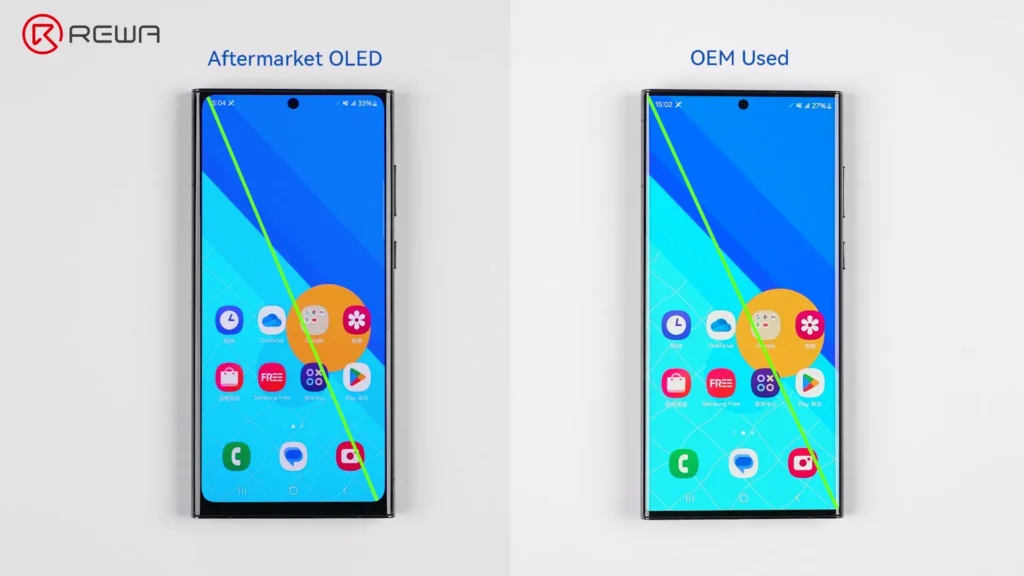
Best For:
- Mainstream repair businesses
- Mid-to-high-end device repairs
- Customers wanting original-like functionality
- Shops prioritizing value and reliability
Premium Repair Option: Aftermarket 1:1 OLED Screens
As aftermarket technology matured, manufacturers pushed toward a new goal: achieving a true OEM-like visual experience, which led to the development of the latest innovation: aftermarket 1:1 OLED screens.
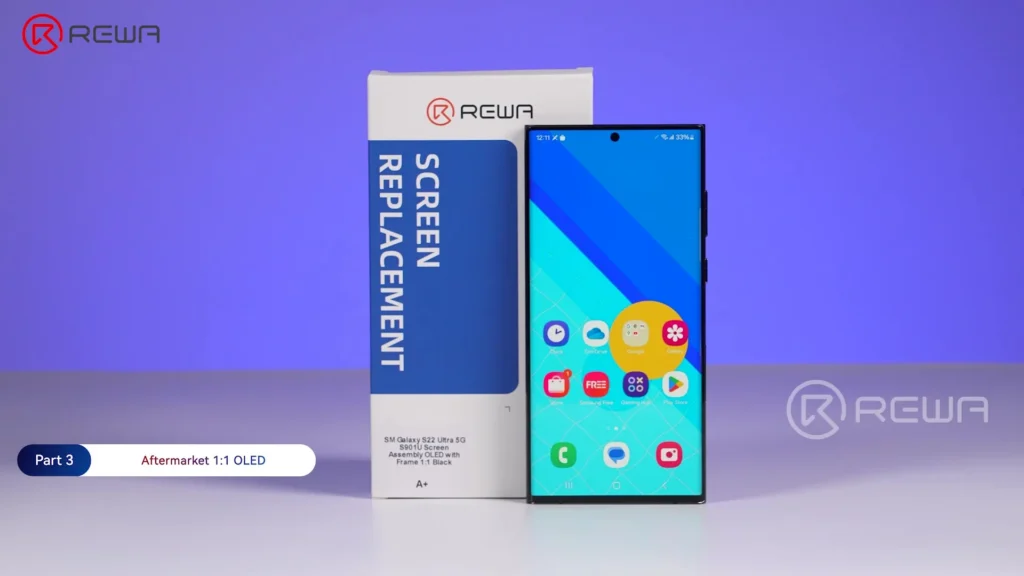
Unlike earlier OLED generations, these panels feature:
- Narrower chins
- True 1:1 viewing areas
- True right-angled corner structures
- OEM-like border proportions
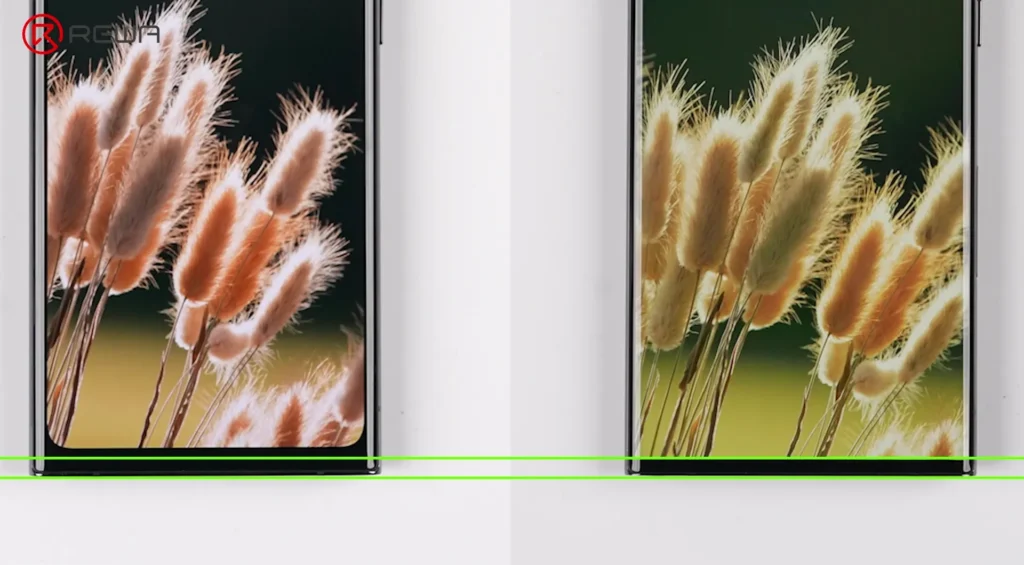
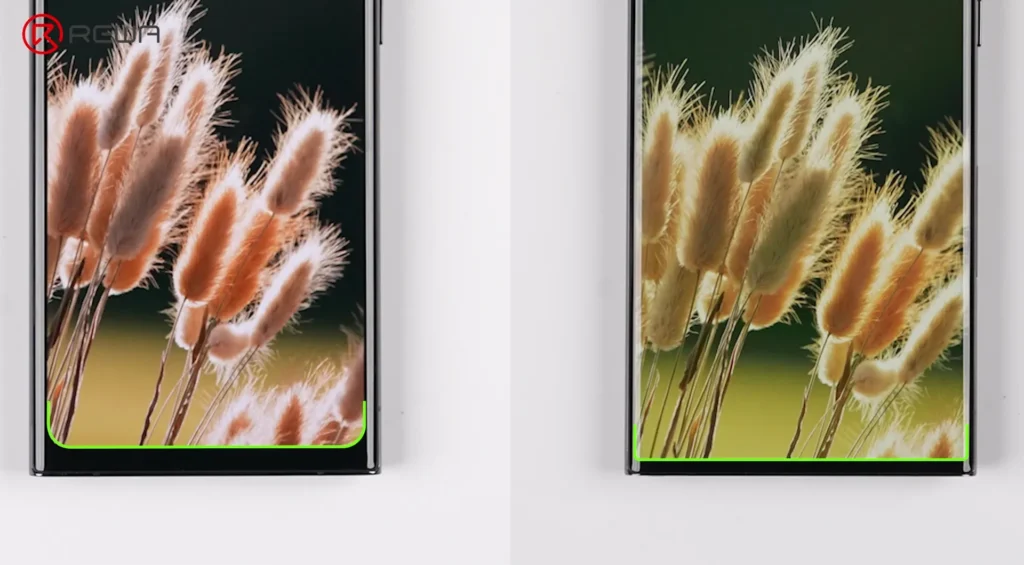
According to REWA Lab testing, the latest third-party 1:1 OLED screens demonstrate virtually no noticeable difference from OEM screens in areas such as:
- Under-display fingerprint sensor
- S Pen pressure sensitivity
- Display performance
- Ambient light sensor
For repair professionals, this represents a major evolution in aftermarket display technology. Of course, newer technologies come with higher initial manufacturing costs. This generation of OLED displays cost highest than previous ones.
Best For:
- High-end Samsung users
- Customers sensitive to display quality
- Professional refurbishing businesses
- Repair shops pursuing OEM-like results
How to Choose the Right Samsung Aftermarket Screen
Different repair scenarios require different solutions. There is no universal “best” option.
Here’s a simplified comparison:
Comparison of Samsung Aftermarket Screens for S & Note Series
| Collection | OEM Used | REWA Selected 1:1 Soft OLED | REWA Selected Aftermarket OLED | Others in the market |
|---|---|---|---|---|
| Display Size | Original | Original | Near OEM | Small Size |
| Display Panel | Soft OLED | Soft OLED | Soft OLED | Incell LCD |
| Display Performance | High Brightness, Wide Gamut, No Color Shift | High Brightness, Wider Gamut, Rich Saturation | High Brightness, Wider Gamut, Rich Saturation | Lower Brightness, Cool Color Tone |
| Battery Impact | Low | Medium | Medium | High |
| Fit & Finish | 1:1 Fit Near; OEM bezel | Excellent Fit; Near OEM bezel | Great Fit; Narrow bezel | Light leakage may exist; Thick bezel |
| Resolution | FHD | FHD | FHD | HD |
| Refresh Rate | 120Hz | 90Hz | 90Hz | 60Hz |
| Touch Response | High-speed response; Supports S pen | Near OEM response; Supports S pen | Near OEM response; Supports S pen | Occasionally delayed response; Unsmooth S Pen |
| Compatible Models | Limited | Limited | Mainstream | Selective |
| Supply Stability | Constrained | Steady | Steady | Variable |
| Price Level | High & Unstable | Slightly High | Medium & Stable | Low, but high customer complaints |
| Target Use Case | OEM experience, premium resale & high-quality repair | 1:1 OEM display size, reliable soft OLED alternative | OEM display performance, cost-effective & stable OLED replacement | No OEM display & touch needs |
| Overall Rating | ☆☆☆ | ☆☆☆☆ | ☆☆☆☆☆ | ☆☆ |
Frequently Asked Question
What is the difference between Incell LCD and OLED screens?
Why does under-display fingerprint recognition not work on some aftermarket screens?
What does “1:1 view area” mean?
Are aftermarket OLED screens good enough for daily use?
Why are 1:1 OLED screens more expensive?
Which aftermarket screen is best for repair shops?
Conclusion
From basic Incell LCDs to advanced 1:1 OLED panels, the aftermarket industry is rapidly narrowing the gap with OEM standards through continuous material innovation and engineering improvements.
REWA selected every tier of screen discussed above on the REWA Online Shop. And it has also obtained the CE certificate. As a global repair supply chain partner, every single display undergoes rigorous inbound and outbound inspection procedures by REWA to ensure it meets REWA strict QC standards.
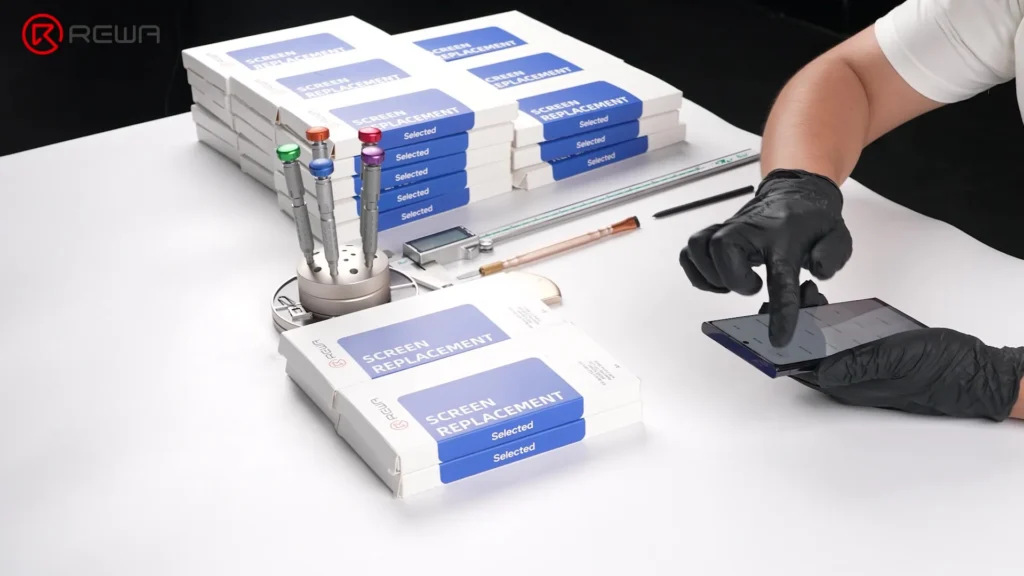
Over the 18 years, we are committed to powering your repair business with reliable and premium products and tailored customer solutions. If you have any questions, feel free to contact us.
 English
 Español
 Français
 Deutsch
 Italiano