Étiquette : batterie iphone

  • iPhone 18 Pro Teardown: What Changed Inside and How Does It Affect Repairability

    iPhone 18 Pro Teardown: What Changed Inside and How Does It Affect Repairability

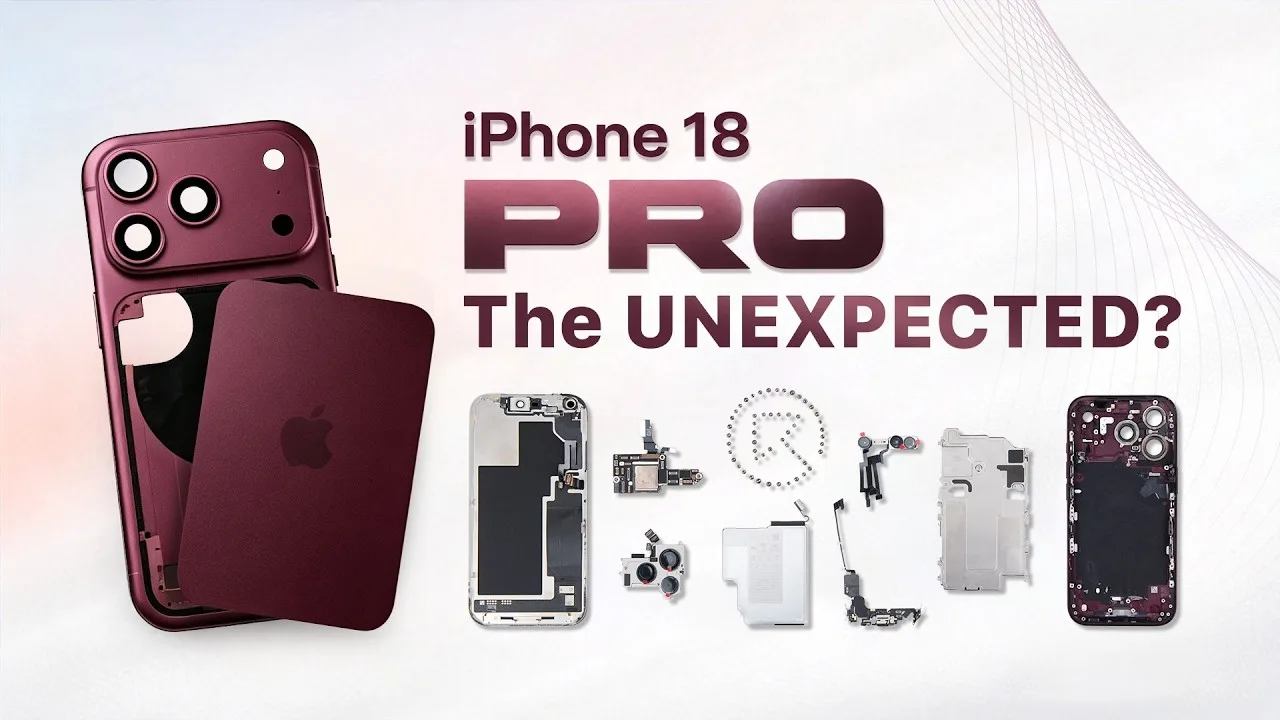
    The iPhone 18 Pro brings several significant changes beneath its familiar exterior. From a smaller Dynamic Island and a new under-display infrared camera to a dramatically larger vapor chamber and a redesigned motherboard layout, Apple has changed more than just the phone’s appearance.

    In this full teardown by REWA Lab, we dive deep into the internal structural changes and analyze what these updates mean for third-party repair shops and aftermarket component manufacturers.

    Step-by-Step Disassembly Process

    Opening the iPhone 18 Pro requires specialized repair tools and a cautious approach to avoid damaging internal flexes and sensors. Standard safety and prep steps are as follows:

    Preparation Before Teardown: Power off the device and remove the bottom screws with the Pentalobe screwdriver.
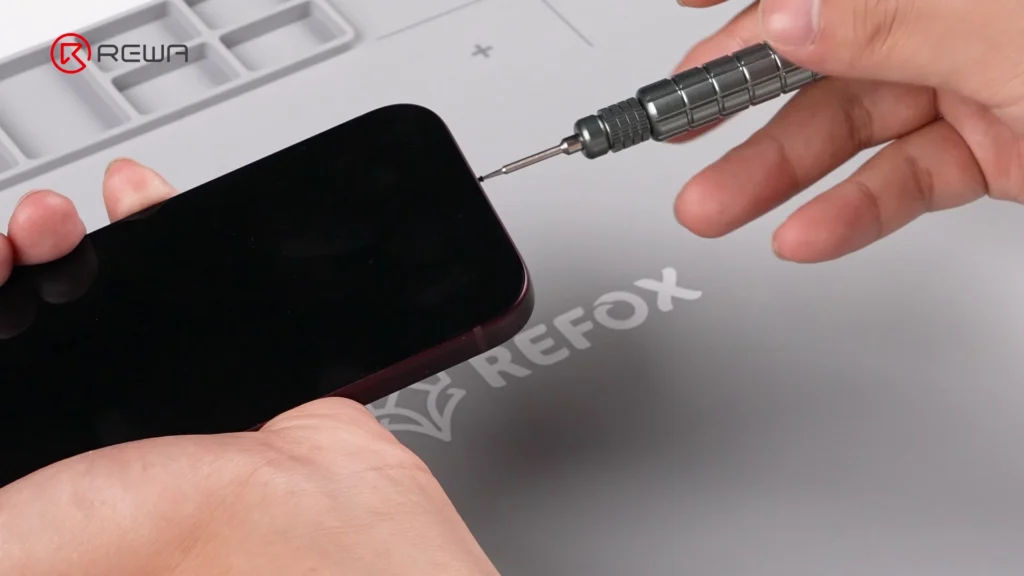
    Removing the bottom screw of an iPhone using a precision Pentalobe screwdriver

    Screen Removal: Heat the screen to soften the perimeter waterproof adhesive. Use an opening tool with suction cup and alcool isopropylique to gently slice through the seal with an opening pick.

    Camera Protection: Cover the front camera module with protective sponge stickers to prevent dust or scratches.

    Bracket & Flex Cable Disconnection: Unscrew and remove the battery and display connector bracket. Disconnect the battery flex cable, display cable, and front sensor cable to free the screen.

    Vapor Chamber & Cameras: Unscrew the vapor chamber using a 4IP screwdriver. Disconnect and remove the front / rear camera modules.
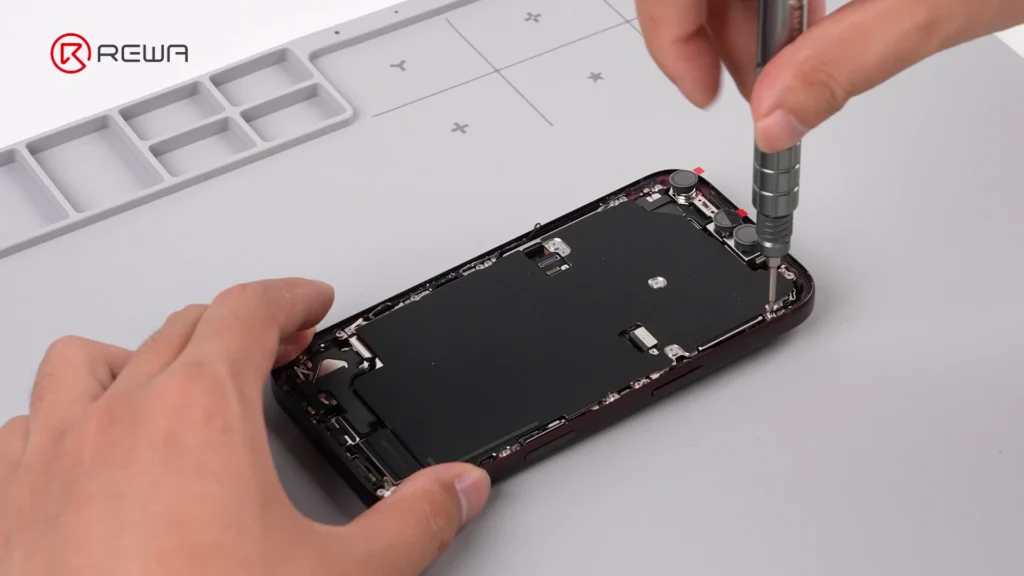
    using a screwdriver to open iPhone 18 Pro for teardown

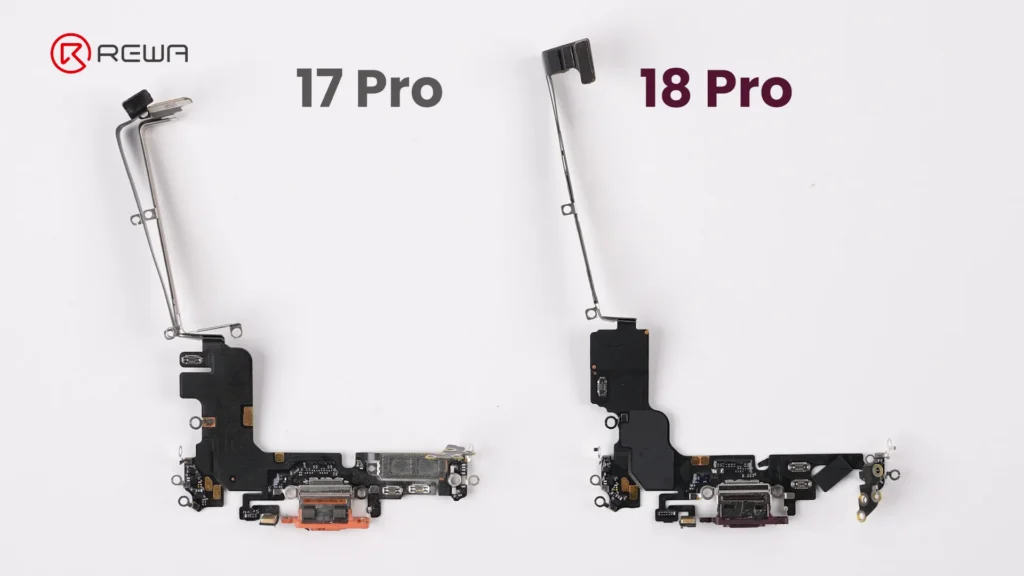
    Motherboard & Peripheral Removal: Unscrew and flip over the motherboard to disconnect the wireless charging coil. Remove flashlight, LiDAR, SIM tray, SIM card reader, bottom speaker, charging port, Taptic Engine, and microphone in sequence.
    iphone 18 pro teardown what changed inside how does it affect 3

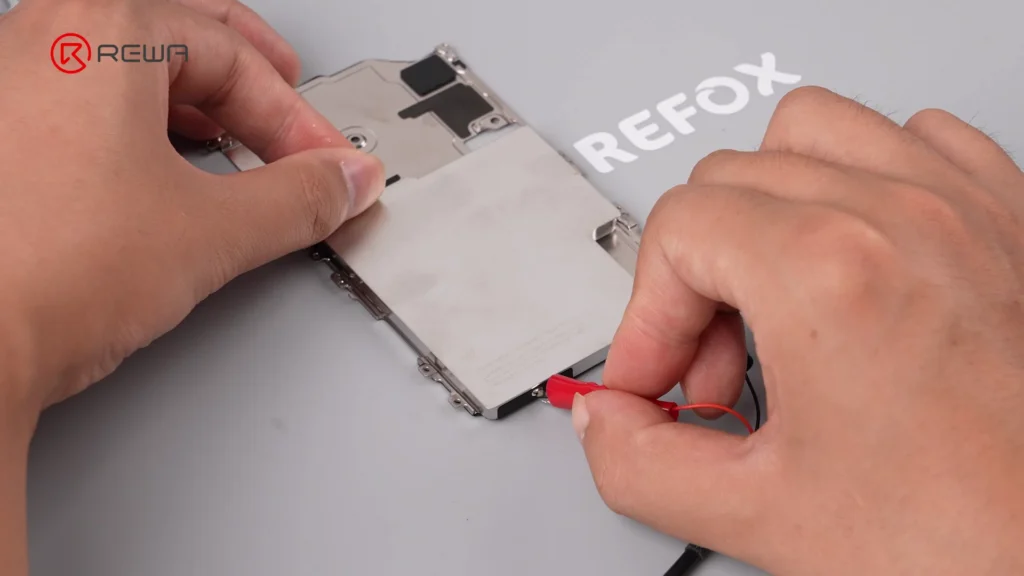
    Battery Debonding: Apply a 9V DC voltage between the silver battery tab (positive probe) and the vapor chamber (negative probe) to electronically deactivate the adhesive, allowing easy battery removal.
    iphone 18 pro teardown what changed inside how does it affect 4

    Display & Dynamic Island: Under-Display Infrared Tech

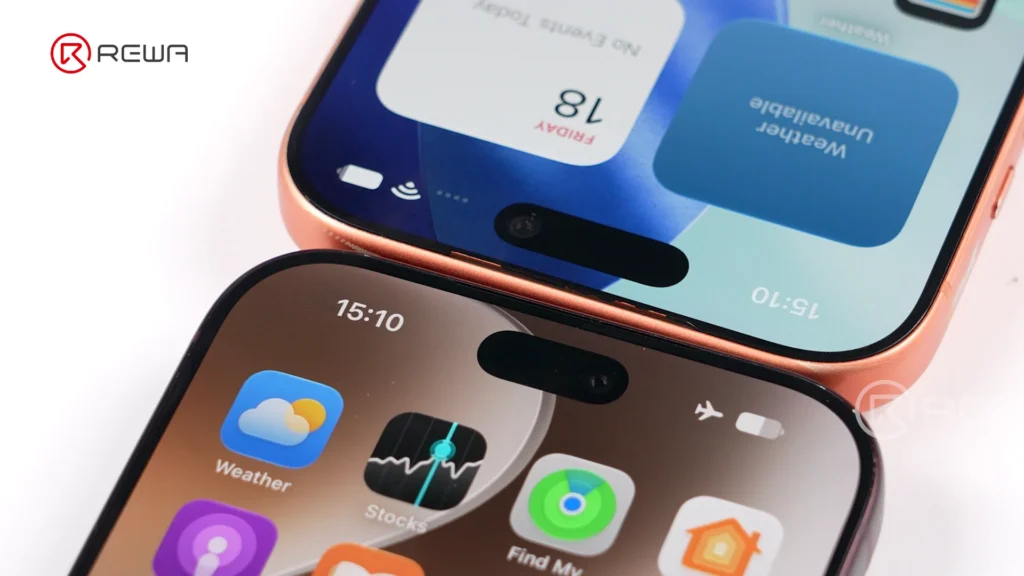
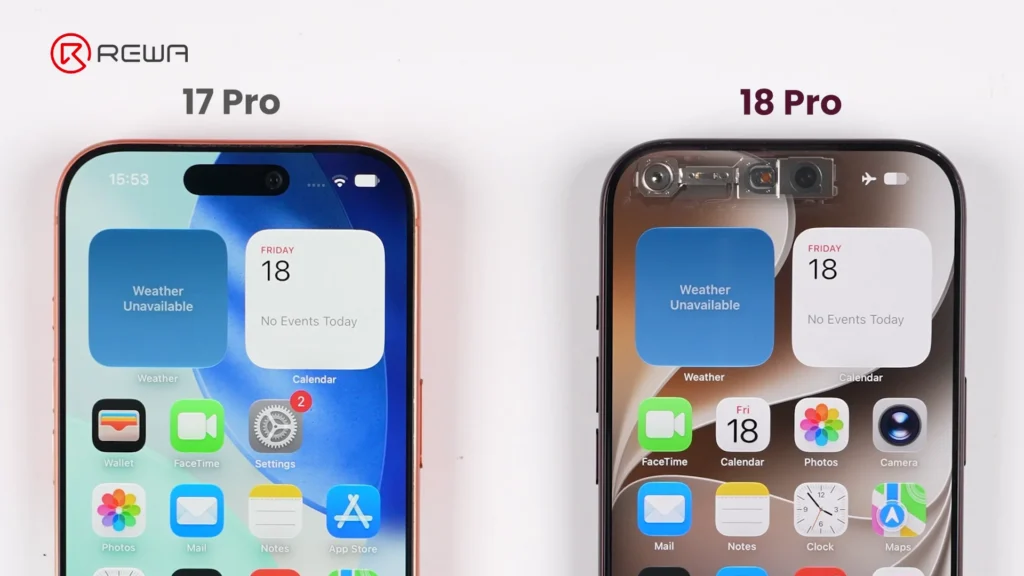
    Apple’s smaller Dynamic Island introduces a more complex under-display optical structure, creating new challenges for display refurbishment. This shrink is achieved by relocating the infrared camera under the display assembly and positioning it near the screen corner.
    iphone 18 pro teardown what changed inside how does it affect 5
    iphone 18 pro teardown what changed inside how does it affect 6

    Key display architecture updates include:

    Adjusted Pixel Matrix: The display above the infrared camera features a modified pixel density and arrangement to allow infrared light transmission for Face ID functionality.

    iphone 18 pro teardown what changed inside how does it affect 7

    Unfixed Flex Cable: The display flex cable is no longer secured with heavy adhesive, making screen separation cleaner during repair and refurbishment.

    Aftermarket Challenge: Third-party display manufacturers will face higher precision requirements to replicate the light-transmitting pixel window for Face ID functionality.

    Motherboard Architecture: Higher Difficulty for Micro-Soldering

    The updated motherboard layout places crucial chips in vulnerable locations while sandwiching NAND and power IC between layers. For micro-soldering technicians, the iPhone 18 Pro motherboard presents an elevated level of complexity.
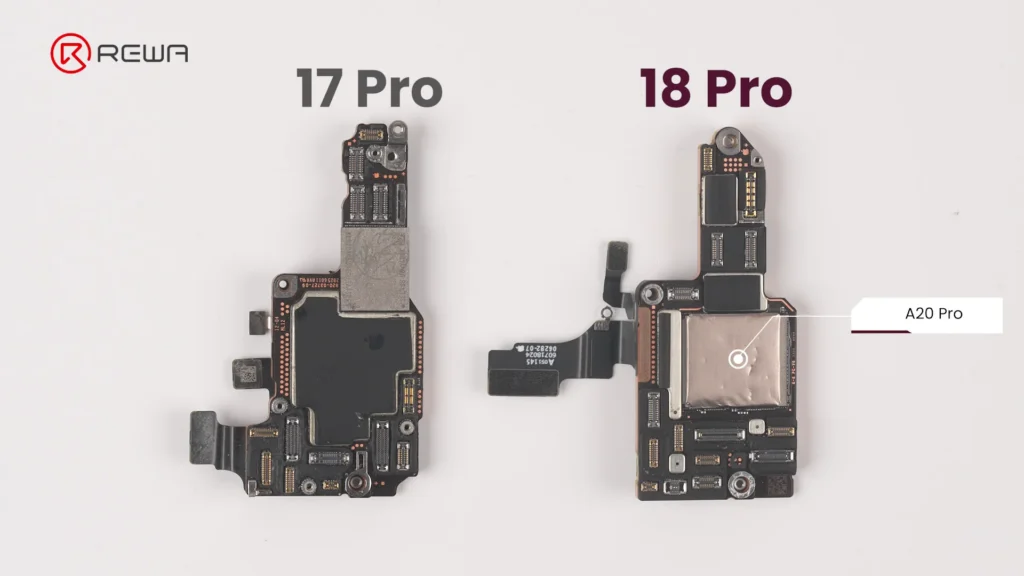
    iphone 18 pro teardown what changed inside how does it affect 8

    Apple has reorganized chip placement and shielding:

    Exposed Logic EEPROM: The Logic EEPROM chip on the board surface lacks a protective metal shield, leaving it significantly more susceptible to physical damage and technician error.
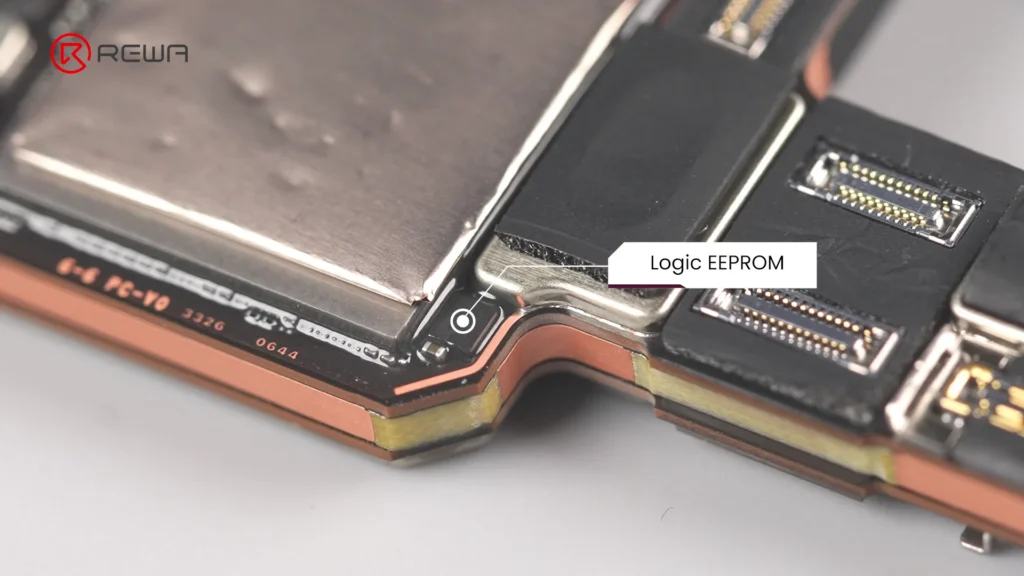
    iphone 18 pro teardown what changed inside how does it affect 9

    Layered Sandwich Design: The NAND storage chip and Power IC are sandwiched inside the multi-layer PCB structure. Replacing or repairing these components requires demanding motherboard desoldering and reballing.

    Relocated A20 Pro Chip: The main processor sits directly on the motherboard surface, and in direct contact with the vapor chamber for substantial improvement in thermal performance.
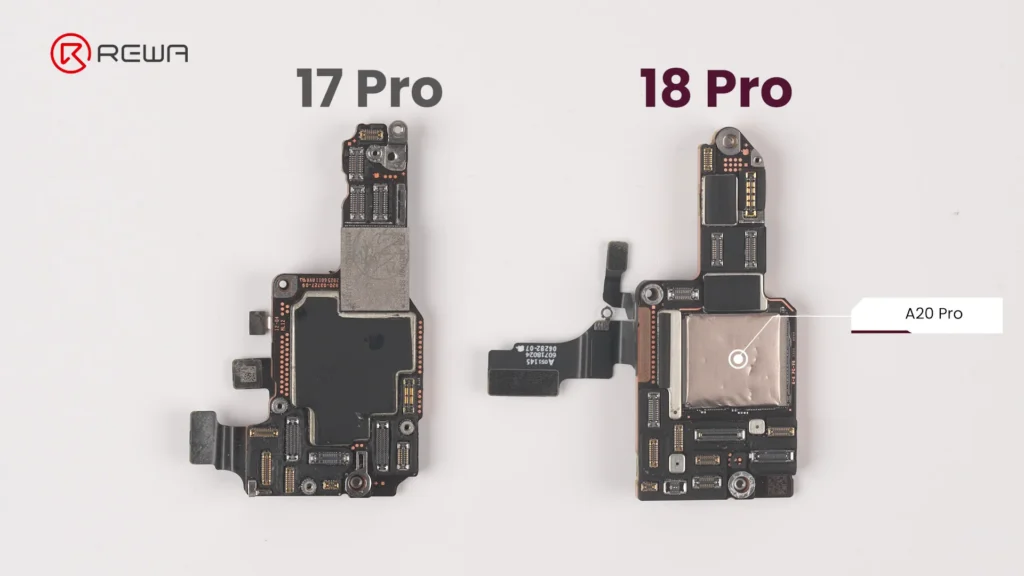
    iphone 18 pro teardown what changed inside how does it affect 10

    Upgraded Camera Modules

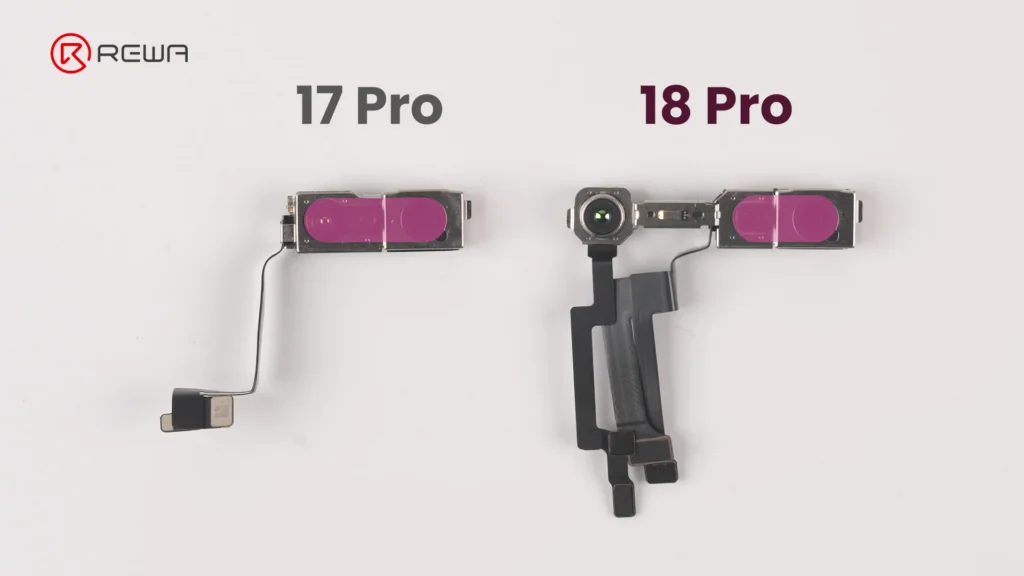
    The iPhone 18 Pro’s camera modules feature noticeable changes in mechanical design, module size, and cable layout.

    Fusion Main Camera: The rear camera module features a variable aperture for greater control over depth of field.
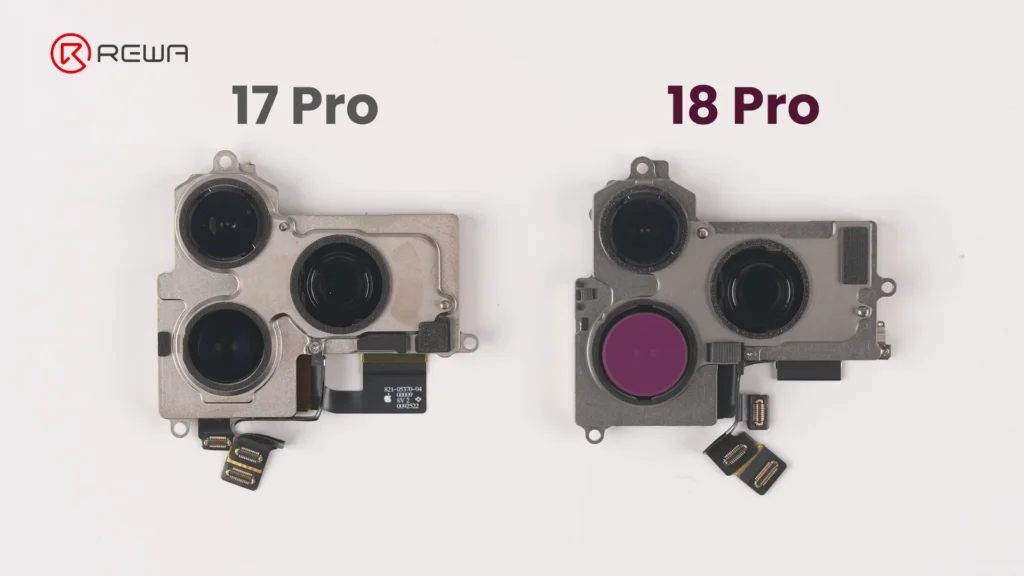
    iphone 18 pro teardown what changed inside how does it affect 11

    Separated Infrared Sensor: The front camera and under-display infrared camera are connected via three separate flex cables, bridged across a wider distance to facilitate the shrunken Dynamic Island.
    iphone 18 pro teardown what changed inside how does it affect 12

    Thermal Management & Battery Changes

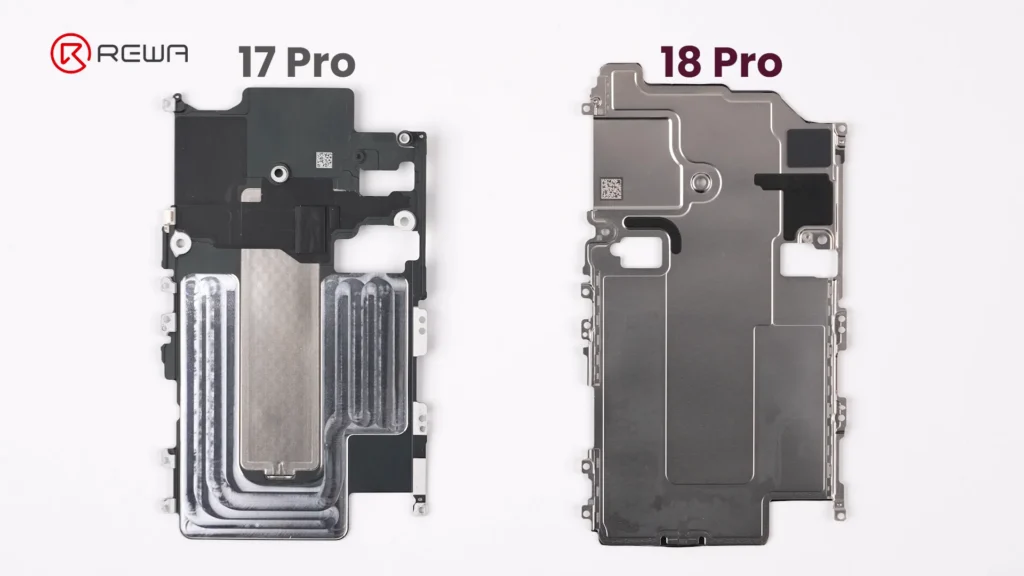
    Vapor chamber on the iPhone 18 Pro receives its largest redesign in years. Apple has integrated a significantly larger vapor chamber, with three times the surface area of the one used in the iPhone 17 Pro.
    iphone 18 pro teardown what changed inside how does it affect 13

    Simply Put:

    A vapor chamber is a flat, sealed metal enclosure containing a small amount of liquid. When the chips heat up, the liquid absorbs heat and evaporates. The vapor then spreads through the chamber, transferring heat to cooler areas where it condenses back into liquid. This helps the phone maintain stable performance under sustained workloads.

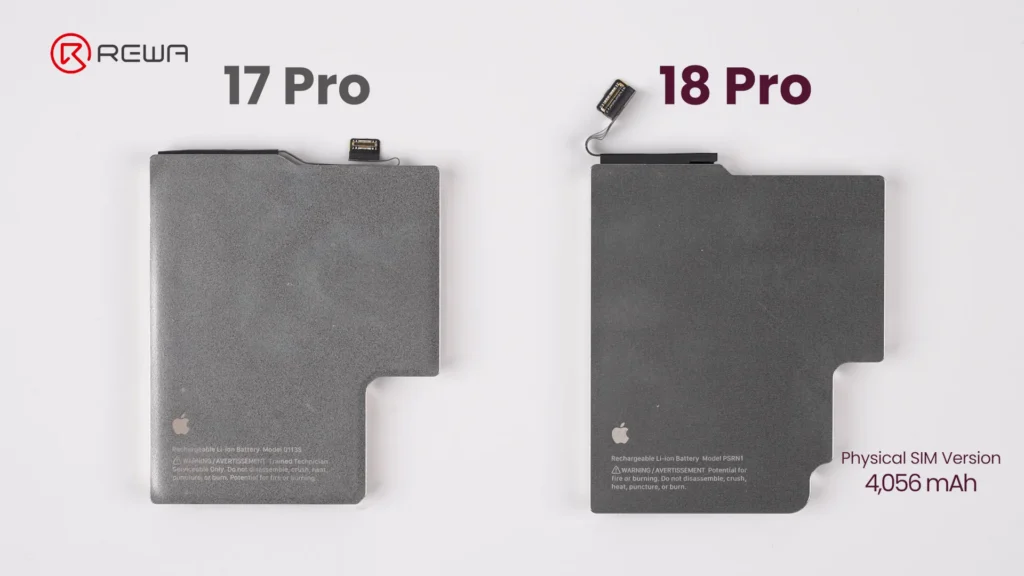
    The battery capacity of iPhone 18 Pro is slightly bigger than that on iPhone 17 Pro. In physical SIM version, it packs 4,056mAh, achieving about 1.7% increase over previous generation. Apple officially confirms that the redesigned battery architecture and charging system enable faster charging, reaching 50% in approximately 15 minutes.
    iphone 18 pro teardown what changed inside how does it affect 14

    Repair Difficulty Assessment: Pros & Cons

    A concise summary of what makes repairing the iPhone 18 Pro easier or harder for repair professionals.

    Composant Changes Made Repair Difficulty
    Écran
    • Smaller Dynamic Island
    • Under-display infrared camera
    • Display flex cable not fixed with adhesive
    Easy
    Batterie
    • Larger capacity: 4,056mAh (SIM tray version)
    • Larger connector
    • Multi-layer cable
    Easy
    Front Camera Module
    • Infrared camera moved to the corner
    • Three separate cables
    Very Easy
    Rear Camera Module
    • Larger Fusion Main Camera
    • Cable layout changed
    Hard
    Carte mère
    • A20 Pro chip on the surface
    • Logic EEPROM chip without a shield
    • NAND and Power IC sandwiched inside
    Very Hard

    Foire aux questions (FAQ)

    Why is iPhone 18 Pro motherboard repair more difficult?

    The main reason is the new layered motherboard architecture. NAND storage and the power IC are positioned between PCB layers, meaning technicians need to separate the board layers to access them. This increases the complexity, heat exposure, labor, and risk involved in component-level repair.

    Why is the Dynamic Island smaller on the iPhone 18 Pro?

    The infrared camera used for Face ID has been moved under the display and toward the corner. The display uses a modified pixel arrangement in this area to allow infrared light to pass through. This allows Apple to reduce the size of the visible Dynamic Island.

    How big is the iPhone 18 Pro battery?

    The iPhone 18 Pro shown in the REWA Lab teardown is the physical-SIM version and has a 4,056mAh battery, approximately 1.7% higher than the iPhone 17 Pro. Battery capacity varies by regional configuration; in eSIM-only version, the iPhone 18 Pro has a 4,288mAh battery.

    How much larger is the iPhone 18 Pro vapor chamber?

    iPhone 18 Pro vapor chamber has three times the surface area of the vapor chamber in the iPhone 17 Pro. Apple says the redesigned thermal system enables up to 40% better sustained performance compared with the previous generation.

    What is the biggest repair challenge revealed by REWA Lab’s iPhone 18 Pro teardown?

    For board-level technicians, the layered motherboard architecture is one of the most significant challenges because it complicates access to NAND and power-management components. For aftermarket parts manufacturers, the new under-display infrared camera arrangement creates another major challenge because display structure, optical transmission, and Face ID compatibility must all work together.

    Did Apple make major changes to the iPhone 18 Pro’s frame and back cover?

    No. The iPhone 18 Pro retains a largely similar frame and back cover structure to the iPhone 17 Pro. The back cover uses a more color-matched aluminum and glass design in iPhone 18 Pro.

    Conclusion :

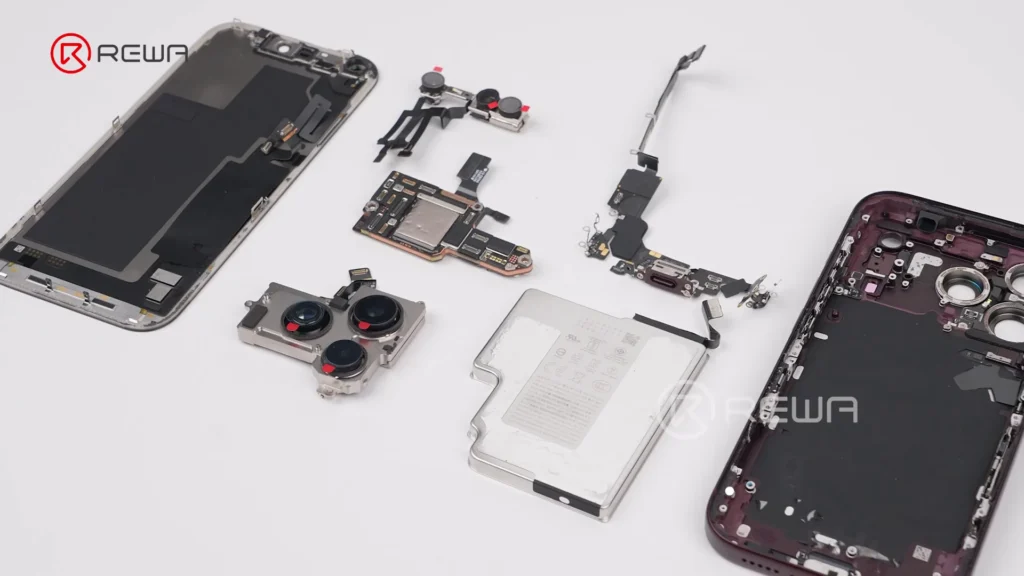
    The iPhone 18 Pro showcases impressive internal engineering, highlighted by under-display Face ID technology, triple-sized vapor chamber, and larger variable-aperture main camera.
    iphone 18 pro teardown what changed inside how does it affect 15

    However, for the independent repair industry, these advancements come with obvious challenges: motherboard layering makes micro-soldering more demanding, and screen replacement requires precise technical alignment and careful handling to ensure proper Face ID functionality.

    As phone architectures become more complex, having high-grade repair tools, reliable replacement parts, and advanced technical training is essential, please nous contacter for OEM/aftermarket replacement parts, professional repair tools, and step-by-step technical guides.
  • How iPhone Aftermarket Battery BMS Boards Are Made

    How iPhone Aftermarket Battery BMS Boards Are Made

    When choosing an iPhone aftermarket battery, the BMS board (Battery Management System board) plays an important role in battery performance. So, what makes a third-party battery board reliable?

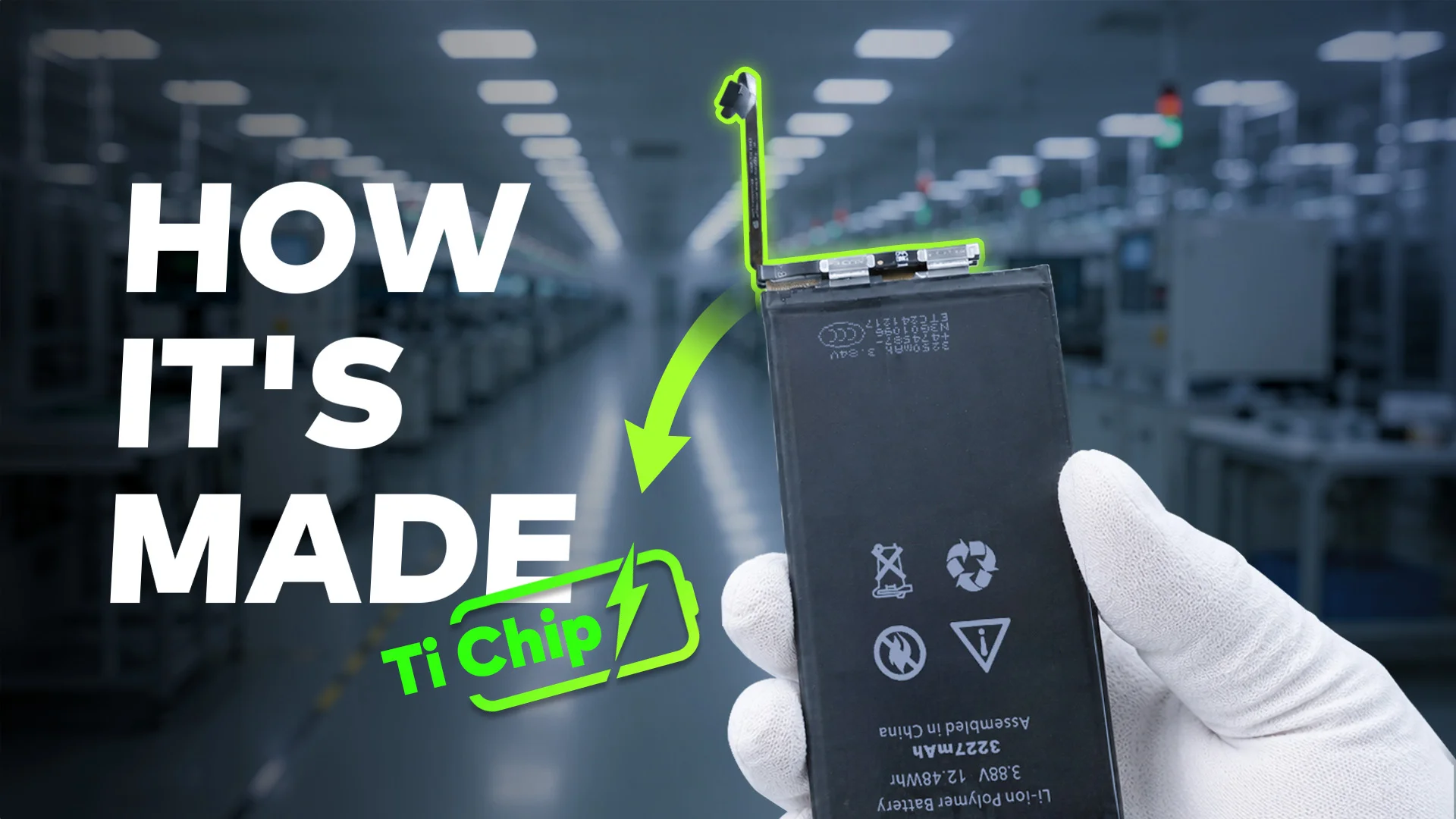
    In this article, REWA Lab takes you to explore how an iPhone aftermarket battery BMS board is manufactured, from bare PCB assembly and TI chip placement to firmware programming, functional testing, battery cell assembly, and final strict quality inspection.

    how iphone aftermarket battery bms boards made the crucial stages to

    What Is an iPhone Battery BMS Board?

    The BMS board is the control and protection system of a rechargeable battery, helping monitor the battery and protect it during charging and use.

    For an aftermarket iPhone battery, the BMS board works alongside the battery cell. While the cell stores the electrical energy, the BMS board manages and monitors important battery-related functions.

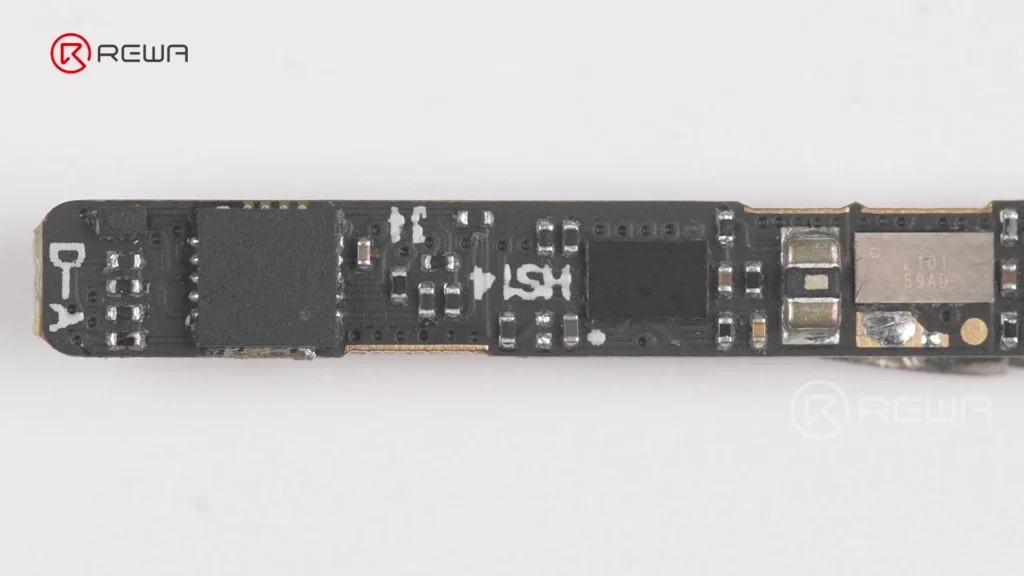
    Close-up view of a populated black iPhone battery BMS circuit board with surface-mounted chips and electronic components

    Depending on the design, a battery BMS board can help with functions such as:

    • Battery voltage & current monitoring
    • Temperature-related protection
    • Overcharge & short-circuit protection
    • Battery data and state-of-charge estimation
    • Communication between the battery and device

    This is why two aftermarket batteries using cells with similar specifications can still have different real-world performance and reliability.

    Step 1: Bare PCB Preparation and SMT Assembly

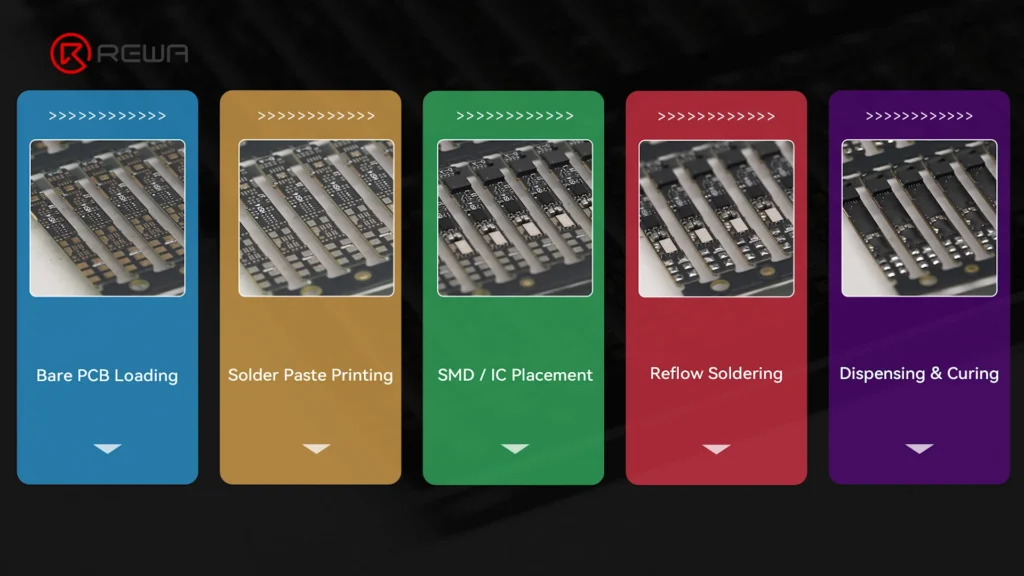
    The manufacturing process starts with a bare PCB, which is the foundation of the BMS board. Before production begins, the factory receives bare PCBs that have already passed IQC inspection and loads them onto SMT feeder racks for automated component placement.

    En termes simples :

    SMT stands for Surface Mount Technology. It is a manufacturing method that places tiny electronic components directly onto the surface of a circuit board.

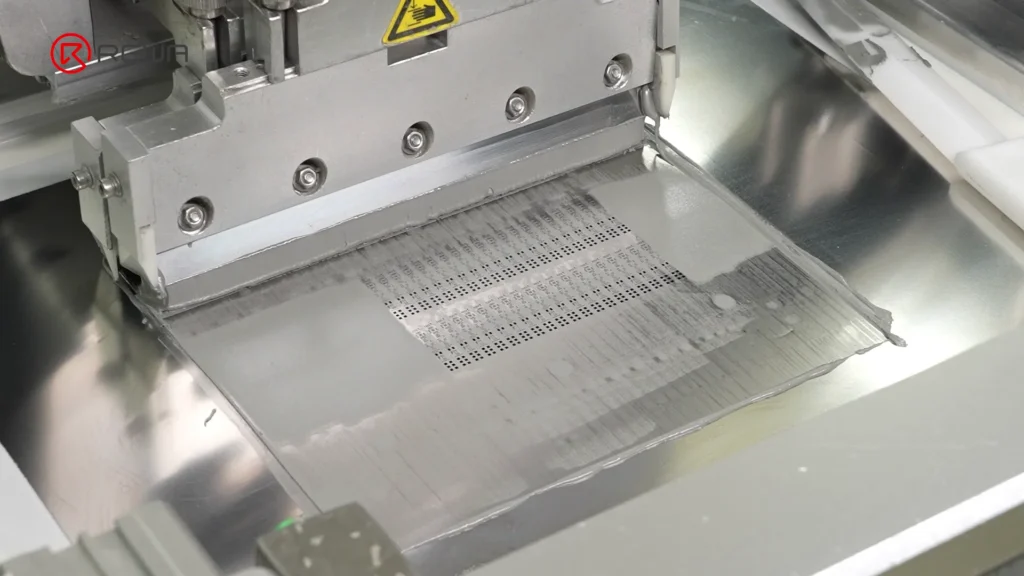
    The basic process begins with solder paste printing. The PCB is positioned against a stencil, and solder paste is applied to precisely defined positions on the board.

    Automated SMT squeegee applying gray solder paste over a stencil onto a BMS circuit board

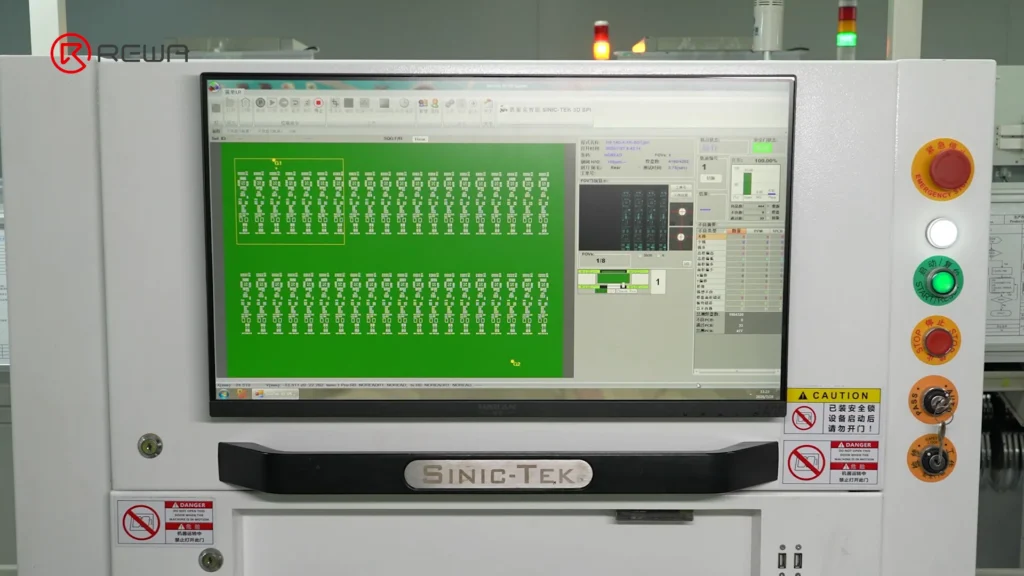
    Infrared marking helps identify the positions of the solder pads, while an SPI system checks the printed solder paste to identify issues such as:

    • Solder paste offset
    • Insufficient solder paste
    • Excessive solder paste
    • Solder bridging
    A Sinic-Tek 3D SPI machine monitor displaying a panel inspection layout for solder paste quality control

    This inspection is important because inaccurate solder paste printing can affect the quality of component soldering later in the process.

    Step 2: High-Speed Component Placement

    After solder paste printing, SMT machines precisely place resistors, capacitors, inductors, and other components onto their designated positions on the PCB.

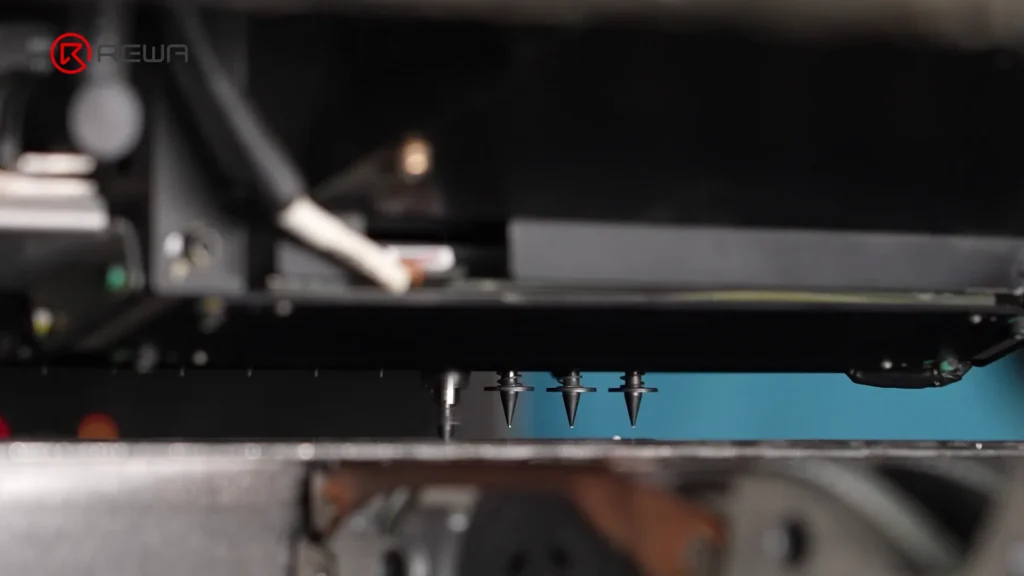
    High-speed nozzles pick up individual components and place them according to the programmed layout of the PCB. Infrared reference marks help the equipment maintain accurate positioning.

    Automated SMT pick-and-place nozzles positioned above a circuit board

    For battery BMS boards, precise component placement is essential because the board contains many small components within a compact design.

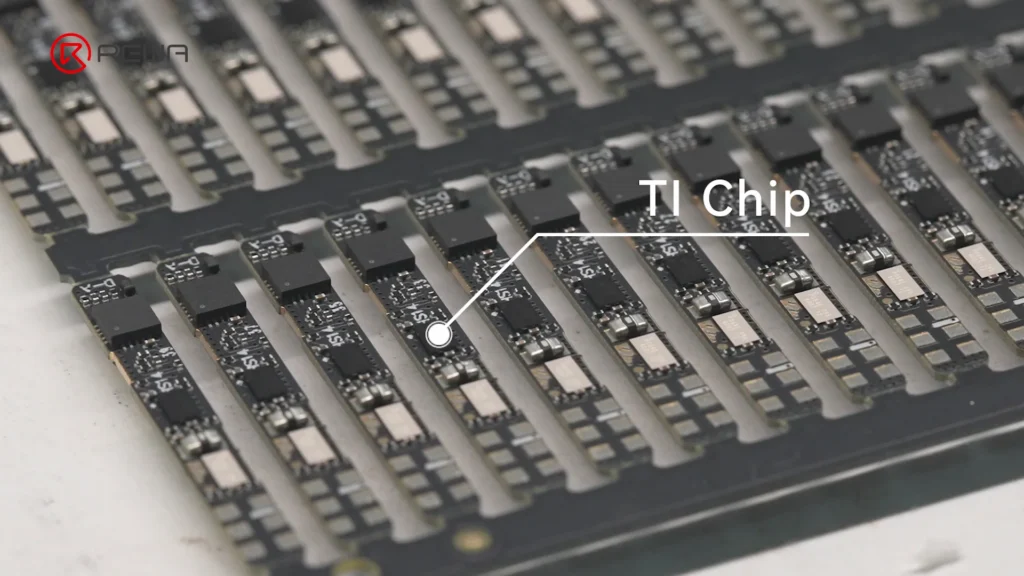
    Step 3: Installing the TI Battery Management Chip

    One of the key components on the board is the TI chip. As a key control component of the battery management system, it serves as the “brain” of the BMS, helping monitor and manage battery performance.

    Array of BMS circuit boards with a callout label pointing to the installed TI chip

    Le REWA Batterie sélectionnée board uses a custom TI chip with an Impedance Track algorithm.

    En termes simples :

    The algorithm helps the battery system estimate the battery’s remaining capacity more accurately by tracking the battery’s electrical characteristics, including impedance.

    Battery impedance changes as the battery operates and ages. Monitoring these characteristics allows the battery management system to make more informed estimates of the battery’s actual state.
    Step 4: Reflow Soldering and AOI Inspection

    Once the components have been placed, the PCB enters the reflow soldering process. The board passes through a controlled thermal profile consisting of preheat, soak, reflow, and cooling stages, permanently connecting the components to the PCB.

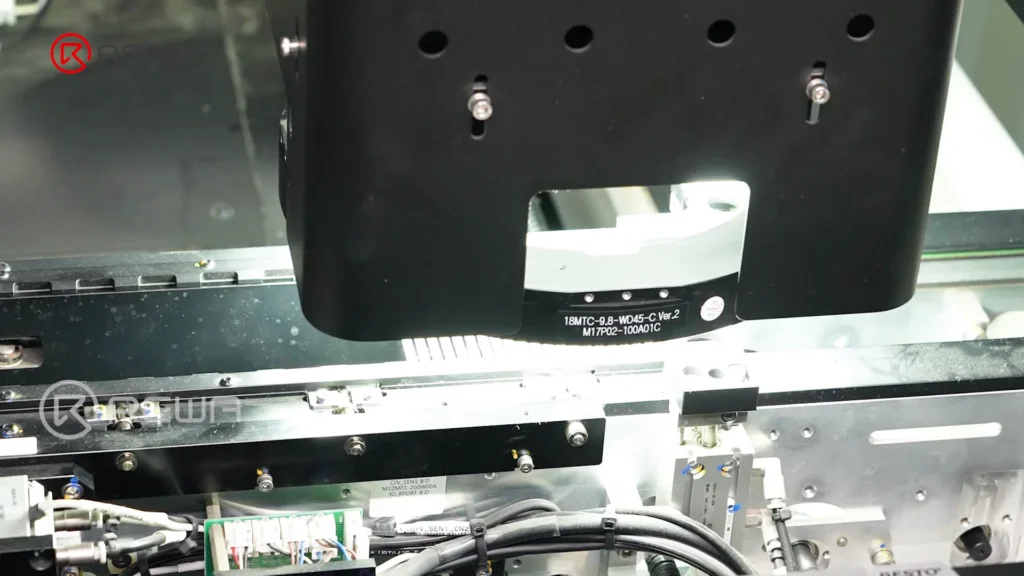
    Afterward, the board undergoes AOI (Automated Optical Inspection) scanning.

    Simply put:

    AOI uses cameras to inspect the board automatically and compare the soldered components and joints against predefined standards or a golden sample.

    Automated optical inspection machine head scanning circuit boards under bright light on an assembly line

    If the system identifies an NG (No Good) board, the board is manually reviewed to separate real defects from false positives.

    Step 5: Underfill Reinforces BGA Component Connections

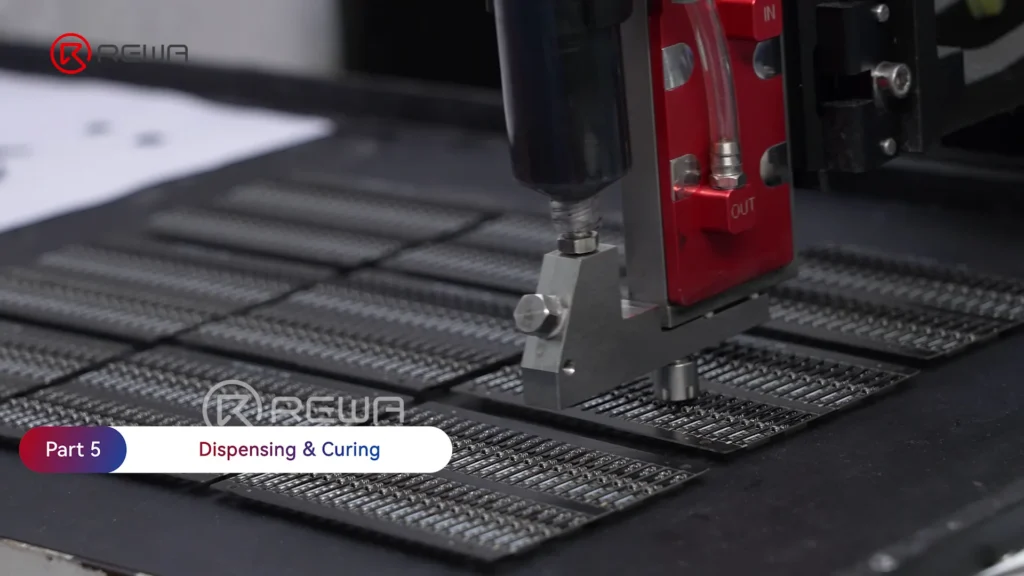
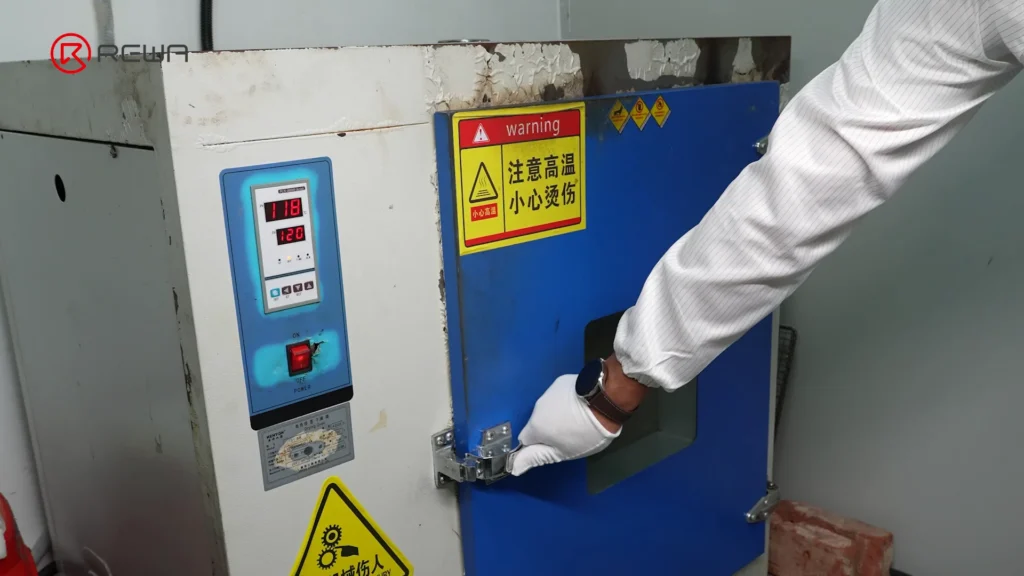
    After solder inspection, automated equipment applies underfill along the edges of BGA components before the adhesive is cured in an oven, which helps provide additional mechanical support.

    For battery BMS boards, this stage can improve resistance to physical shock and vibration, helping strengthen the connection between the component and PCB during handling and use.

    How iPhone Aftermarket Battery BMS Boards Are Made
    A gloved worker closing the door of an industrial drying oven used to cure underfill adhesive

    Step 6: Firmware Programming and Flex Cable Bonding

    The completed PCB is programmed with firmware before its flex cable is bonded using controlled heat and pressure. To put it simply, firmware is the embedded software that controls how the hardware operates.

    How do the controlled heat and pressure achieve?

    Through a hot-bar bonding process, the controlled heat and pressure are used to bond the flex cable to the PCB.

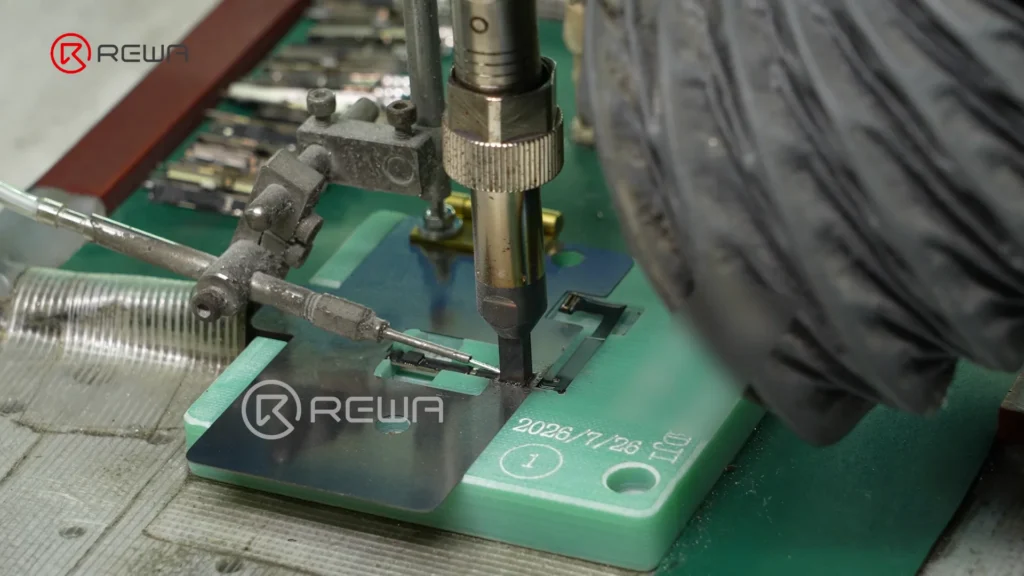
    bonding flex cable

    After bonding, the flex cable connection is verified through FCT (Functional Circuit Test) to check whether the assembled board actually functions as intended.

    Step 7: Battery Cell and BMS Board Assembly

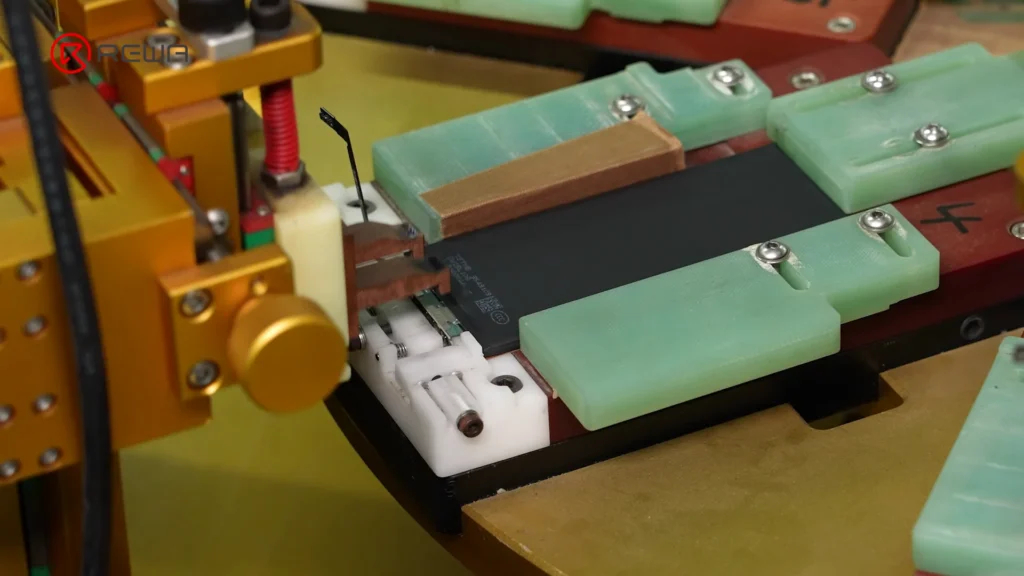
    In the assembly stage, the factory first uses capacity-matched cells. The cell tabs are then cut before the cell is connected to the BMS board through fiber laser spot welding.

    Why Is Weld Quality Important?

    The weld connects the battery cell to the BMS board, so the quality of this connection directly affects the electrical and mechanical integrity of the battery pack.

    Automated spot welding equipment connecting a battery cell to a BMS board held in an assembly fixture

    After welding, each weld joint is checked for durability. The battery pack then receives insulation tape and a rubber casing as part of the assembly process, helping provide both electrical insulation and physical protection.

    Step 8: Final Quality Inspection and Battery Testing

    Manufacturing does not end when the battery pack is assembled. A strict final quality inspection is performed before the battery is considered ready for shipment.

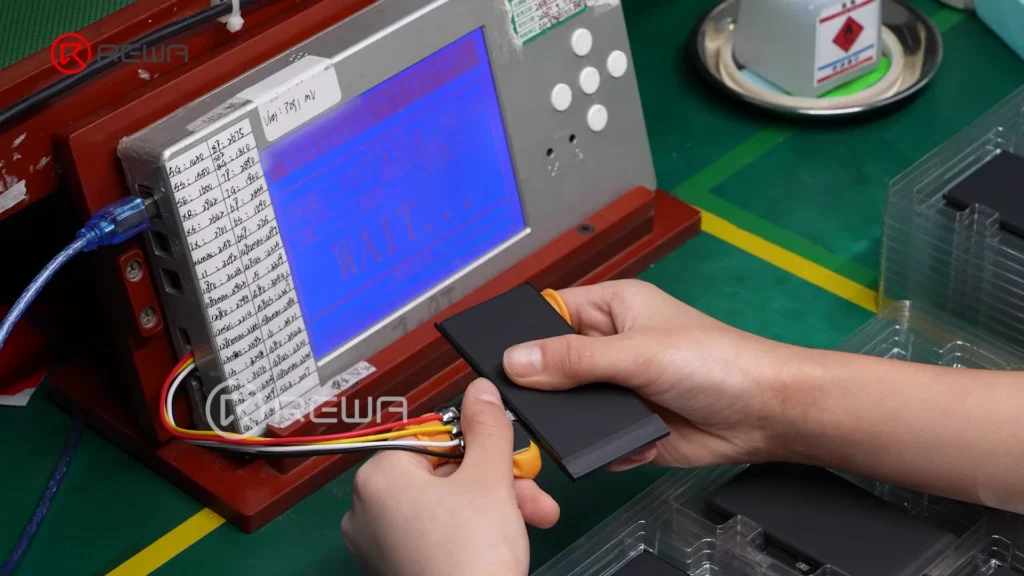
    After final inspection, the battery enters a resting period, during which parameters such as voltage and internal resistance are monitored.

    Technician connecting an assembled iPhone battery to a digital testing device to monitor voltage and internal resistance

    Monitoring voltage and internal resistance during the resting period provides additional data for quality control.

    Why the BMS Board Matters for Aftermarket iPhone Batteries

    The BMS board is often hidden inside the battery, so it is easy to overlook when comparing aftermarket batteries. However, its design and manufacturing quality can influence important aspects of battery operation.

    A reliable third-party battery requires more than simply selecting a battery cell with the right capacity. The cell, BMS board, firmware, electrical connections, protection circuitry, manufacturing process and strict quality test before shipping all work together.

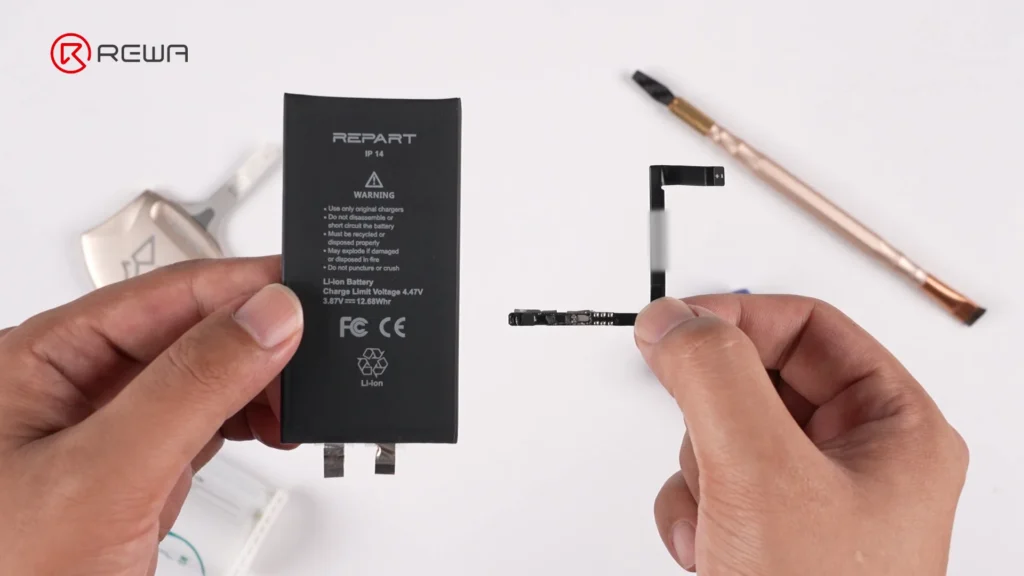
    Hands holding a black iPhone 14 battery cell on the left and a small BMS board with flex cable on the right

    For distributors, refurbishing facilities, and repair shops, this means that battery evaluation should go beyond looking at the printed capacity or external appearance.

    Questions fréquemment posées

    What is the difference between a battery cell and a BMS board?

    The battery cell is the component that stores electrical energy. The BMS board is the electronic management and protection system that monitors the cell and controls related battery functions.

    What is a TI chip in a battery BMS board?

    TI refers to Texas Instruments, a semiconductor manufacturer whose battery-management ICs are used in various battery applications. In the REWA Selected battery board shown in the video, a custom TI chip with an Impedance Track algorithm is used to support accurate battery monitoring and gauge estimation.

    Why are SPI and AOI inspections important?

    SPI checks the accuracy of solder paste printing before components are soldered, while AOI uses cameras to inspect the assembled PCB and solder joints afterward. These inspections help identify manufacturing issues at different stages of PCB production.

    Why does REWA test battery voltage and internal resistance after assembly?

    Voltage and internal resistance provide important information about the electrical condition of a battery pack. Monitoring these parameters after assembly and during the resting period adds another layer of quality control before the battery is shipped.

    Why measure internal resistance during final quality inspection?

    Internal resistance is one of the important electrical characteristics of a battery. Lower internal resistance generally means less electrical energy is lost inside the battery when current flows, although battery performance cannot be judged by this parameter alone.

    Conclusion :

    An aftermarket iPhone battery is more than a battery cell. Behind the finished product is a BMS board that integrates electronic components, battery-management technology, protection functions, firmware, and flex-cable connections.

    From a bare PCB to a complete battery pack, every stage can contribute to the consistency and reliability of the finished battery.

    By combining rigorous quality control process with technical support, REWA Technology is committed to developing high-standard aftermarket battery solutions for professional repair businesses worldwide. If you have any question, please feel free to nous contacter.

  • Réparation de l'iPhone : Impact d'iOS 18.1 sur les pièces détachées

    Réparation de l'iPhone : Impact d'iOS 18.1 sur les pièces détachées

    Depuis qu'Apple a introduit l'appariement des pièces, les techniciens tiers ont contourné ces limitations avec diverses solutions. Aujourd'hui, avec la sortie d'iOS 18.1, les modifications apportées au suivi de l'historique des réparations visent à améliorer les possibilités de réparation. Mais quel est l'impact sur les réparations d'iPhone par des tiers ?

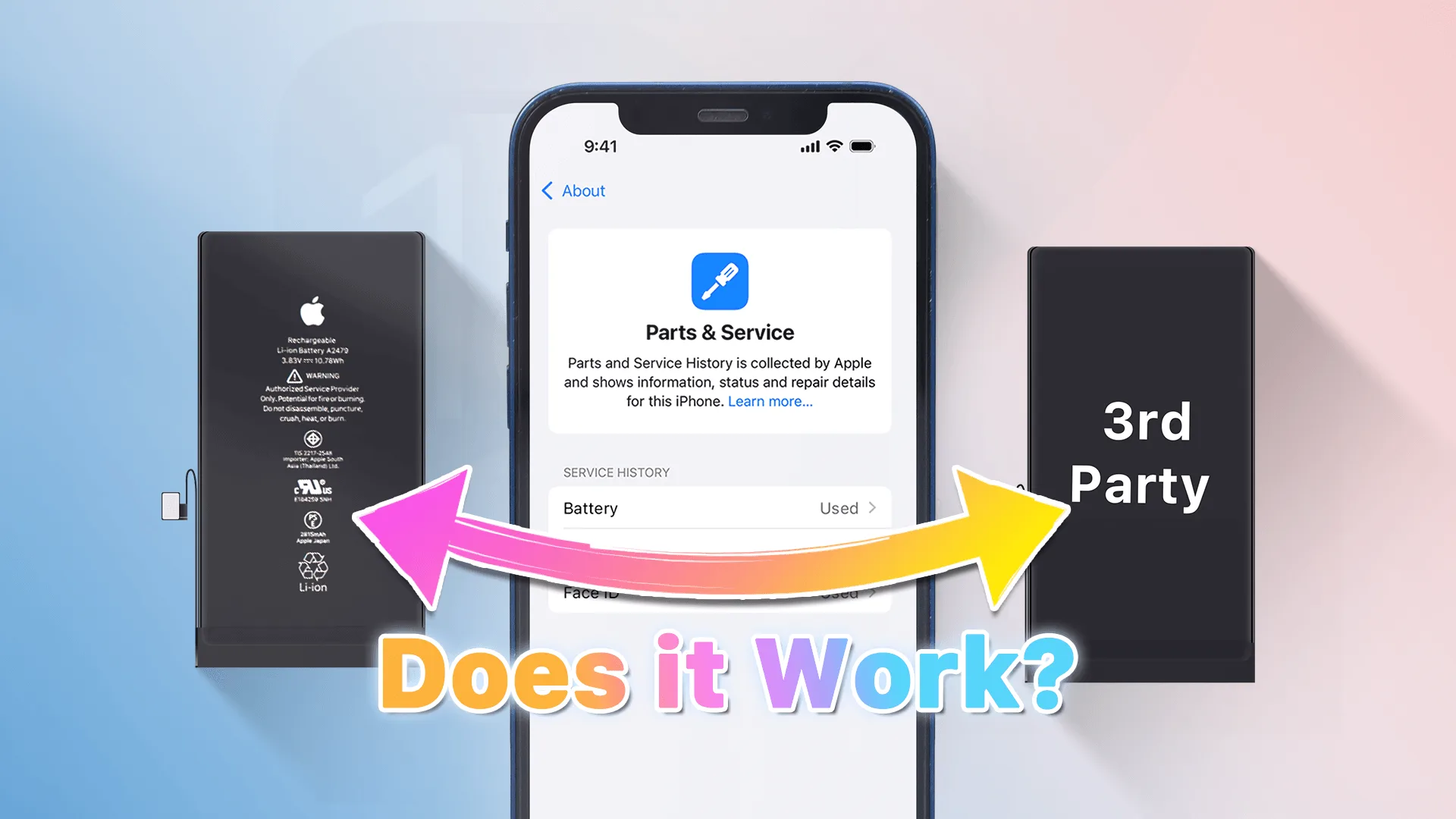
    Une large gamme de pièces de rechange, y compris Écrans de l'iPhone, piles, caméraset identification du visage ont été testés par le laboratoire de REWA Tech afin de déterminer l'impact réel de l'iOs 18.1 sur les pièces détachées.

    Remplacer l'écran Remplacer l'écran

    Avant iOS 18

    Le remplacement de l'écran de l'iPhone fait apparaître le message "Unknown Part" et le True Tone disparaît ; les problèmes sont résolus à l'aide de programmateurs de transfert et de réparation de circuits intégrés.

    Exemple : 100% Corriger le message "Unknown Part" sur l'iPhone 15 Pro après le remplacement de l'écran

    Après iOS 18.1

    Non.Type d'écranTransfert IC d'origineTransfert Capteur frontal d'origineAssistant de réparation de colsHistorique des pièces et de l'entretienVéritable tonalité
    1OEMNonOuiNonImpossible de configurerOui
    2OEMOuiOui/NonOui
    3Marché de l'après-venteNonOuiNonImpossible de configurerOui
    4Marché de l'après-venteOuiOui/NonOui
    5OEM + capteur avant appariéNonNonOuiUtiliséOui
    6Service Pack + Capteur avant appariéNonNonOuiAuthentiqueOui

    Principales conclusions

    • Tant que l'écran est doté d'un circuit intégré et d'un capteur compatibles, il n'y a pas d'historique de réparation et il n'est pas nécessaire de recourir au diagnostic de l'assistant de réparation.
    • Tous les écrans tiers prennent en charge la fonction True Tone.

    Remplacer la batterie Remplacer la batterie

    Avant iOS 18

    Message "Unknown Part", l'état de la batterie n'est pas affiché ; résolu par des solutions telles que batterie sans soudure, cellule de batterie + tag-on flex, cellule de batterie + carte de réparation.

    Exemple : Solutions de rechange pour calibrer l'état de la batterie de l'iPhone sous iOS 17.4

    Après iOS 18.1

    Non.Type de batterieAssistant de réparation de colsHistorique des pièces et de l'entretienDonnées sur la santé
    1OEM NouveauOuiAuthentique100%
    2OEM utiliséOuiUtiliséDonnées de la batterie OEM usagée
    3Aftermarket(TI ZY HF 
    Solutions)
    NonNon vérifié100%
    4Cellule de batterie + carte BMS native//Données de la batterie native

    Principales conclusions

    • Les batteries tierces ne passent toujours pas l'assistant de réparation et l'historique des pièces est enregistré comme non vérifié.
    • Les nouvelles batteries tierces remplacées dans les iPhones peuvent toutes afficher des données de santé.

    Nous avons également testé des batteries tierces sur iOS 18.0.

    Voir la vidéo : 

    Remplacer la caméra arrière

    Avant iOS 18

    Le remplacement d'une lentille seule entraîne l'affichage d'un message de pièce inconnue. Un programmateur de réparation et des câbles flexibles de réparation sont nécessaires.

    Exemple : Comment supprimer le message "pièce inconnue" de la caméra arrière pour l'iPhone 15 PM

    Après iOS 18.1

    Non.Modèle d'appareil photoAssistant de réparation de colsÉtalonnage de la caméra
    1iPhone 12OuiNon
    2iPhone 13OuiNon
    3iPhone 14OuiNon
    4iPhone 15OuiOui
    5iPhone 16OuiOui

    Principales conclusions

    Les caméras arrière des iPhone 12 à 16 peuvent être diagnostiquées par l'assistant de réparation, mais les séries iPhone 15 et 16 nécessitent un étalonnage de la caméra.

    Remplacer l'ensemble caméra frontale + Face ID

    Avant iOS 18

    Le remplacement de cet assemblage entraînera la défaillance de la fonction Face ID. Un programmateur de réparation et des câbles flexibles de réparation sont nécessaires.

    Exemple : Réparer Face ID (SANS SOUDURE) ne fonctionnant pas avec REFOX RP30

    Après iOS 18.1

    Non.Modèle d'assemblageAssistant de réparation de colsFace ID
    1iPhone 12NonNon
    2iPhone 13NonNon
    3iPhone 14NonNon
    4iPhone 15NonNon
    5iPhone 16OuiOui

    Principales conclusions

    L'ensemble caméra frontale + Face ID de l'iPhone 12-15 ne peut pas être diagnostiqué par l'assistant de réparation, seul l'iPhone 16 peut l'être.

    Résumé

    Entre iOS 18.0 et 18.1, les réparations de l'iPhone sont progressivement devenues relativement faciles, mais certains problèmes doivent encore être vérifiés. Suivez attentivement la chaîne REWA pour obtenir davantage de nouvelles technologies et d'informations.

    En outre, REWA fournit une variété d'outils de réparation et de pièces détachées pour téléphones. N'hésitez pas à consulter ou à visiter notre boutique en ligne !

    Consultez-nous : https://rewawp.iamtareq.com/wholesale/

    Visitez la boutique en ligne : https://shop.rewa.tech/

  • Les batteries de rechange peuvent-elles être appariées sur iOS 18 ?

    Les batteries de rechange peuvent-elles être appariées sur iOS 18 ?

    Dans cette vidéo, REWA Lab vous fait part de la progression complète du test de batterie sur iOS 18, nous installerons différentes batteries pour voir si elles peuvent être couplées avec l'appareil, restez à l'écoute pour d'autres vidéos professionnelles de REWA.
    Pour les outils de réparation de batterie, vous pouvez visiter le site web :
    https://rewawp.iamtareq.com/repair-tools/
    Contactez-nous pour plus de détails : +852 5167 5273 / sales@rewa.tech

  • REWA Tech Showcases à l'IFA Berlin 2024, Innovation and Empowerment (innovation et autonomisation)

    REWA Tech Showcases à l'IFA Berlin 2024, Innovation and Empowerment (innovation et autonomisation)

    Du 6 au 10 septembre, REWA Tech est ravi d'annoncer sa participation à l'IFA Berlin 2024. Cette année marque le 100e anniversaire de l'exposition IFA. Il ne met pas seulement en lumière les dernières avancées et tendances de l'industrie, mais offre également une occasion précieuse d'interactions en face-à-face avec des clients du monde entier.

    rewa tech showcases ifa berlin 2024 innovation empowerment 100th
    Figure 1. Spectacle du 100e anniversaire de l'IFA

    Rester à la pointe des dernières technologies

    Ces dernières années, les innovations technologiques se sont développées à un rythme rapide. Les fabricants chinois se sont engagés à être à l'avant-garde des développements technologiques pour les consommateurs.

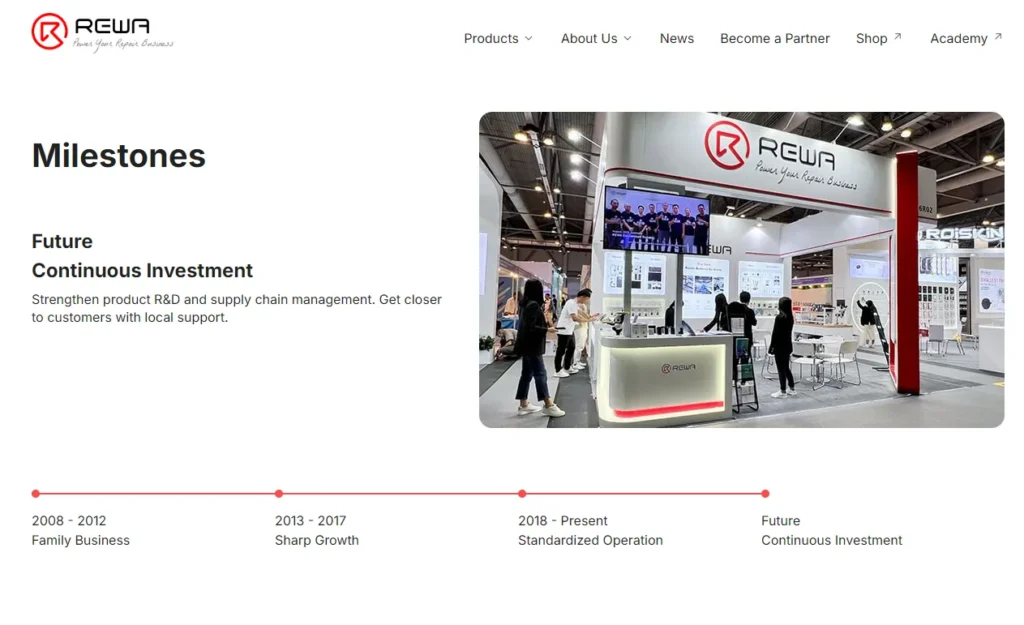
    REWA Tech a été fondée en 2008 et s'est engagée à devenir la marque leader de l'industrie dans le domaine de l'autonomisation des entreprises de réparation. La gamme de produits REWA Selected comprend assemblages d'écrans, piles, petites pièces, machines de remise à neufet outils de réparationToutes ces mesures sont destinées à stimuler l'innovation et le développement dans le secteur de la réparation.

    En participant à l'IFA Berlin 2024, REWA Tech vise à mettre en valeur ses principales forces et à favoriser des collaborations approfondies avec des partenaires et des clients mondiaux.

    rewa tech showcases ifa berlin 2024 innovation empowerment booth no
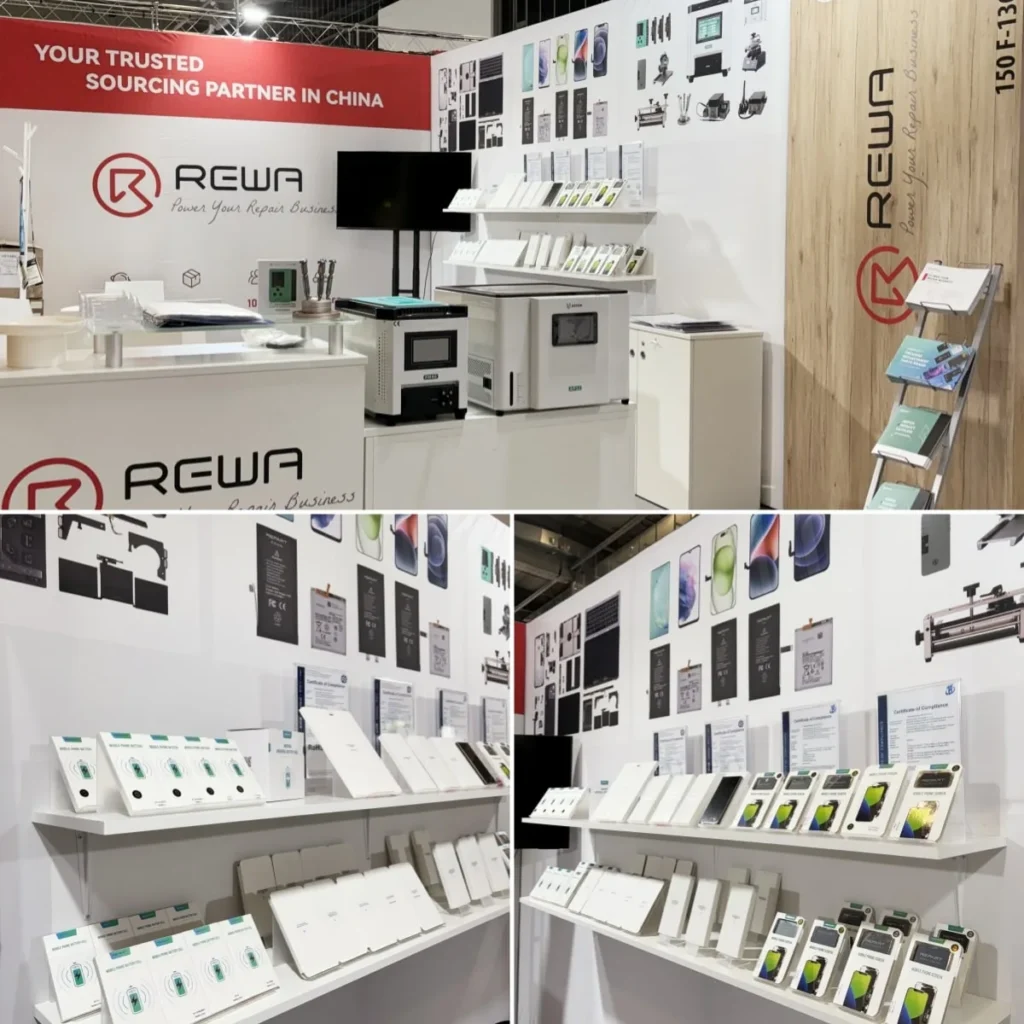
    Figure 2. Stand technique de REWA

    Les produits réels prouvent leur solidité

    Lors de l'exposition, REWA Tech a présenté ses dernières lignes de produits et solutions technologiques, y compris les pièces principales de téléphone, les machines de reconditionnement d'écran et les outils de réparation efficaces. Nos experts techniques et nos représentants commerciaux se sont engagés chaleureusement avec les participants, discutant des derniers développements et défis en matière de réparation de téléphones.
    De nombreux exposants ont montré un grand intérêt pour les produits sélectionnés par REWA, et certains clients potentiels ont eu des échanges approfondis avec les représentants de REWA.

    rewa tech showcases ifa berlin 2024 innovation empowerment communicate
    Figure 3. Communiquer avec les exposants

    Par exemple, la REFOX AP32, une machine à polir les écrans de bureau à deux fentes. Elle est conçue pour éliminer efficacement les rayures tout en étant facile à utiliser. Contrairement à de nombreux modèles plus grands, l'AP32 prend peu de place dans les magasins de réparation. La machine a suscité un intérêt considérable, de nombreux clients demandant des détails et des prix. Plusieurs clients ont commandé cet outil immédiatement pour l'intégrer dans leur entreprise.

    rewa tech showcases ifa berlin 2024 innovation empowerment customers
    Figure 4. Les clients demandent des détails et le prix de l'AP32

    Établir des relations avec des clients internationaux

    REWA Tech a pu nouer des relations étroites avec ses clients et renforcer ses partenariats avec les exposants de l'industrie lors de cet événement. L'entreprise se réjouit de continuer à fournir des services et une assistance de haute qualité à la communauté mondiale des réparateurs, en favorisant le progrès et la croissance dans l'industrie.

    rewa tech showcases ifa berlin 2024 innovation empowerment cooperation
    Figure 5. Coopération et amitié

    Événements à venir

    En outre, REWA Tech participera au MWC 2024 à Las Vegas et au GITEX 2024 à Dubaï. Au plaisir de vous voir !
    Pour plus d'informations, veuillez nous contacter : https://rewawp.iamtareq.com/wholesale/

  • Lancement du nouveau site web de REWA : Propulsez votre entreprise de réparation

    Lancement du nouveau site web de REWA : Propulsez votre entreprise de réparation

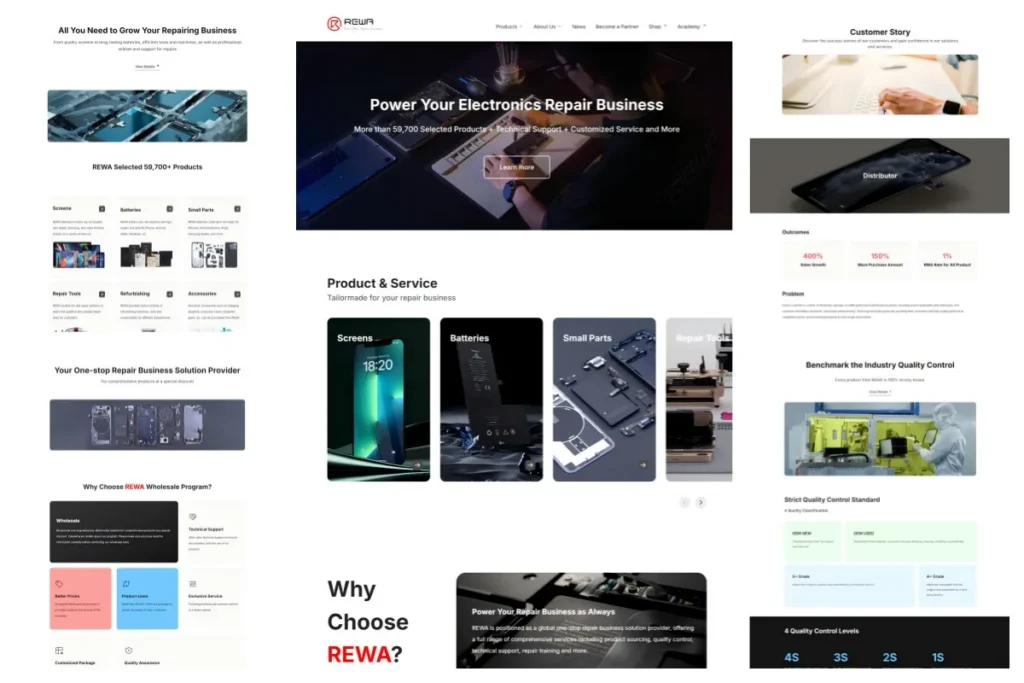
    Nous avons le plaisir d'annoncer que Site officiel de REWA Tech a été mis à jour ! Cette mise à jour est conçue pour les entreprises de réparation de téléphones B2B. Non seulement la conception visuelle a été améliorée, mais elle offre également plus d'informations sur les produits et les services. Cela vous aidera à vous démarquer de la concurrence dans le secteur de la réparation.

    rewa new website released power your repair business tech

    Des informations riches sur les produits et les services

    En tant que grossiste en pièces détachées pour téléphones, nous avons mis à jour la page d'affichage des produits et services afin de fournir un aperçu plus détaillé des solutions, vous permettant ainsi de trouver la solution qui répond le mieux aux besoins de votre entreprise.
    Vérifier les détails : https://rewawp.iamtareq.com/product/

    rewa new website released power your repair business product

    Nouveau design de l'interface utilisateur

    En adoptant un style de conception moderne, il offre une expérience de navigation plus professionnelle et plus concise. Profitez d'une navigation fluide et d'un plaisir visuel, que vous recherchiez des informations ou que vous exploriez des solutions.

    Améliorer l'expérience des utilisateurs

    L'optimisation de la présentation du contenu et de l'architecture du site web permet également d'améliorer considérablement l'expérience de navigation sur les appareils mobiles. Cela vous permet d'accéder plus efficacement au site web à tout moment et en tout lieu et de prendre des décisions commerciales.

    Pourquoi choisir REWA ?

    En tant que leader dans le domaine des solutions commerciales de réparation à guichet unique, REWA Tech s'est toujours engagé à fournir à ses clients les solutions les plus complètes grâce aux éléments suivants assemblages d'écrans, piles, petites pièces, réparation et produits de rénovation et l'assistance technique. Ces services comprennent services de formationNous avons également mis à jour notre site web afin de refléter l'évolution de notre marque et notre compréhension la plus récente des besoins de nos clients. En outre, nous avons mis à jour notre site web afin de refléter l'évolution de notre marque et notre compréhension récente des besoins des clients.

    rewa new website released power your repair business why

    Explorer maintenant

    Visiter Site officiel de REWA Tech maintenant pour explorer de nouvelles solutions de réparation !
    Nous vous invitons sincèrement à visiter le nouveau site officiel pour découvrir son nouveau design et ses nouvelles fonctions. Si vous avez des questions ou des commentaires, n'hésitez pas à nous contacter. Nous nous réjouissons de collaborer avec vous pour assurer la réussite de votre entreprise.

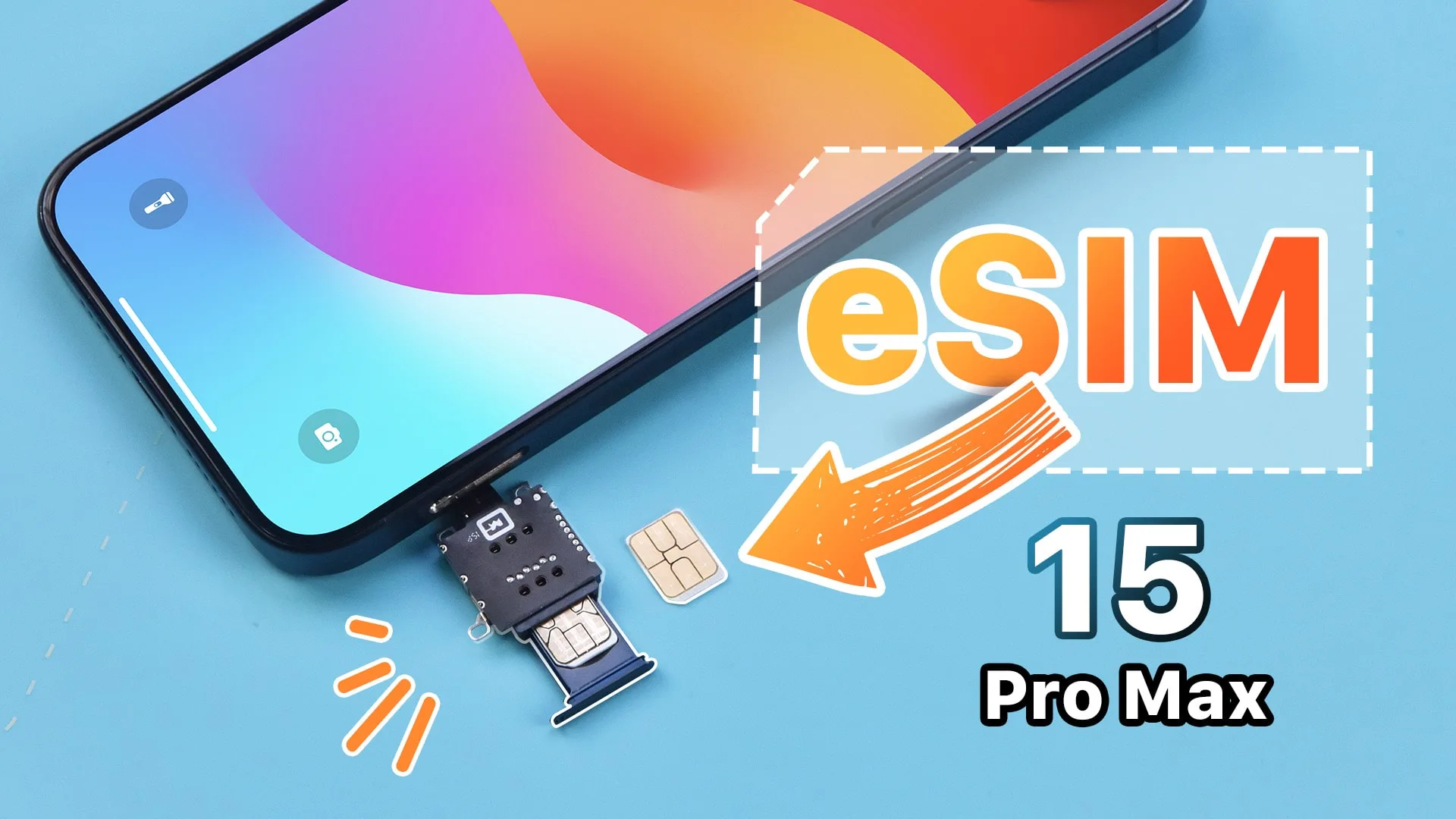
  • Débloquer l'iPhone US 15 PM Potentiel : Convertir une eSIM en double SIM physique

    Débloquer l'iPhone US 15 PM Potentiel : Convertir une eSIM en double SIM physique

    En raison de la différence de structure de la carte mère entre la version américaine de l'iPhone 14 Pro Max et celle de l'iPhone 15 Pro Max, la transformation de l'eSIM en double SIM devient plus délicate.
    Nous allons partager avec vous un nouveau hack sur la façon de convertir une eSIM en double SIM physique, mais plus important encore, nous allons discuter de l'intérêt ou non de cette conversion.
    Pour les outils de réparation et les remplacements d'appareils photo, vous pouvez visiter le site web :

    https://rewawp.iamtareq.com/repair-tools/ ; https://rewawp.iamtareq.com/battery/

    Contactez-nous pour plus de détails : +852 5167 5273 / sales@rewa.tech

  • Batteries de rechange pour iPhone : Production massive et inspection professionnelle

    Batteries de rechange pour iPhone : Production massive et inspection professionnelle

    Dans le blog précédent : Qu'est-ce qu'une batterie qualifiée ? REWA a expliqué quand une batterie doit être remplacée et quelles sont les normes que nous appliquons pour le remplacement des batteries.

    Nous allons maintenant présenter le processus de production détaillé et les procédures de test.

    Les batteries de qualité supérieure sont fabriquées à partir d'excellents matériaux, d'équipements d'automatisation avancés et de normes d'inspection et d'essai strictes. Dans les usines de haut niveau, les batteries de téléphone sont généralement fabriquées à l'aide d'équipements hautement automatisés et de matériaux de qualité supérieure.

    Cependant, il existe encore de nombreux petits fabricants qui utilisent des méthodes d'assemblage manuelles ou des matériaux de mauvaise qualité, ce qui explique la grande diversité des piles sur le marché.

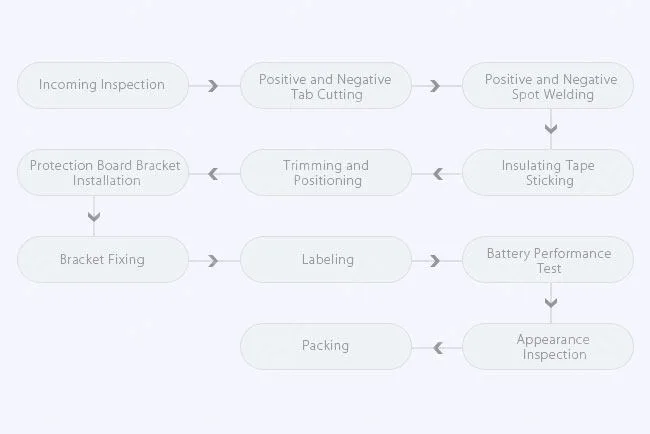
    Quel devrait être le processus complet de production d'une batterie ?

    Processus de production

    Processus de production

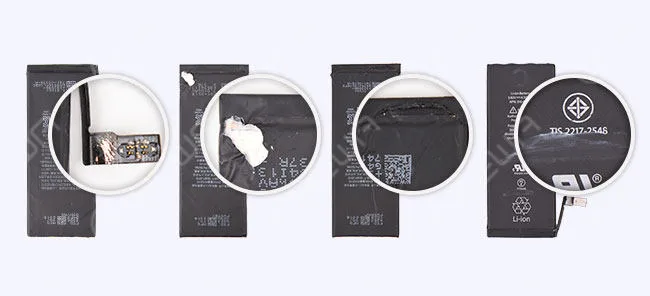
    L'inspection de l'aspect de la batterie est un moyen courant et facile d'inspecter les batteries de votre téléphone, mais elle ne fonctionne pas toujours, faute de valeurs et de résultats précis.

    Certaines défaillances des piles ne sont pas faciles à repérer à l'œil nu. Cependant, les piles au lithium doivent être soumises à des tests stricts pour garantir leur sécurité et leur qualité.

    Nous présentons ici les procédures de test professionnelles et complètes.

    Le test peut être divisé en trois parties : Inspection de l'apparence, test de performance de base et test de performance physique.

    Inspection de l'apparence

    Inspection de l'aspect : bris, perte de peinture, fissure, corrosion, données étiquetées

    Inspection de l'aspect : bris, perte de peinture, fissure, corrosion, données étiquetées

    Méthodes et procédures d'essai de base

    Méthodes et procédures d'essai de base

    Procédures de test de performance physique 

    D'autres tests de performance physique sont effectués dans des situations extrêmes, afin de vérifier si la batterie peut se plier, se déformer, s'enflammer et exploser dans les différents environnements simulés.

    1. Test de simulation basse pression et haute altitude 

    Cette procédure permet de tester les performances de la batterie en matière de sécurité du transport aérien à une pression inférieure à 11,6 kPa.

    Résultat : Après 360 minutes, tous les échantillons fonctionnent normalement, sans feu ni explosion. /Les échantillons n'explosent pas et ne prennent pas feu.

    2. Temp. et Humi. Test 

    Ce test permet de vérifier l'adaptabilité à la température de la batterie, traitée à une température extrême de 72±2℃ et -40±2℃. 

    Les batteries sont stockées pendant 6 heures à 72±2℃, puis 6 heures à -40±2℃, pour un total de 10 cycles.

    Résultat : Après 10 cycles, tous les échantillons fonctionnent normalement. Pas de bombement, d'incendie ou d'explosion / Les échantillons n'explosent pas et ne prennent pas feu.

    3. Essai de vibration 

    Le test de vibration est utilisé pour vérifier la performance anti-vibration de la batterie pendant le transport et l'utilisation. Le test est un balayage sinusoïdal : 7Hz - 200Hz, 15 min/balayage, 12 fois, 3 heures au total.

    Résultat : Tous les échantillons se comportent normalement

    4. Test de capacité 

    Il s'agit de tester la capacité réelle de la batterie.

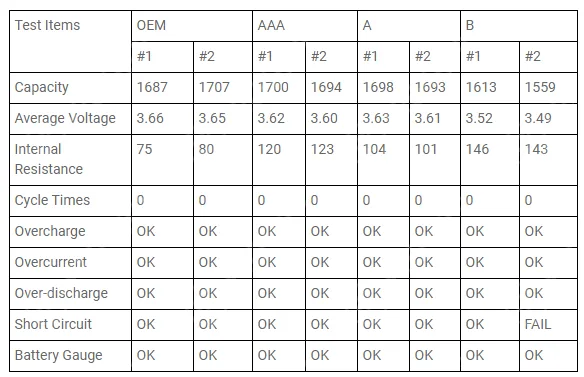
    Résultat : L'OEM est le plus performant. Les piles AAA et A arrivent en deuxième position et les valeurs sont très proches. Les piles de qualité B sont bien moins performantes que les trois types de piles susmentionnés.

    5. Test d'impact 

    Le test d'impact simule l'impact et le choc de la batterie.

    Appliquer une accélération de 561,5 cm/s2 à la batterie pour vérifier si elle sera écrasée ou déformée en cas de surcharge.

    Résultat : Les piles de qualité B présentent des problèmes de pliage et de déformation. Les autres échantillons fonctionnent normalement.

    6. Essai de court-circuit externe 

    Ce test simule un court-circuit externe aux bornes de la cellule ou de la batterie. Lorsque la température monte à 55℃, actionnez l'interrupteur pour provoquer un court-circuit, puis vérifiez si la batterie explose.

    Résultat : Après 2 heures de repos, tous les échantillons fonctionnent normalement. Pas d'incendie ni d'explosion. /Les échantillons n'explosent pas et ne prennent pas feu.

    7. Test de chute 

    Le test de chute est effectué à une hauteur de 1,2 mètre pour tester la dureté de la batterie et sa capacité à résister à la déformation.

    Résultat : Les piles de qualité B présentent des problèmes de pliage et de déformation. Les autres échantillons fonctionnent normalement.

    8. Test d'écrasement 

    Chaque pile est soumise à une force d'écrasement de 1,3kN pendant 0,1s. Après 30 minutes, on vérifie si la pile s'enflamme, explose ou se déforme.

    Résultat : Tous les échantillons se comportent normalement.

    9. Test d'abus thermique 

    L'objectif des tests d'abus est de vérifier que la batterie ne constitue pas un danger pour l'utilisateur en raison d'un abus thermique accidentel ou délibéré dans toutes les conditions d'utilisation concevables.

    Après la montée en température pendant 26 minutes, maintenir à 130℃ pendant 10 minutes, vérifier la batterie pour voir si elle va s'enflammer ou exploser.

    Résultat : Toutes les piles présentent un problème de gonflement, pas d'incendie ni d'explosion.

    10. Test de combustion 

    L'objectif de cette procédure est de tester les performances de sécurité de la batterie. Mettez la batterie dans la machine, allumez-la pour vérifier si elle explose et si les cendres sont agglomérées.

    Résultat : Après 30 minutes, les piles ont complètement brûlé, sans explosion, avec des cendres agglomérées.

    Chaque batterie REWA doit subir des tests rigoureux de performance de base et de performance physique, et seuls les produits qualifiés peuvent être livrés à l'entrepôt. Cela permet de garantir que chaque batterie que vous recevez est de qualité supérieure, sûre et fiable.

    Certifications

    Depuis des années, notre entreprise est fondée sur la conviction que "la qualité avant tout". Les piles de REWA ont passé une série de certifications internationales, telles que UL, CE, FCC, etc.

    Les résultats et l'analyse des tests ci-dessus nous permettent de conclure que les piles OEM, AAA et A sont bien meilleures et plus sûres que les piles de qualité B.

    Maintenant qu'il y a une pénurie de piles OEM, les piles économiques de qualité AAA et A deviennent sans aucun doute votre premier choix.Chaque pile de REWA a été rigoureusement testée.

    Notre équipe technique et de contrôle de la qualité peut vous proposer des solutions adaptées à vos besoins et vous conseiller sur les remplacements de piles les plus efficaces et les plus économiques.

    Si vous avez des questions ou des demandes, n'hésitez pas à nous contacter.

  • Comment réparer la décharge rapide de la batterie de l'iPhone X – Un défaut se cache sous le lecteur de carte

    Comment réparer la décharge rapide de la batterie de l'iPhone X – Un défaut se cache sous le lecteur de carte

    The iPhone X battery is draining fast with an overheating issue. After measurement, the motherboard is found to have a current leakage. Since the current is too small, rosin detecting is unable to find the fault. Therefore, we use a thermal imager to find the faulty part. After multiple checks, the faulty part is found to be under the card reader.

  • iPhone Aftermarket Screen & Battery Compatibility Test On iOS 13

    iPhone Aftermarket Screen & Battery Compatibility Test On iOS 13

    iOS 13 has been officially released for a month. In order to provide our clients with featuring stable quality, REWA LAB has conducted a series of compatibility tests for iPhone series from iPhone 6s to iPhone X with OEM NEW, A+Grade Aftermarket Screens and Aftermarket Batteries respectively. Now, Let’s take iPhone 6s, iPhone 8P, and iPhone X as examples and show you how the test goes.

    Tips: iOS 13 only supports the iPhone 6s and later models.

  • Comparaison de l'autonomie de la batterie de l'iPhone 13 et de l'iPhone 12

    Comparaison de l'autonomie de la batterie de l'iPhone 13 et de l'iPhone 12

    Apple a distribué quatre iPhone 13, iPhone 13 MINI, iPhone 13 Pro et iPhone 13 Pro Max en 2021, malgré le développement de la batterie.

    Il a a également acquis une tonne La nouvelle version de l'appareil présente de nombreuses améliorations, ainsi qu'une batterie d'une plus grande autonomie. Voyons les différences par rapport à l'iPhone 12.

    Le modèle iPhone 13 d'Apple est indiscernable de l'apparence de l'iPhone 12, ce qui compte c'est que l'iPhone 13 a une épaisseur de 0,25 mm contrairement à l'iPhone 12, qui est essentiellement impacté par une batterie de plus grande capacité et un autre module caméra.

    iPhone 13 épaisseur : 7,65 mm 

    iPhone 12 épaisseur : 7,4 mm 

    iPhone La capacité de la batterie de l'iPhone 13 est augmentée, 8% pour l'iPhone 13, 9% pour l'iPhone 13 et l'iPhone 13, la capacité de la batterie de l'iPhone 13 Pro Max atteignant 18%, mais en outre, le Pour la première fois, l'iPhone dispose d'une batterie d'une capacité supérieure à 4 000 mAh.

    iPhone La capacité de la batterie 13 mini est de 2406mAh 

    iPhone 13 La capacité de la batterie est de 3095mAh 

    iPhone La capacité de la batterie du 13 Pro est de 3095mAh 

    iPhone La capacité de la batterie du 13 Pro Max est de 4352mAh 

    iPhone 13 Comparaison de l'autonomie de la batterie avec l'iPhone 12

    Comme l'a indiqué Apple lors de l'événement entièrement numérique "California streaming" du 14 septembre, l'autonomie de la batterie de la série iPhone 13 sur la fortification 1,5 heure à 2,5 heures de plus que l'iPhone série 12, les informations sont les suivantes par ce qui suit :

    iPhone L'autonomie de la batterie de l'iPhone 13 mini a augmenté de 1,5 heure par rapport à celle de l'iPhone 12 mini 

    iPhone 13 autonomie de la batterie est augmenté de 2,5 heures par rapport à l'iPhone 12 

    iPhone 13 Pro Autonomie de la batterie pour stimuler 1,5 heure par rapport à l'iPhone 12 Pro 

    iPhone L'autonomie de la batterie du 13 Pro Max est supérieure à 2,5 heures que l'iPhone 12 Pro Max 

    La série iPhone 13 améliore entièrement la capacité de la batterie et est équipée de 5 puces bioniques A15 nano-améliorées pour réduire la consommation d'énergie, ce qui permettra de réduire la consommation d'énergie. faire Batterie de l'iPhone 13 le renforcement de la vie.

    L'épaisseur de 0,25 mm contraste avec l'iPhone 12, qui est essentiellement impacté par une batterie de plus grande capacité et un autre module caméra.

    Épaisseur de l'iPhone 13 : 7,65 mm 

    Épaisseur de l'iPhone 12 : 7,4 mm 

    La capacité de la batterie de l'iPhone 13 a augmenté, 8% pour l'iPhone 13, 9% pour l'iPhone 13 et l'iPhone 13, où la capacité de la batterie de l'iPhone 13 Pro Max a atteint 18%, mais en plus l'iPhone a une capacité de batterie de plus de 4000mAh pour la première fois.

    La capacité de la batterie de l'iPhone 13 mini est de 2406mAh 

    La capacité de la batterie de l'iPhone 13 est de 3095mAh 

    La capacité de la batterie de l'iPhone 13 pro est de 3095mAh 

    La capacité de la batterie de l'iPhone 13 Pro Max est de 4352mAh 

    Comparaison de l'autonomie de la batterie de l'iPhone 13 avec celle de l'iPhone 12

    Comme l'indique l'événement entièrement numérique "California streaming" organisé par Apple le 14 septembre, l'autonomie de la batterie de la série iPhone 13 a été augmentée de 1,5 heure à 2,5 heures par rapport à celle de la série iPhone 12, selon les informations suivantes :

    L'autonomie de l'iPhone 13 mini augmentera de 1,5 heure par rapport à l'iPhone 12 mini 

    L'autonomie de l'iPhone 13 augmente de 2,5 heures par rapport à l'iPhone 12 

    L'autonomie de l'iPhone 13 Pro augmentera de 1,5 heure par rapport à l'iPhone 12 Pro 

    L'autonomie de l'iPhone 13 Pro Max est supérieure à 2,5 heures par rapport à l'iPhone 12 Pro Max 

    La série iPhone 13 améliore entièrement la capacité de la batterie et est équipée de 5 puces bioniques A15 nano-améliorées pour réduire la consommation d'énergie, ce qui renforcera la durée de vie de la batterie de l'iPhone 13.

  • How to improve iPhone battery life!

    How to improve iPhone battery life!

    Watching videos on YouTube, reading news, playing games and replying email will all consume the battery life greatly.

    There are many ways that can be used to save power. Some are not very convenient or not effective, while some are useless on the latest operating system, but below are proven ways to extend battery life.

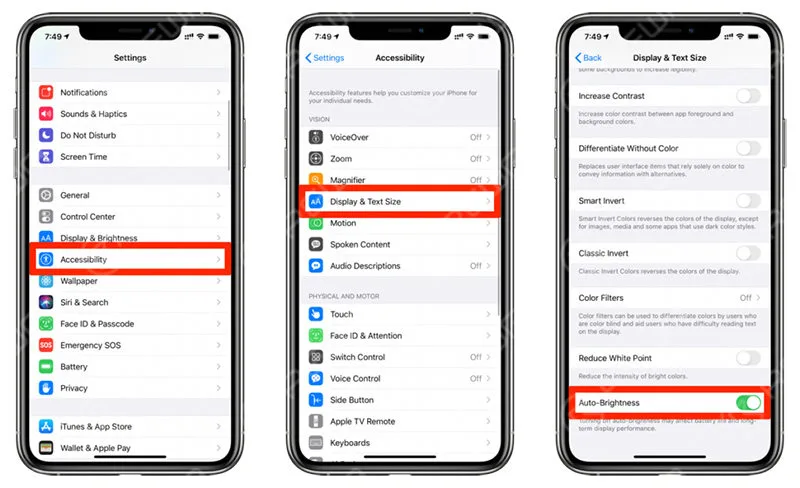
    Turn off auto- brightness

    The brighter the screen, the faster the power consumed by the iPhone battery.

    Turn off auto- brightness

    Go to Settings > Accessibility > Display & Text Size > Auto-Brightness.

    The brightness of the screen depends on the surrounding environment. Turning off this feature can avoid unnecessary power consumption. In the future, if you want to change the brightness, open the control center and use the slider to control the screen brightness.

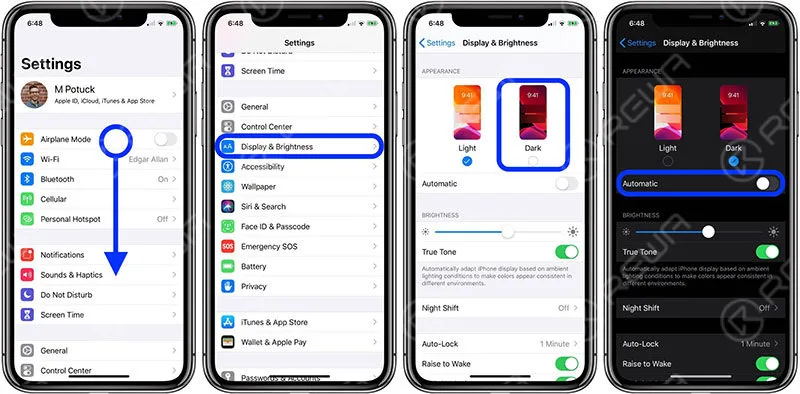
    Switch to dark mode

    Dark mode is a feature starting from iOS 13. It browses the part that is displayed in the white so far and switches to color matching in black.OLED’s iPhone will help increase the battery. OLED does not use the power to display in black, so dark mode is used to increase the battery time.

    The corresponding model is as follows

    iPhone X

    iPhone XS / XS Max

    iPhone 11 Pro / Pro Max

    iPhone 12/12 Mini / 12 Pro / 12 Pro Max

    Setting – display and brightness, light and dark, switch here

    Switch to dark mode

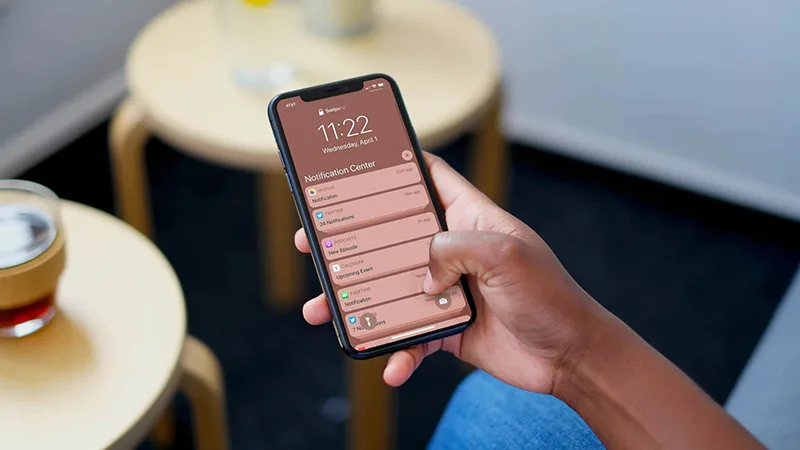
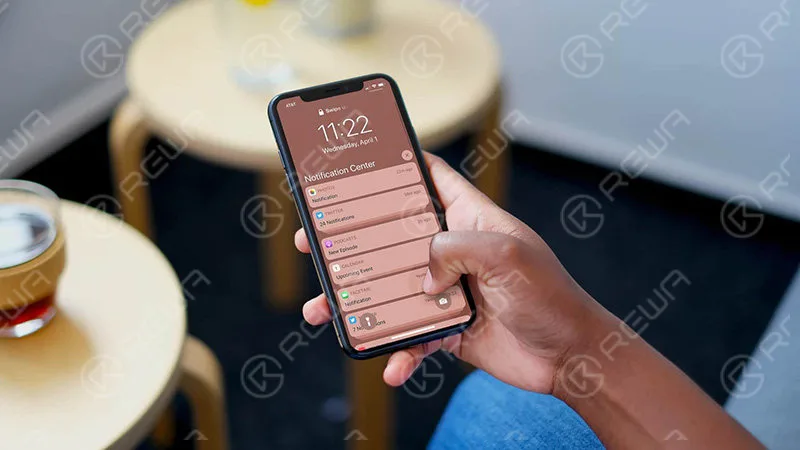
    Reduce unnecessary notifications

    When the iPhone receives the notification, the battery is powered by the battery, so you can manage the battery consumption by managing the required and unnecessary notifications.

    Which application notification is not important, turn off the notice.

    Reduce unnecessary notifications

    Open the “Settings” app and proceed to “Notification”. Then select the app from the list and switch off “Allow notification” and disable it.

    Conclusion :

    This time, we introduced settings to suppress the battery consumption of the iPhone.

    By customizing the 3 choices introduced above, the battery consumption of the day is considerably reduced.