Etiqueta: batería del iphone

  • iPhone 18 Pro Teardown: What Changed Inside and How Does It Affect Repairability

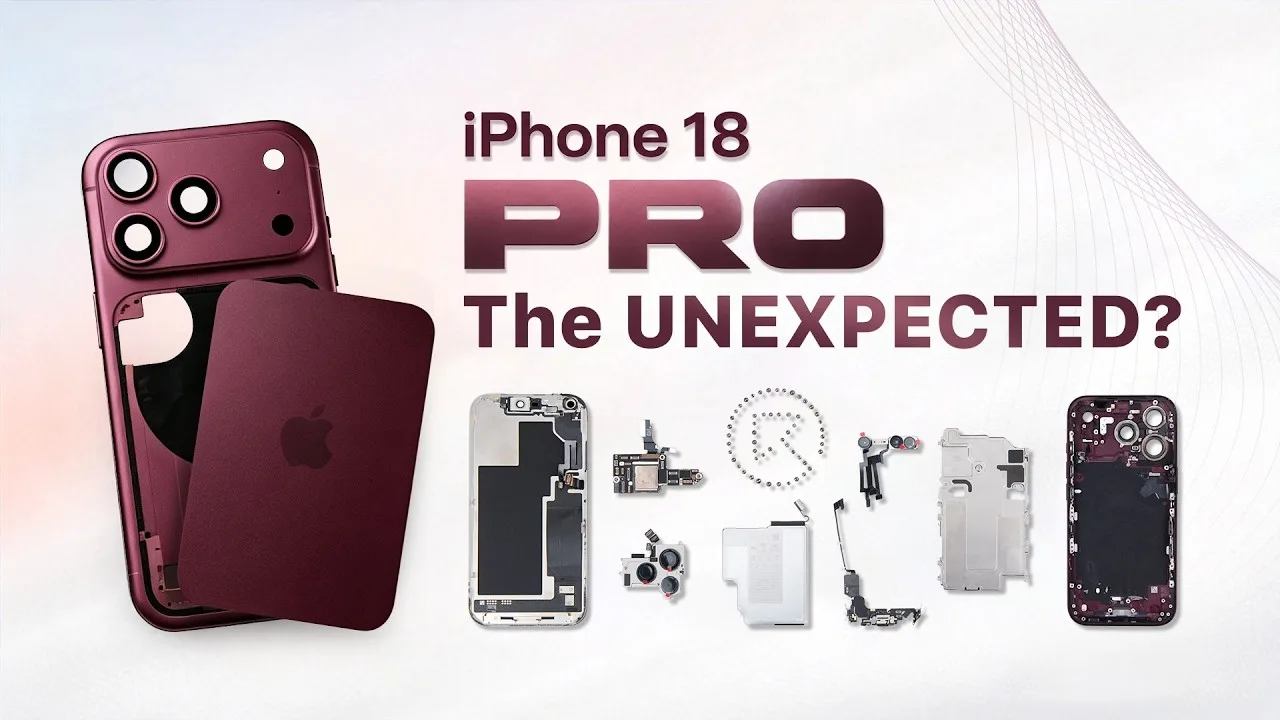
    iPhone 18 Pro Teardown: What Changed Inside and How Does It Affect Repairability

    The iPhone 18 Pro brings several significant changes beneath its familiar exterior. From a smaller Dynamic Island and a new under-display infrared camera to a dramatically larger vapor chamber and a redesigned motherboard layout, Apple has changed more than just the phone’s appearance.

    In this full teardown by REWA Lab, we dive deep into the internal structural changes and analyze what these updates mean for third-party repair shops and aftermarket component manufacturers.

    Step-by-Step Disassembly Process

    Opening the iPhone 18 Pro requires specialized repair tools and a cautious approach to avoid damaging internal flexes and sensors. Standard safety and prep steps are as follows:

    Preparation Before Teardown: Power off the device and remove the bottom screws with the Pentalobe screwdriver.
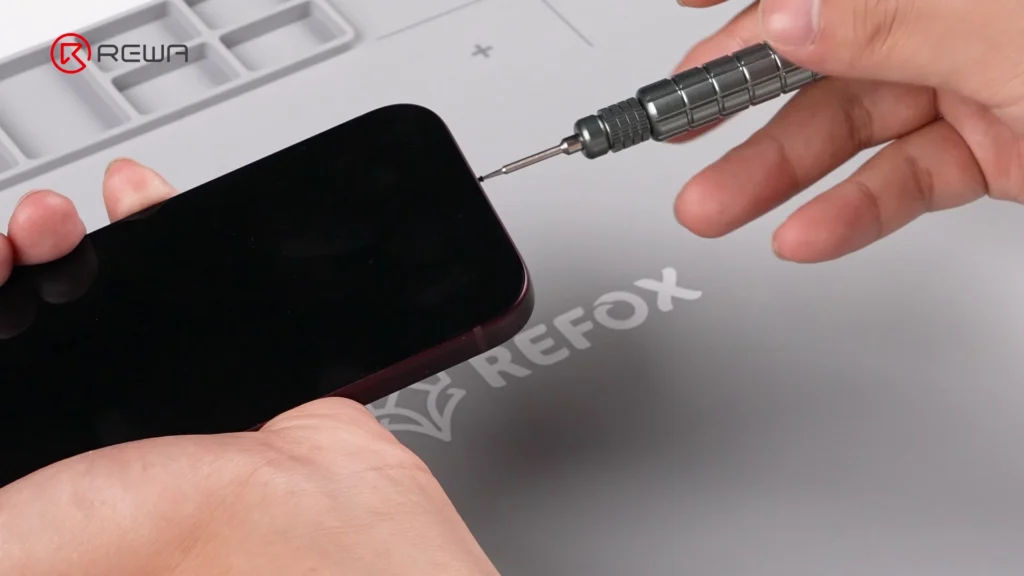
    Removing the bottom screw of an iPhone using a precision Pentalobe screwdriver

    Screen Removal: Heat the screen to soften the perimeter waterproof adhesive. Use an opening tool with suction cup and alcohol isopropílico to gently slice through the seal with an opening pick.

    Camera Protection: Cover the front camera module with protective sponge stickers to prevent dust or scratches.

    Bracket & Flex Cable Disconnection: Unscrew and remove the battery and display connector bracket. Disconnect the battery flex cable, display cable, and front sensor cable to free the screen.

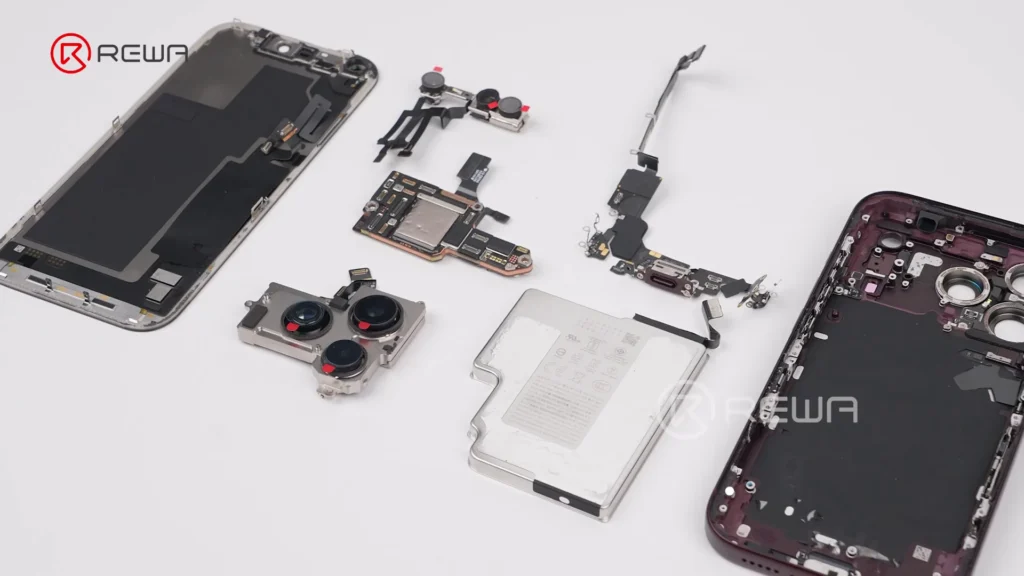
    Vapor Chamber & Cameras: Unscrew the vapor chamber using a 4IP screwdriver. Disconnect and remove the front / rear camera modules.
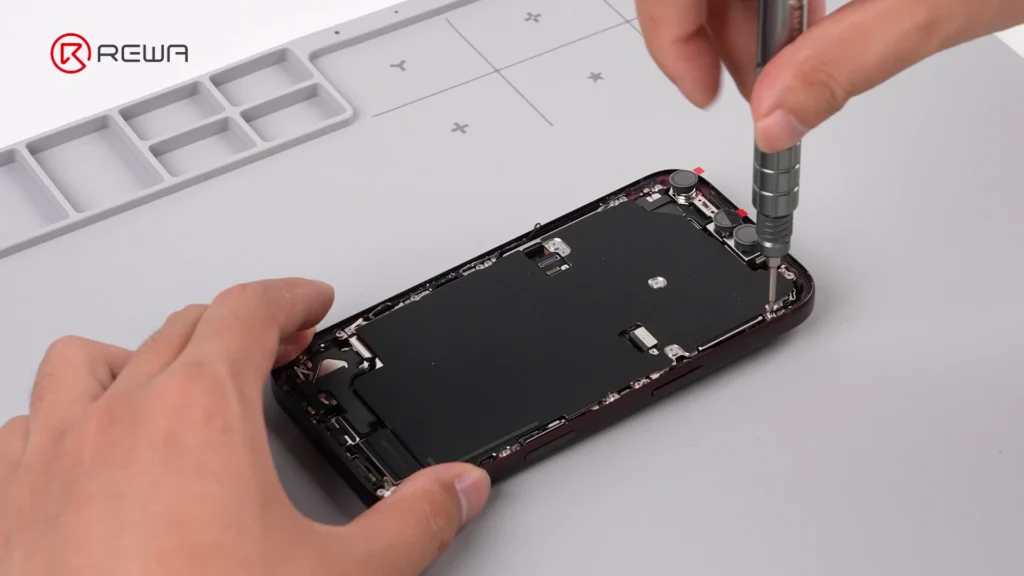
    using a screwdriver to open iPhone 18 Pro for teardown

    Motherboard & Peripheral Removal: Unscrew and flip over the motherboard to disconnect the wireless charging coil. Remove flashlight, LiDAR, SIM tray, SIM card reader, bottom speaker, charging port, Taptic Engine, and microphone in sequence.
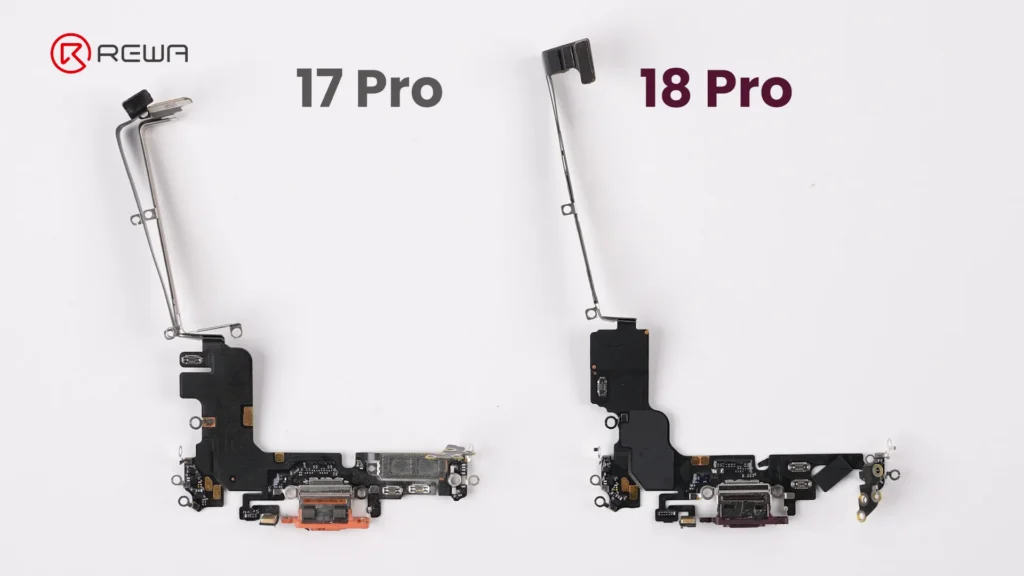
    iphone 18 pro teardown what changed inside how does it affect 3

    Battery Debonding: Apply a 9V DC voltage between the silver battery tab (positive probe) and the vapor chamber (negative probe) to electronically deactivate the adhesive, allowing easy battery removal.
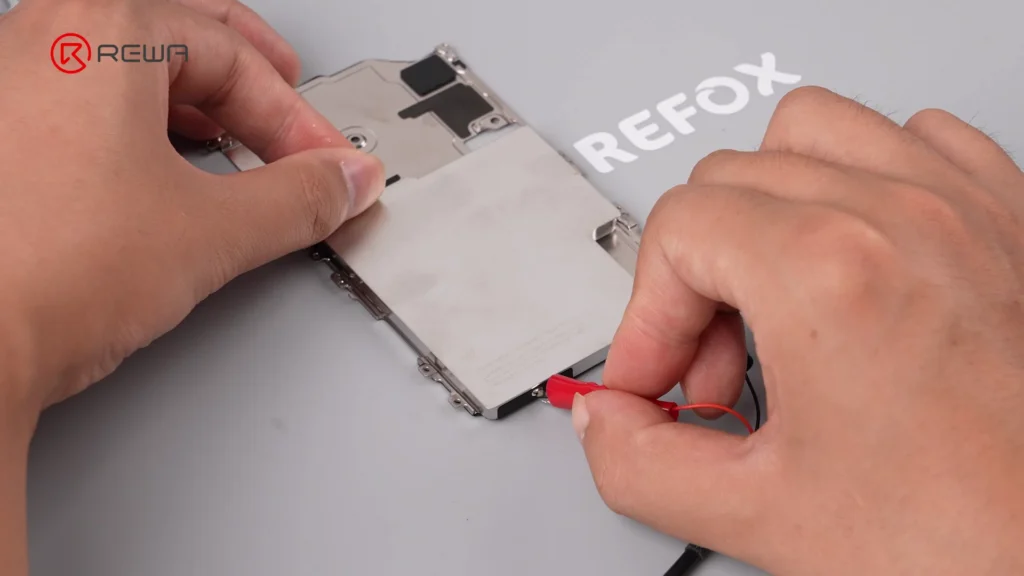
    iphone 18 pro teardown what changed inside how does it affect 4

    Display & Dynamic Island: Under-Display Infrared Tech

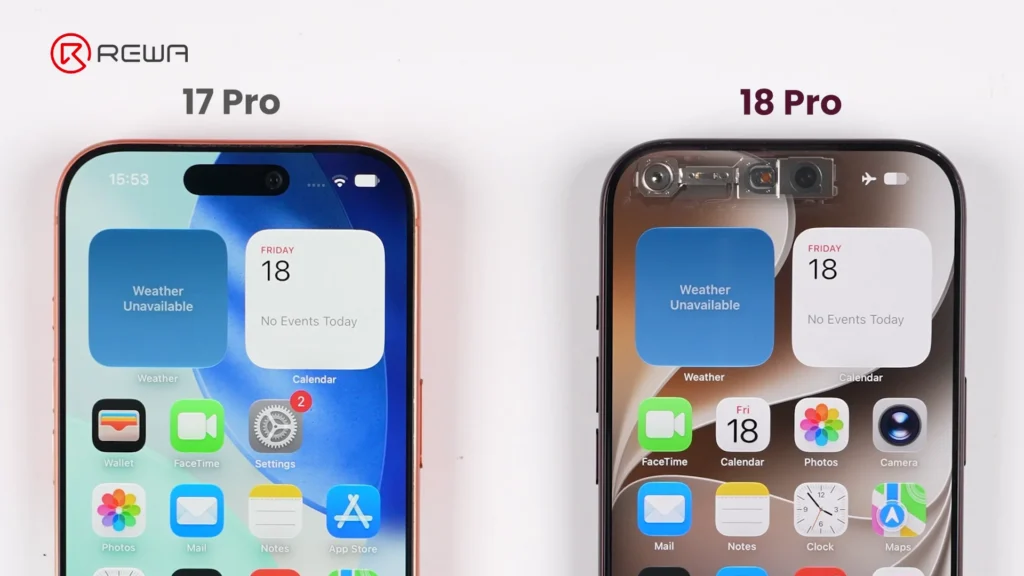
    Apple’s smaller Dynamic Island introduces a more complex under-display optical structure, creating new challenges for display refurbishment. This shrink is achieved by relocating the infrared camera under the display assembly and positioning it near the screen corner.
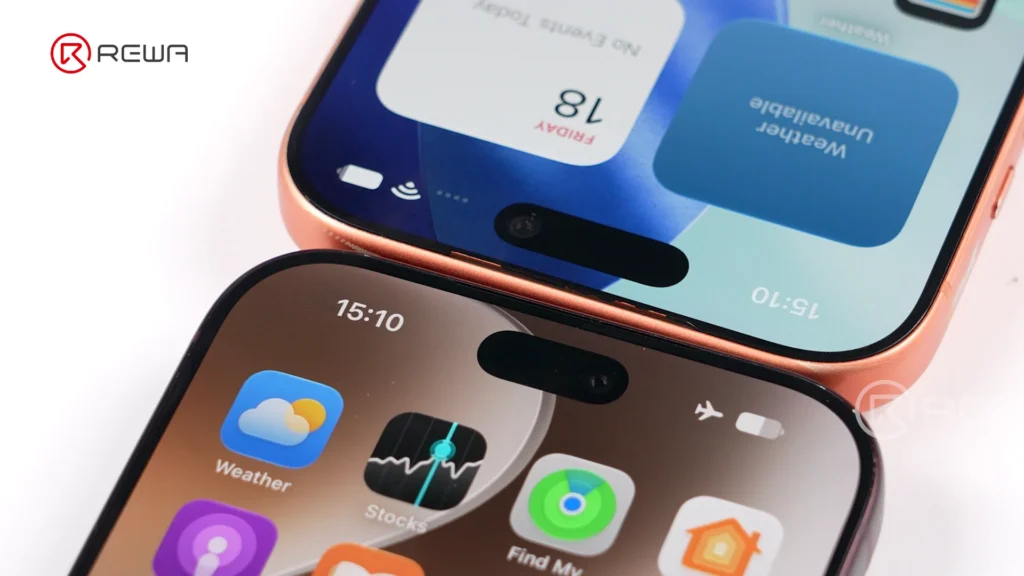
    iphone 18 pro teardown what changed inside how does it affect 5
    iphone 18 pro teardown what changed inside how does it affect 6

    Key display architecture updates include:

    Adjusted Pixel Matrix: The display above the infrared camera features a modified pixel density and arrangement to allow infrared light transmission for Face ID functionality.

    iphone 18 pro teardown what changed inside how does it affect 7

    Unfixed Flex Cable: The display flex cable is no longer secured with heavy adhesive, making screen separation cleaner during repair and refurbishment.

    Aftermarket Challenge: Third-party display manufacturers will face higher precision requirements to replicate the light-transmitting pixel window for Face ID functionality.

    Motherboard Architecture: Higher Difficulty for Micro-Soldering

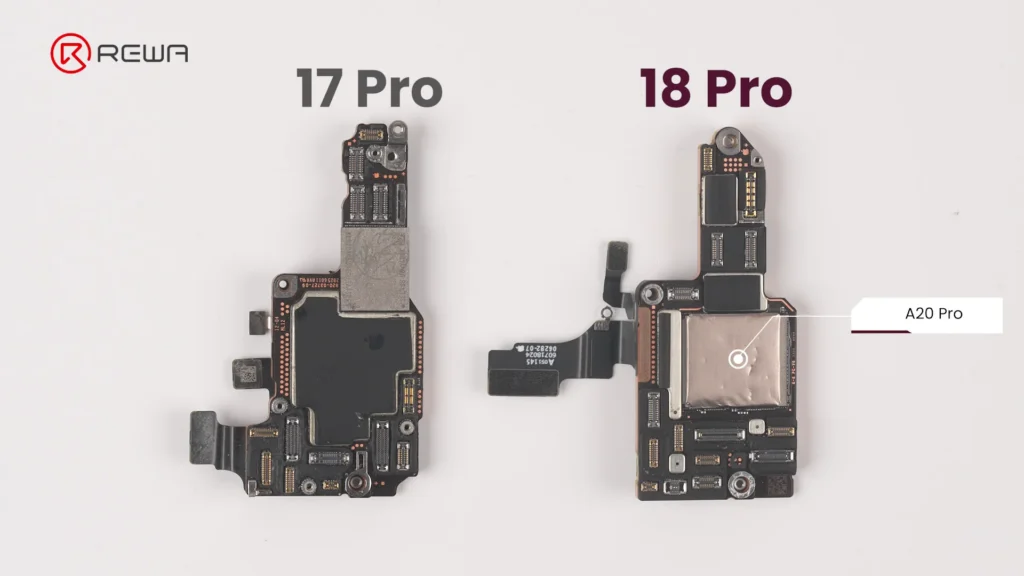
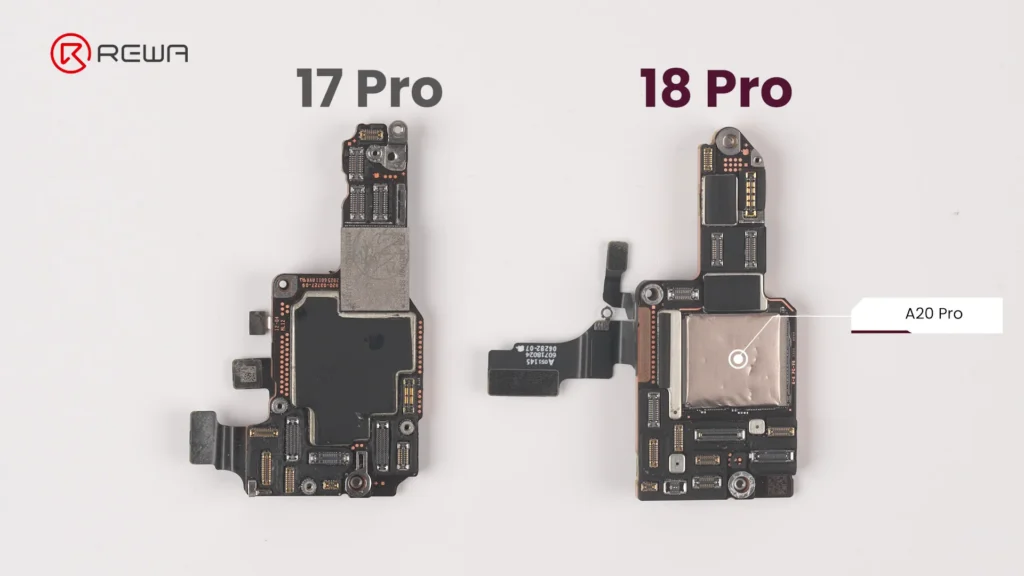
    The updated motherboard layout places crucial chips in vulnerable locations while sandwiching NAND and power IC between layers. For micro-soldering technicians, the iPhone 18 Pro motherboard presents an elevated level of complexity.
    iphone 18 pro teardown what changed inside how does it affect 8

    Apple has reorganized chip placement and shielding:

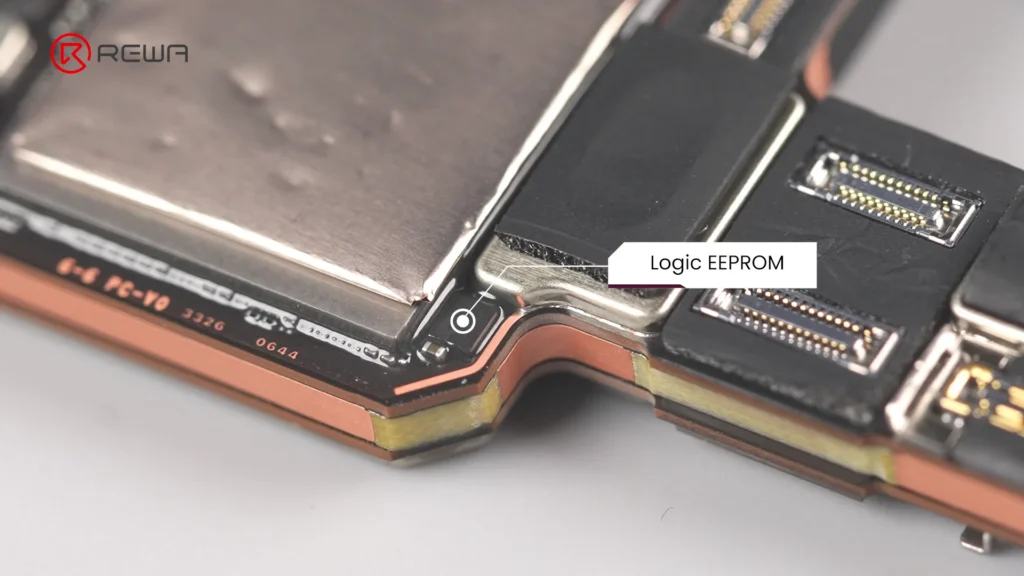
    Exposed Logic EEPROM: The Logic EEPROM chip on the board surface lacks a protective metal shield, leaving it significantly more susceptible to physical damage and technician error.
    iphone 18 pro teardown what changed inside how does it affect 9

    Layered Sandwich Design: The NAND storage chip and Power IC are sandwiched inside the multi-layer PCB structure. Replacing or repairing these components requires demanding motherboard desoldering and reballing.

    Relocated A20 Pro Chip: The main processor sits directly on the motherboard surface, and in direct contact with the vapor chamber for substantial improvement in thermal performance.
    iphone 18 pro teardown what changed inside how does it affect 10

    Upgraded Camera Modules

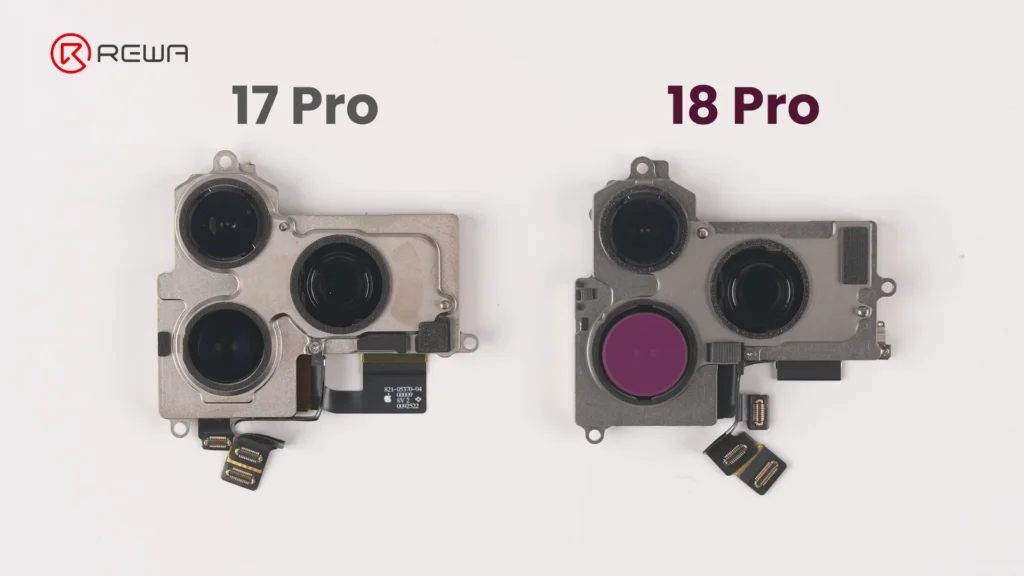
    The iPhone 18 Pro’s camera modules feature noticeable changes in mechanical design, module size, and cable layout.

    Fusion Main Camera: The rear camera module features a variable aperture for greater control over depth of field.
    iphone 18 pro teardown what changed inside how does it affect 11

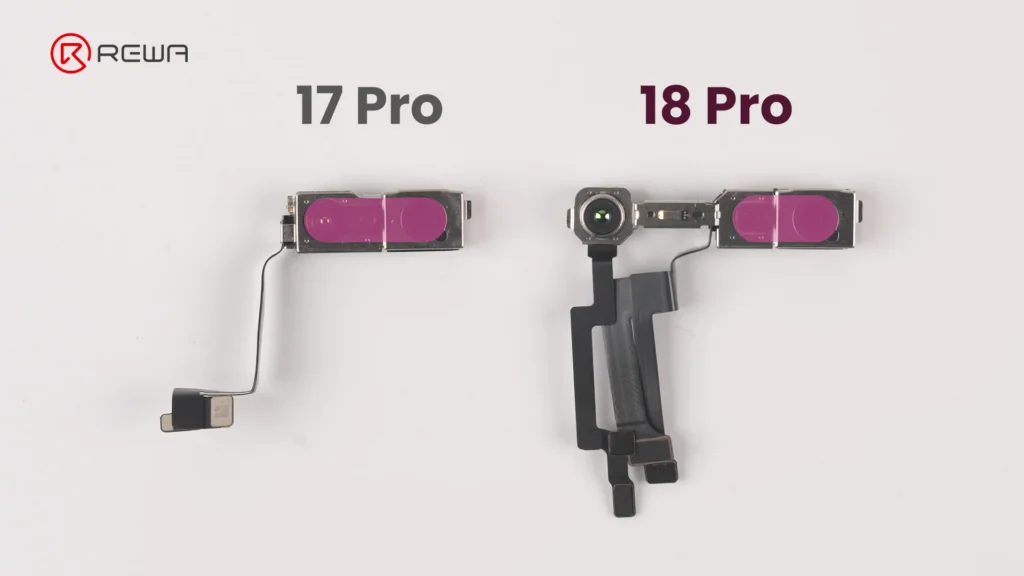
    Separated Infrared Sensor: The front camera and under-display infrared camera are connected via three separate flex cables, bridged across a wider distance to facilitate the shrunken Dynamic Island.
    iphone 18 pro teardown what changed inside how does it affect 12

    Thermal Management & Battery Changes

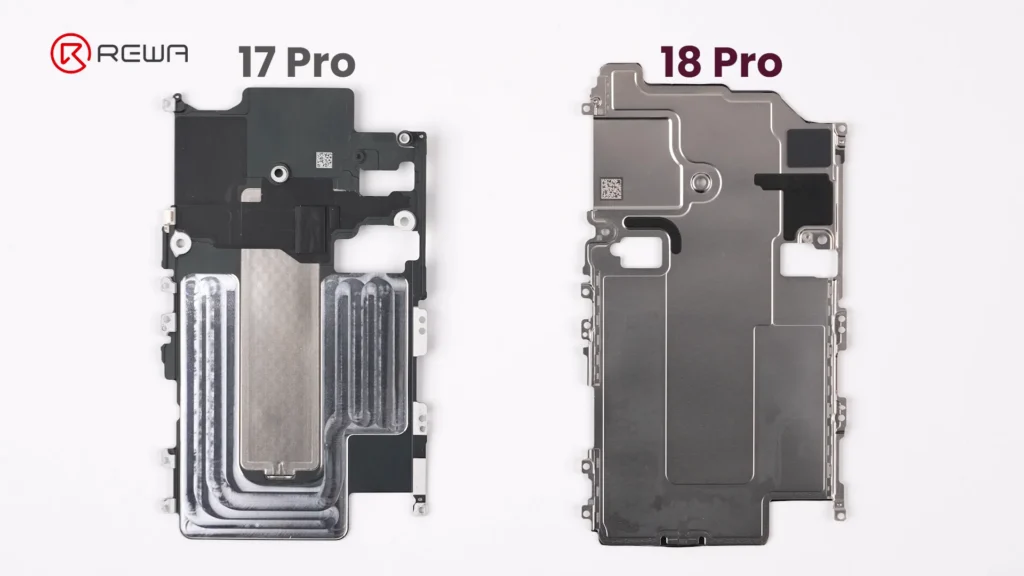
    Vapor chamber on the iPhone 18 Pro receives its largest redesign in years. Apple has integrated a significantly larger vapor chamber, with three times the surface area of the one used in the iPhone 17 Pro.
    iphone 18 pro teardown what changed inside how does it affect 13

    Simply Put:

    A vapor chamber is a flat, sealed metal enclosure containing a small amount of liquid. When the chips heat up, the liquid absorbs heat and evaporates. The vapor then spreads through the chamber, transferring heat to cooler areas where it condenses back into liquid. This helps the phone maintain stable performance under sustained workloads.

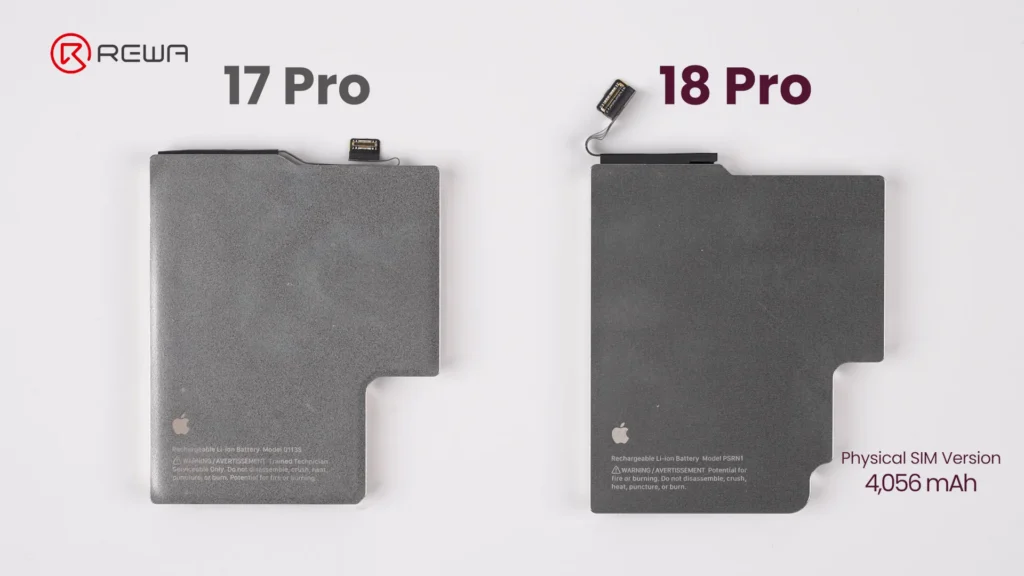
    The battery capacity of iPhone 18 Pro is slightly bigger than that on iPhone 17 Pro. In physical SIM version, it packs 4,056mAh, achieving about 1.7% increase over previous generation. Apple officially confirms that the redesigned battery architecture and charging system enable faster charging, reaching 50% in approximately 15 minutes.
    iphone 18 pro teardown what changed inside how does it affect 14

    Repair Difficulty Assessment: Pros & Cons

    A concise summary of what makes repairing the iPhone 18 Pro easier or harder for repair professionals.

    Componente Changes Made Repair Difficulty
    Pantalla
    • Smaller Dynamic Island
    • Under-display infrared camera
    • Display flex cable not fixed with adhesive
    Easy
    Batería
    • Larger capacity: 4,056mAh (SIM tray version)
    • Larger connector
    • Multi-layer cable
    Easy
    Front Camera Module
    • Infrared camera moved to the corner
    • Three separate cables
    Very Easy
    Rear Camera Module
    • Larger Fusion Main Camera
    • Cable layout changed
    Hard
    Placa base
    • A20 Pro chip on the surface
    • Logic EEPROM chip without a shield
    • NAND and Power IC sandwiched inside
    Very Hard

    Preguntas más frecuentes (FAQ)

    Why is iPhone 18 Pro motherboard repair more difficult?

    The main reason is the new layered motherboard architecture. NAND storage and the power IC are positioned between PCB layers, meaning technicians need to separate the board layers to access them. This increases the complexity, heat exposure, labor, and risk involved in component-level repair.

    Why is the Dynamic Island smaller on the iPhone 18 Pro?

    The infrared camera used for Face ID has been moved under the display and toward the corner. The display uses a modified pixel arrangement in this area to allow infrared light to pass through. This allows Apple to reduce the size of the visible Dynamic Island.

    How big is the iPhone 18 Pro battery?

    The iPhone 18 Pro shown in the REWA Lab teardown is the physical-SIM version and has a 4,056mAh battery, approximately 1.7% higher than the iPhone 17 Pro. Battery capacity varies by regional configuration; in eSIM-only version, the iPhone 18 Pro has a 4,288mAh battery.

    How much larger is the iPhone 18 Pro vapor chamber?

    iPhone 18 Pro vapor chamber has three times the surface area of the vapor chamber in the iPhone 17 Pro. Apple says the redesigned thermal system enables up to 40% better sustained performance compared with the previous generation.

    What is the biggest repair challenge revealed by REWA Lab’s iPhone 18 Pro teardown?

    For board-level technicians, the layered motherboard architecture is one of the most significant challenges because it complicates access to NAND and power-management components. For aftermarket parts manufacturers, the new under-display infrared camera arrangement creates another major challenge because display structure, optical transmission, and Face ID compatibility must all work together.

    Did Apple make major changes to the iPhone 18 Pro’s frame and back cover?

    No. The iPhone 18 Pro retains a largely similar frame and back cover structure to the iPhone 17 Pro. The back cover uses a more color-matched aluminum and glass design in iPhone 18 Pro.

    Conclusión:

    The iPhone 18 Pro showcases impressive internal engineering, highlighted by under-display Face ID technology, triple-sized vapor chamber, and larger variable-aperture main camera.
    iphone 18 pro teardown what changed inside how does it affect 15

    However, for the independent repair industry, these advancements come with obvious challenges: motherboard layering makes micro-soldering more demanding, and screen replacement requires precise technical alignment and careful handling to ensure proper Face ID functionality.

    As phone architectures become more complex, having high-grade repair tools, reliable replacement parts, and advanced technical training is essential, please Contacto for OEM/aftermarket replacement parts, professional repair tools, and step-by-step technical guides.
  • How iPhone Aftermarket Battery BMS Boards Are Made

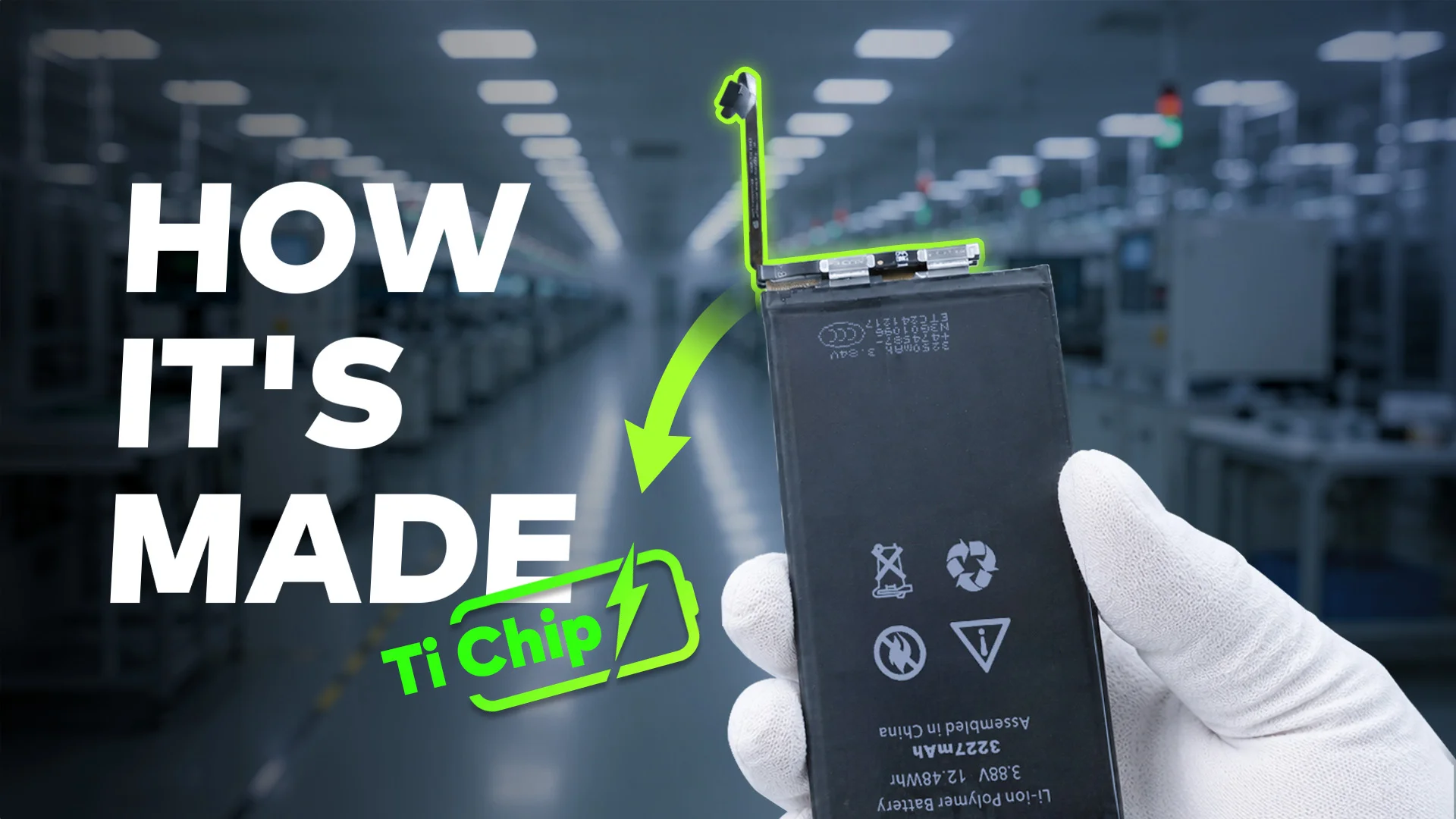
    How iPhone Aftermarket Battery BMS Boards Are Made

    When choosing an iPhone aftermarket battery, the BMS board (Battery Management System board) plays an important role in battery performance. So, what makes a third-party battery board reliable?

    In this article, REWA Lab takes you to explore how an iPhone aftermarket battery BMS board is manufactured, from bare PCB assembly and TI chip placement to firmware programming, functional testing, battery cell assembly, and final strict quality inspection.

    how iphone aftermarket battery bms boards made the crucial stages to

    What Is an iPhone Battery BMS Board?

    The BMS board is the control and protection system of a rechargeable battery, helping monitor the battery and protect it during charging and use.

    For an aftermarket iPhone battery, the BMS board works alongside the battery cell. While the cell stores the electrical energy, the BMS board manages and monitors important battery-related functions.

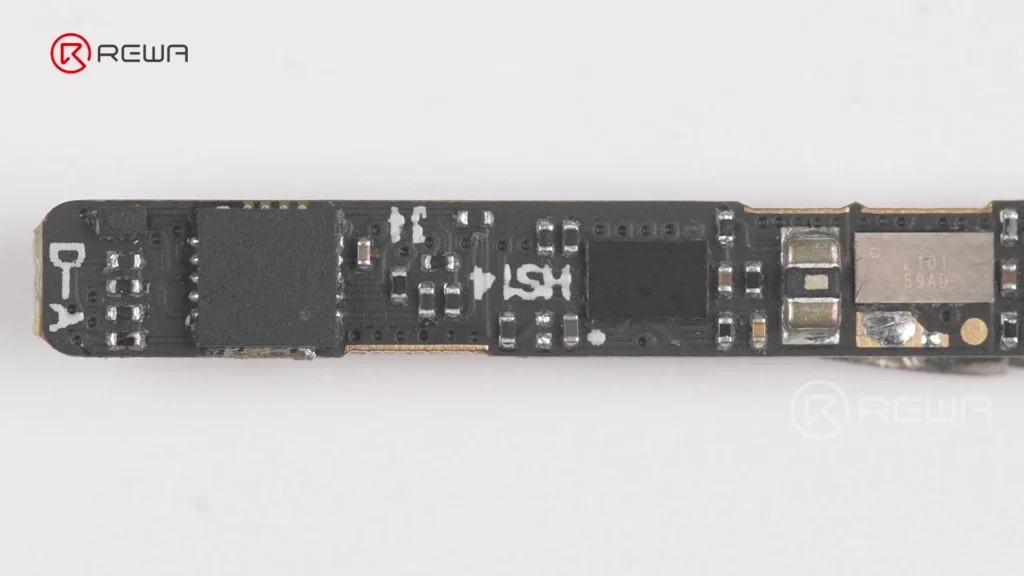
    Close-up view of a populated black iPhone battery BMS circuit board with surface-mounted chips and electronic components

    Depending on the design, a battery BMS board can help with functions such as:

    • Battery voltage & current monitoring
    • Temperature-related protection
    • Overcharge & short-circuit protection
    • Battery data and state-of-charge estimation
    • Communication between the battery and device

    This is why two aftermarket batteries using cells with similar specifications can still have different real-world performance and reliability.

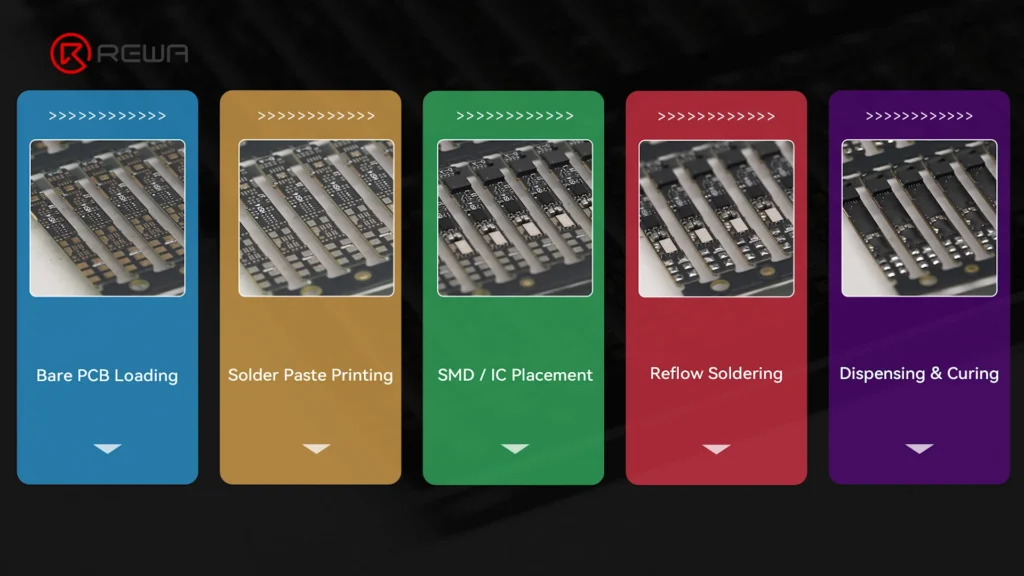
    Step 1: Bare PCB Preparation and SMT Assembly

    The manufacturing process starts with a bare PCB, which is the foundation of the BMS board. Before production begins, the factory receives bare PCBs that have already passed IQC inspection and loads them onto SMT feeder racks for automated component placement.

    En pocas palabras:

    SMT stands for Surface Mount Technology. It is a manufacturing method that places tiny electronic components directly onto the surface of a circuit board.

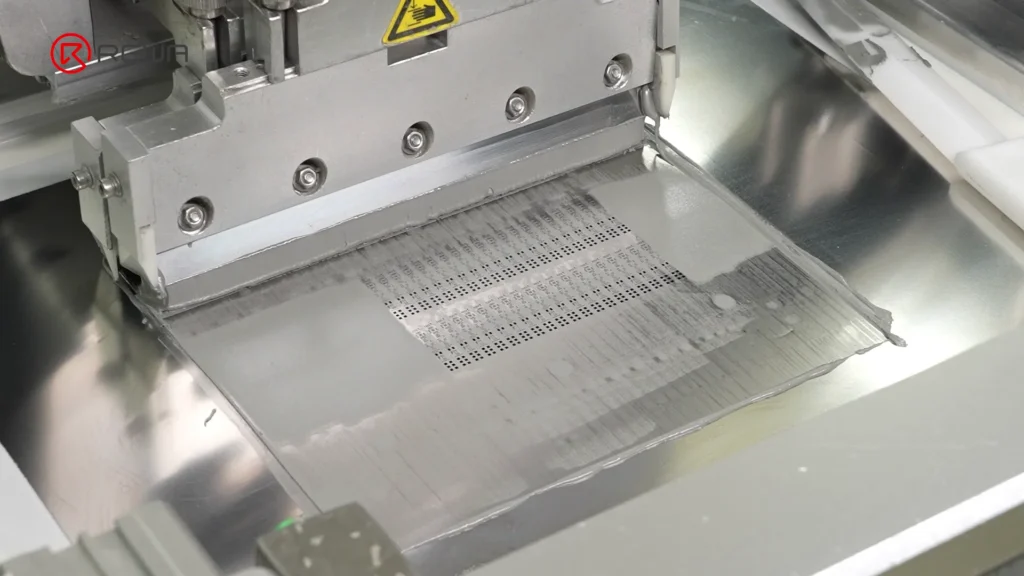
    The basic process begins with solder paste printing. The PCB is positioned against a stencil, and solder paste is applied to precisely defined positions on the board.

    Automated SMT squeegee applying gray solder paste over a stencil onto a BMS circuit board

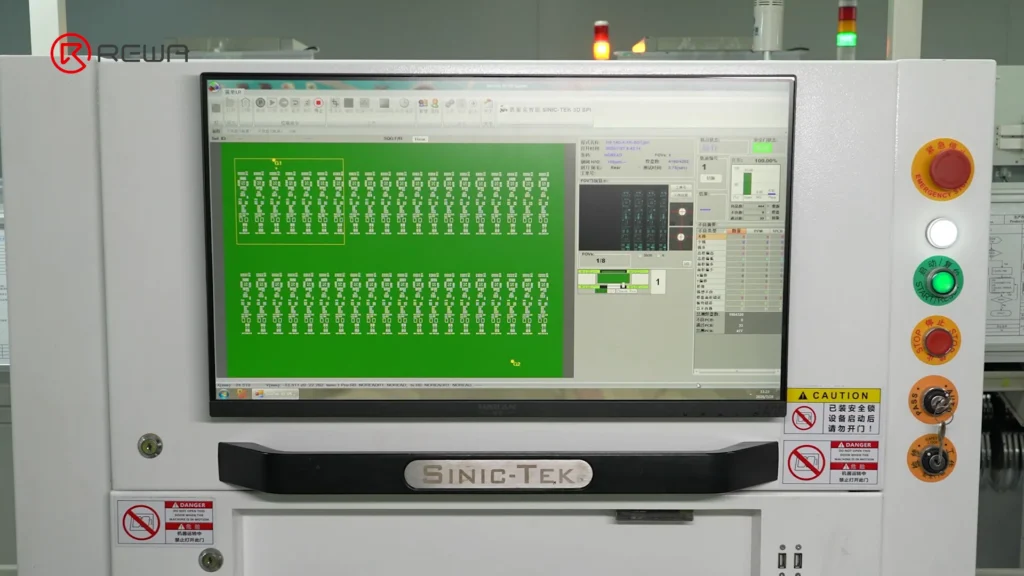
    Infrared marking helps identify the positions of the solder pads, while an SPI system checks the printed solder paste to identify issues such as:

    • Solder paste offset
    • Insufficient solder paste
    • Excessive solder paste
    • Solder bridging
    A Sinic-Tek 3D SPI machine monitor displaying a panel inspection layout for solder paste quality control

    This inspection is important because inaccurate solder paste printing can affect the quality of component soldering later in the process.

    Step 2: High-Speed Component Placement

    After solder paste printing, SMT machines precisely place resistors, capacitors, inductors, and other components onto their designated positions on the PCB.

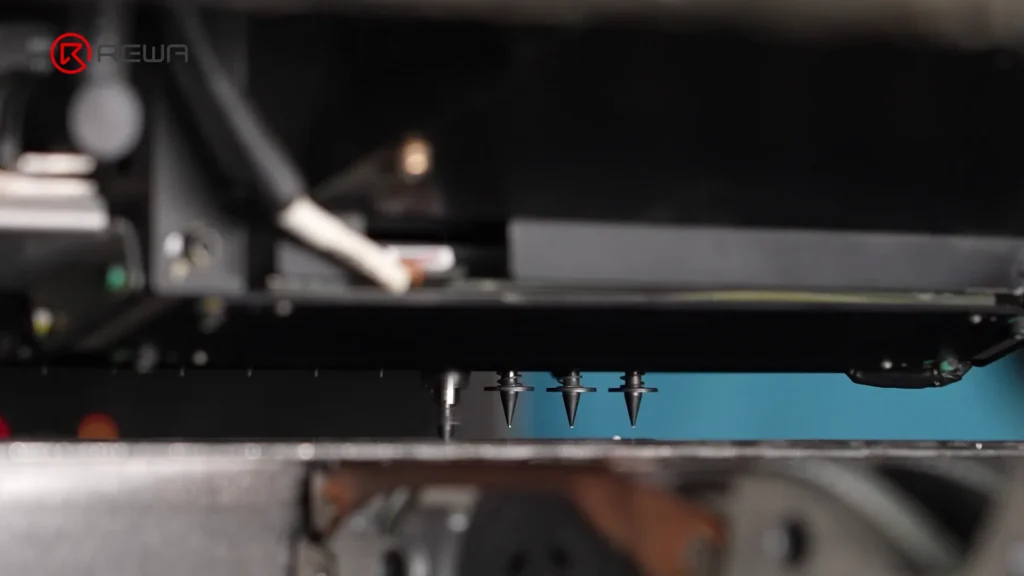
    High-speed nozzles pick up individual components and place them according to the programmed layout of the PCB. Infrared reference marks help the equipment maintain accurate positioning.

    Automated SMT pick-and-place nozzles positioned above a circuit board

    For battery BMS boards, precise component placement is essential because the board contains many small components within a compact design.

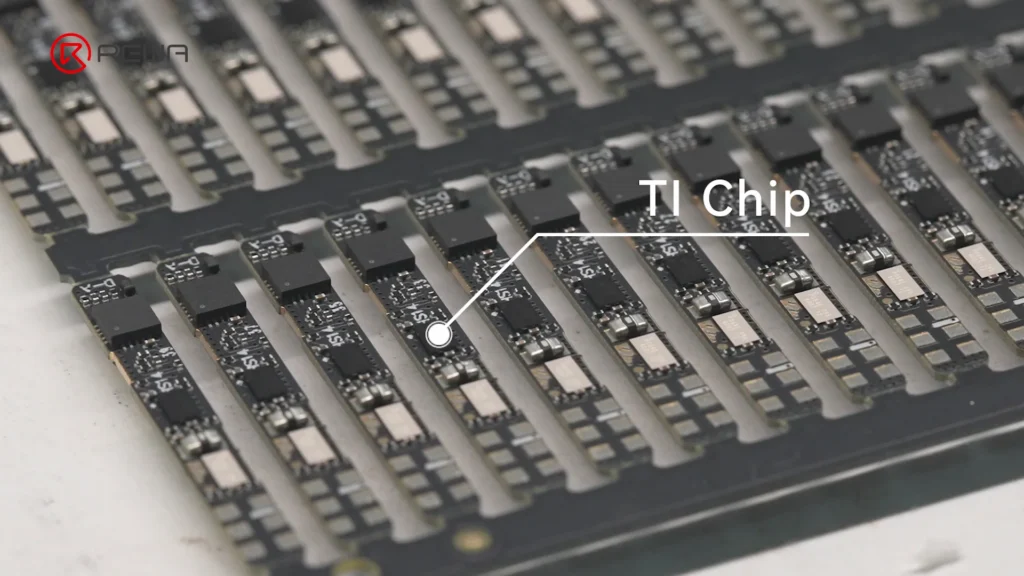
    Step 3: Installing the TI Battery Management Chip

    One of the key components on the board is the TI chip. As a key control component of the battery management system, it serves as the “brain” of the BMS, helping monitor and manage battery performance.

    Array of BMS circuit boards with a callout label pointing to the installed TI chip

    En REWA Batería seleccionada board uses a custom TI chip with an Impedance Track algorithm.

    En pocas palabras:

    The algorithm helps the battery system estimate the battery’s remaining capacity more accurately by tracking the battery’s electrical characteristics, including impedance.

    Battery impedance changes as the battery operates and ages. Monitoring these characteristics allows the battery management system to make more informed estimates of the battery’s actual state.
    Step 4: Reflow Soldering and AOI Inspection

    Once the components have been placed, the PCB enters the reflow soldering process. The board passes through a controlled thermal profile consisting of preheat, soak, reflow, and cooling stages, permanently connecting the components to the PCB.

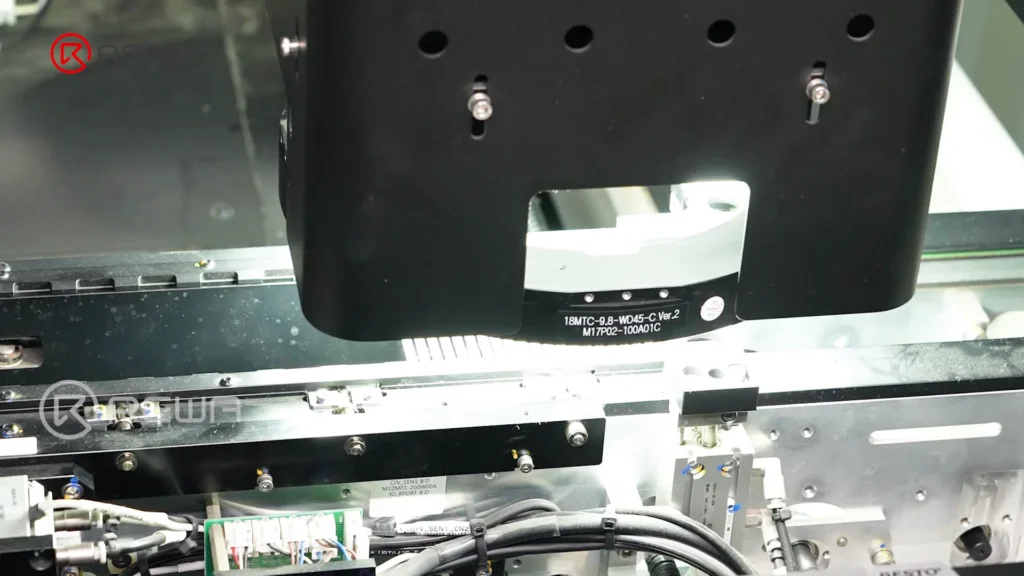
    Afterward, the board undergoes AOI (Automated Optical Inspection) scanning.

    Simply put:

    AOI uses cameras to inspect the board automatically and compare the soldered components and joints against predefined standards or a golden sample.

    Automated optical inspection machine head scanning circuit boards under bright light on an assembly line

    If the system identifies an NG (No Good) board, the board is manually reviewed to separate real defects from false positives.

    Step 5: Underfill Reinforces BGA Component Connections

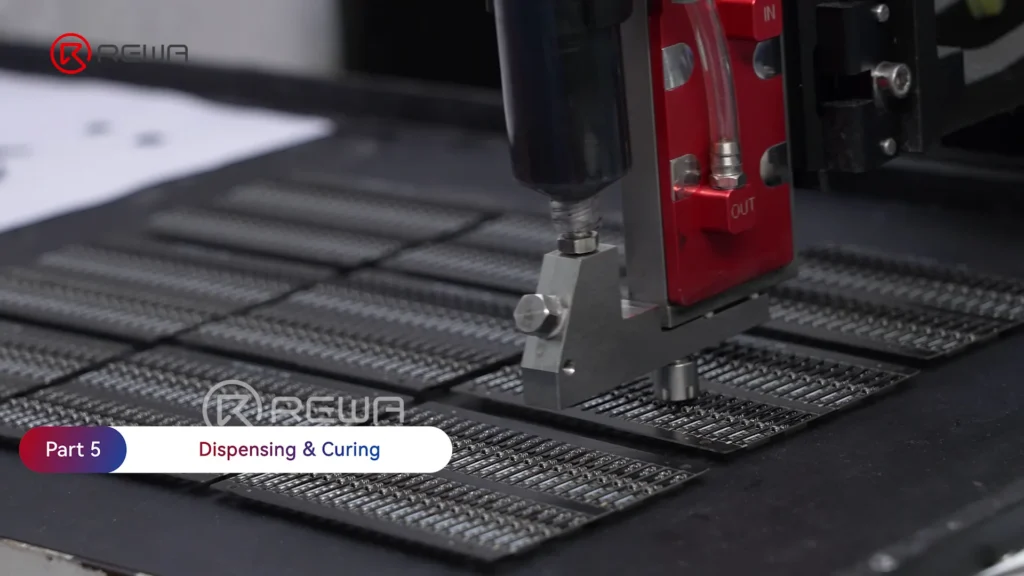
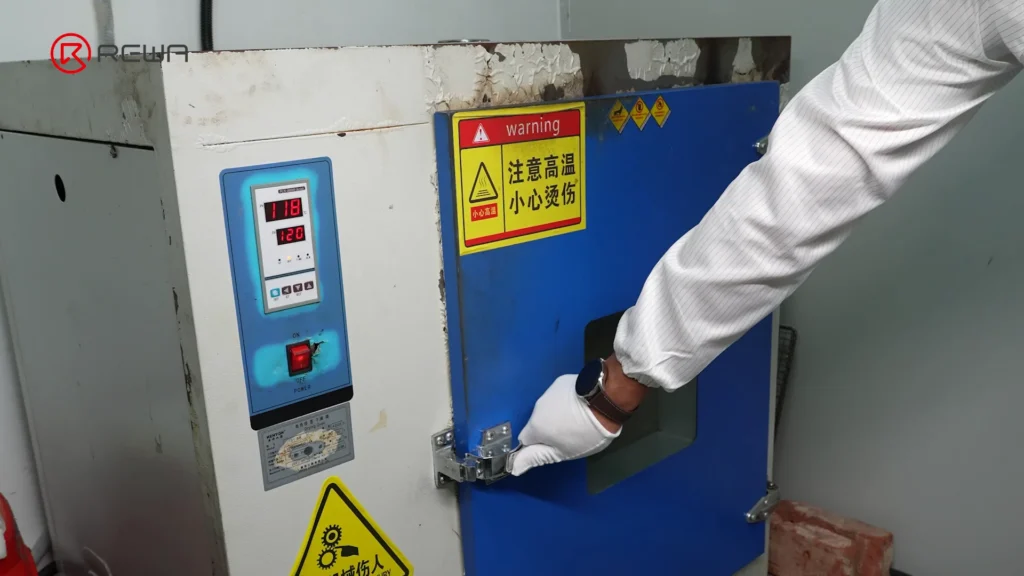
    After solder inspection, automated equipment applies underfill along the edges of BGA components before the adhesive is cured in an oven, which helps provide additional mechanical support.

    For battery BMS boards, this stage can improve resistance to physical shock and vibration, helping strengthen the connection between the component and PCB during handling and use.

    How iPhone Aftermarket Battery BMS Boards Are Made
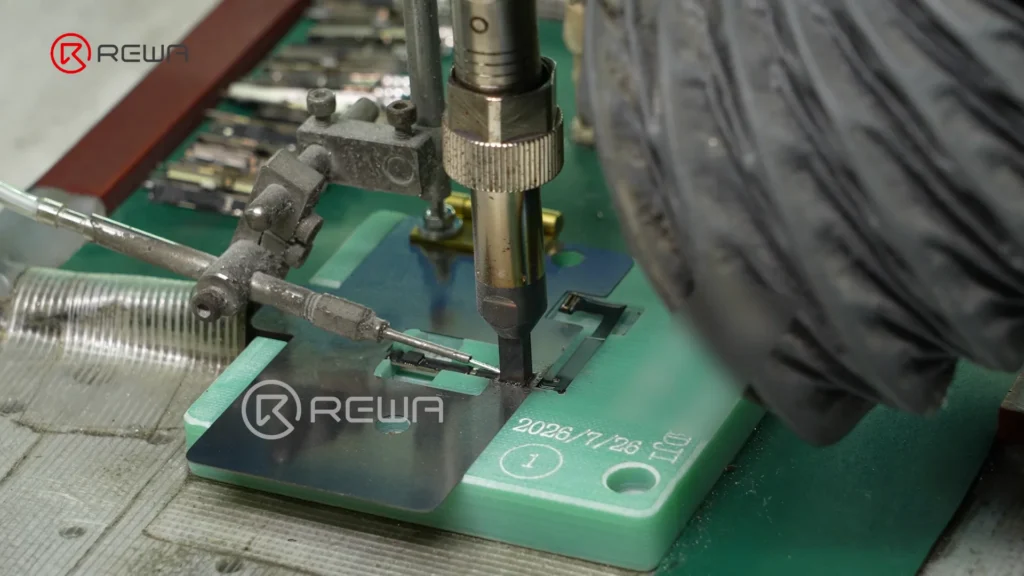
    A gloved worker closing the door of an industrial drying oven used to cure underfill adhesive

    Step 6: Firmware Programming and Flex Cable Bonding

    The completed PCB is programmed with firmware before its flex cable is bonded using controlled heat and pressure. To put it simply, firmware is the embedded software that controls how the hardware operates.

    How do the controlled heat and pressure achieve?

    Through a hot-bar bonding process, the controlled heat and pressure are used to bond the flex cable to the PCB.

    bonding flex cable

    After bonding, the flex cable connection is verified through FCT (Functional Circuit Test) to check whether the assembled board actually functions as intended.

    Step 7: Battery Cell and BMS Board Assembly

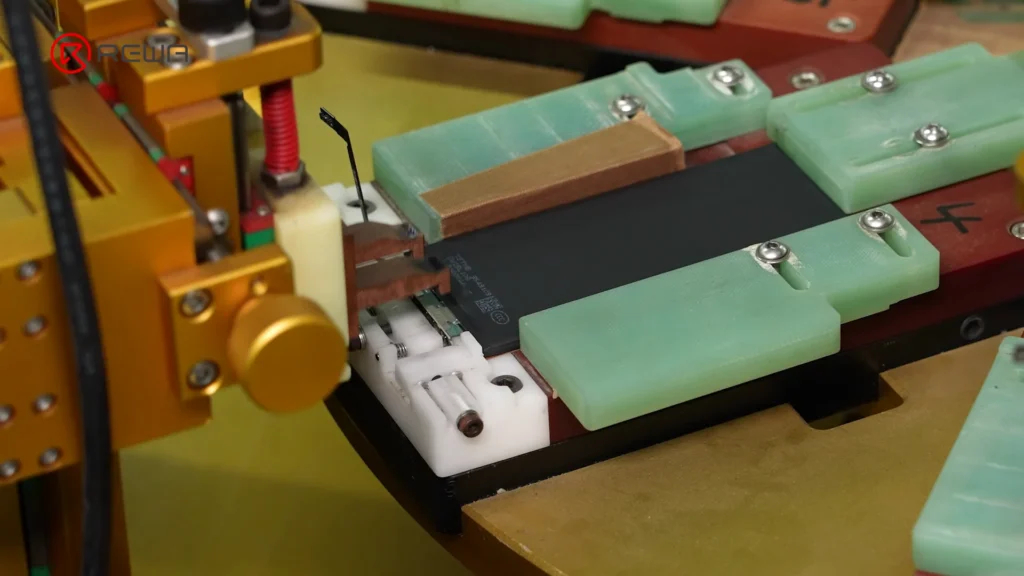
    In the assembly stage, the factory first uses capacity-matched cells. The cell tabs are then cut before the cell is connected to the BMS board through fiber laser spot welding.

    Why Is Weld Quality Important?

    The weld connects the battery cell to the BMS board, so the quality of this connection directly affects the electrical and mechanical integrity of the battery pack.

    Automated spot welding equipment connecting a battery cell to a BMS board held in an assembly fixture

    After welding, each weld joint is checked for durability. The battery pack then receives insulation tape and a rubber casing as part of the assembly process, helping provide both electrical insulation and physical protection.

    Step 8: Final Quality Inspection and Battery Testing

    Manufacturing does not end when the battery pack is assembled. A strict final quality inspection is performed before the battery is considered ready for shipment.

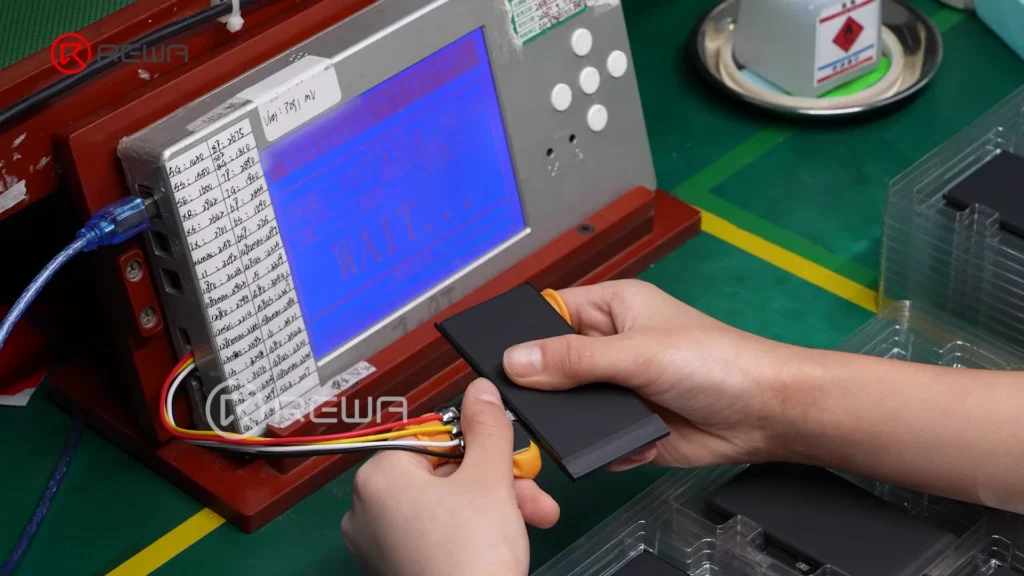
    After final inspection, the battery enters a resting period, during which parameters such as voltage and internal resistance are monitored.

    Technician connecting an assembled iPhone battery to a digital testing device to monitor voltage and internal resistance

    Monitoring voltage and internal resistance during the resting period provides additional data for quality control.

    Why the BMS Board Matters for Aftermarket iPhone Batteries

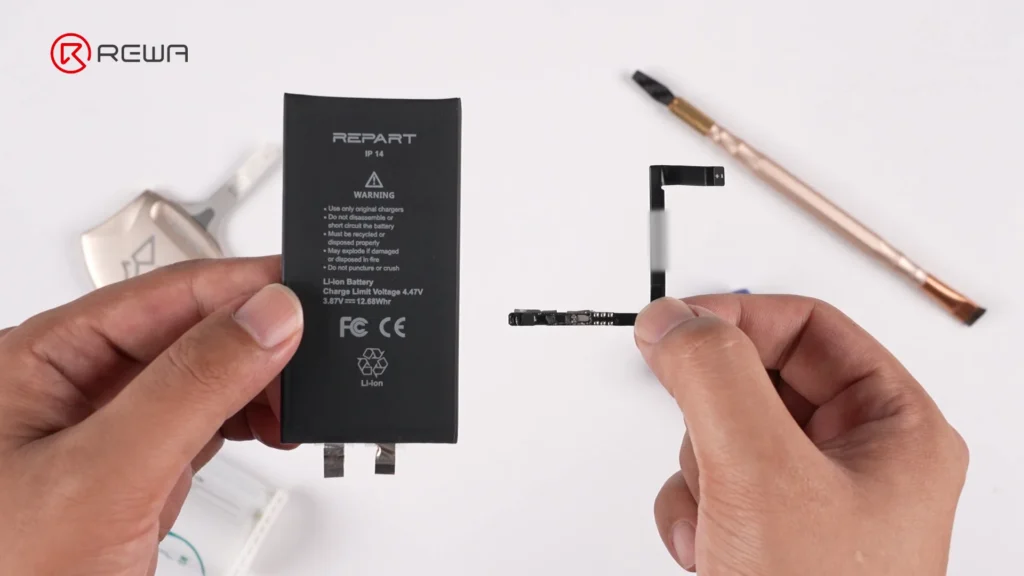
    The BMS board is often hidden inside the battery, so it is easy to overlook when comparing aftermarket batteries. However, its design and manufacturing quality can influence important aspects of battery operation.

    A reliable third-party battery requires more than simply selecting a battery cell with the right capacity. The cell, BMS board, firmware, electrical connections, protection circuitry, manufacturing process and strict quality test before shipping all work together.

    Hands holding a black iPhone 14 battery cell on the left and a small BMS board with flex cable on the right

    For distributors, refurbishing facilities, and repair shops, this means that battery evaluation should go beyond looking at the printed capacity or external appearance.

    Preguntas frecuentes

    What is the difference between a battery cell and a BMS board?

    The battery cell is the component that stores electrical energy. The BMS board is the electronic management and protection system that monitors the cell and controls related battery functions.

    What is a TI chip in a battery BMS board?

    TI refers to Texas Instruments, a semiconductor manufacturer whose battery-management ICs are used in various battery applications. In the REWA Selected battery board shown in the video, a custom TI chip with an Impedance Track algorithm is used to support accurate battery monitoring and gauge estimation.

    Why are SPI and AOI inspections important?

    SPI checks the accuracy of solder paste printing before components are soldered, while AOI uses cameras to inspect the assembled PCB and solder joints afterward. These inspections help identify manufacturing issues at different stages of PCB production.

    Why does REWA test battery voltage and internal resistance after assembly?

    Voltage and internal resistance provide important information about the electrical condition of a battery pack. Monitoring these parameters after assembly and during the resting period adds another layer of quality control before the battery is shipped.

    Why measure internal resistance during final quality inspection?

    Internal resistance is one of the important electrical characteristics of a battery. Lower internal resistance generally means less electrical energy is lost inside the battery when current flows, although battery performance cannot be judged by this parameter alone.

    Conclusión:

    An aftermarket iPhone battery is more than a battery cell. Behind the finished product is a BMS board that integrates electronic components, battery-management technology, protection functions, firmware, and flex-cable connections.

    From a bare PCB to a complete battery pack, every stage can contribute to the consistency and reliability of the finished battery.

    By combining rigorous quality control process with technical support, REWA Technology is committed to developing high-standard aftermarket battery solutions for professional repair businesses worldwide. If you have any question, please feel free to Contacto.

  • Reparación del iPhone: Impacto de iOS 18.1 en las piezas de recambio

    Reparación del iPhone: Impacto de iOS 18.1 en las piezas de recambio

    Desde que Apple introdujo el emparejamiento de piezas, los técnicos de terceros han sorteado estas limitaciones con diversas soluciones. Ahora, con el lanzamiento de iOS 18.1, los cambios en el seguimiento del historial de reparaciones pretenden mejorar las posibilidades de reparación. Pero, ¿qué impacto tiene esto en las reparaciones de iPhone de terceros?

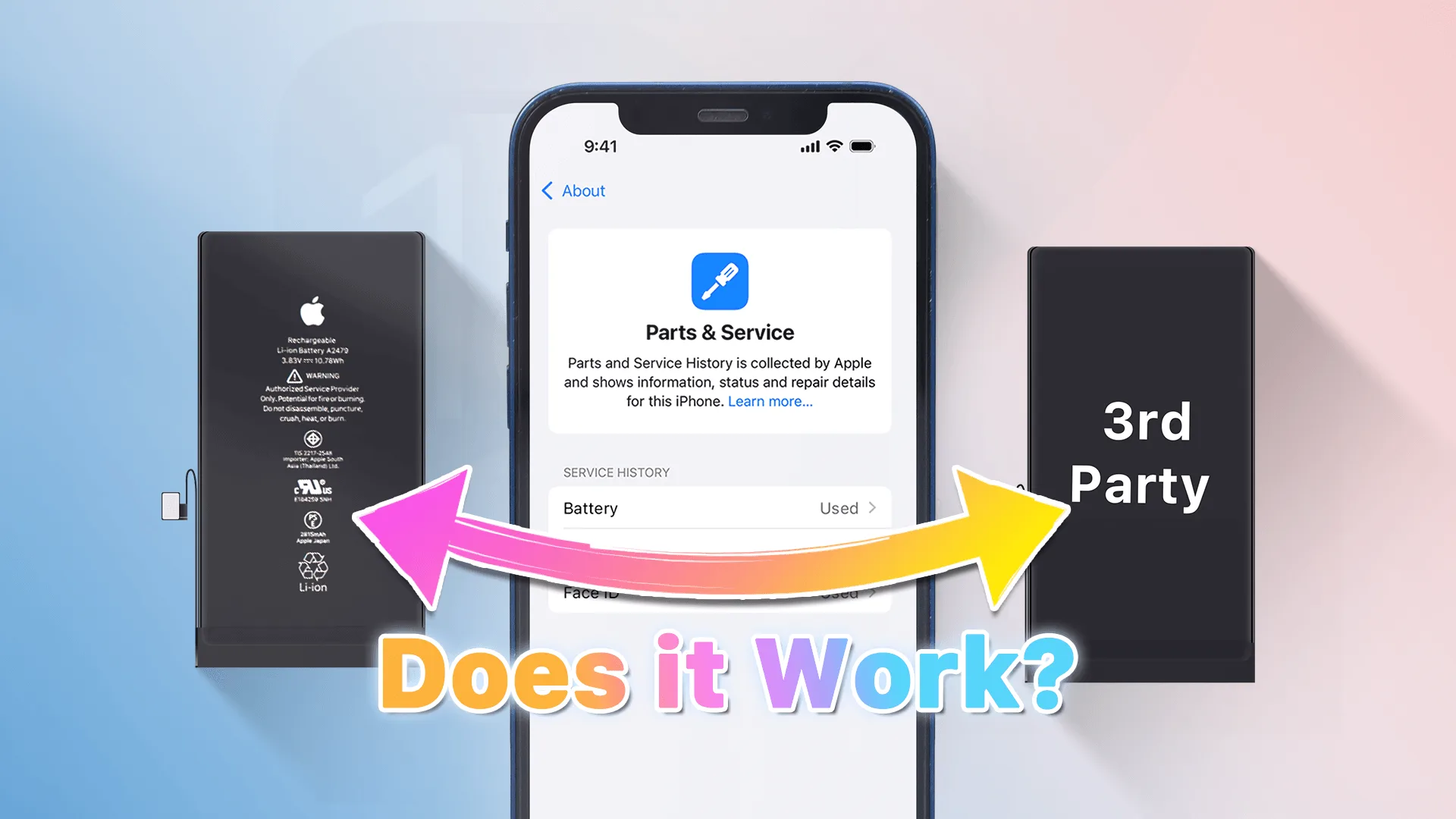
    Una amplia gama de piezas de recambio, incluyendo Pantallas del iPhone, pilas, cámarasy cara ID fueron probados por el laboratorio REWA Tech para determinar el impacto real de iOs 18.1 en las piezas de recambio.

    Sustitución de la pantalla

    Antes de iOS 18

    Al sustituir la pantalla del iPhone aparecerá el mensaje "Pieza desconocida" y desaparecerá el True Tone; problemas resueltos con los programadores de reparación y transferencia IC.

    Por ejemplo: 100% Arreglar Mensaje "Parte Desconocida" para iPhone 15 Pro Después de Reemplazar la Pantalla

    Después de iOS 18.1

    No.Tipo de pantallaTransferencia CI originalTransferencia Sensor delantero originalAsistente de reparación de pasesHistorial de piezas y mantenimientoTono verdadero
    1OEMNoSíNoNo se puede configurarSí
    2OEMSíSí/NoSí
    3PosventaNoSíNoNo se puede configurarSí
    4PosventaSíSí/NoSí
    5OEM + Sensor delantero emparejadoNoNoSíUsadoSí
    6Paquete de mantenimiento + sensor frontal emparejadoNoNoSíGenuinoSí

    Principales resultados

    • Mientras la pantalla tenga un CI y un sensor coincidentes, no habrá historial de reparaciones ni será necesario un diagnóstico del asistente de reparación.
    • Todas las pantallas de terceros admiten True Tone.

    Sustitución de la batería

    Antes de iOS 18

    Mensaje "Pieza desconocida", no se muestra el estado de la batería; resuelto con soluciones como batería sin soldar, célula de batería + tag-on flex, célula de batería + placa de reparación.

    Por ejemplo: Soluciones posventa para calibrar el estado de la batería del iPhone en iOS 17.4

    Después de iOS 18.1

    No.Tipo de bateríaAsistente de reparación de pasesHistorial de piezas y mantenimientoDatos sanitarios
    1OEM NuevoSíGenuino100%
    2OEM UsadoSíUsadoDatos de la batería usada OEM
    3Aftermarket(TI ZY HF 
    Soluciones)
    NoSin verificar100%
    4Celda de batería + placa BMS nativa//Datos de la batería nativa

    Principales resultados

    • Las baterías de terceros siguen sin pasar el Asistente de reparación y el historial de piezas se registra como no verificado.
    • Las nuevas baterías de terceros sustituidas en iPhones pueden mostrar todos los datos de salud.

    También hemos probado baterías de terceros en iOS 18.0.

    Vea el vídeo: 

    Sustitución de la cámara trasera

    Antes de iOS 18

    La sustitución de una lente por sí sola mostrará un mensaje de pieza desconocida. Se necesita un programador de reparación y cables flexibles de reparación.

    Por ejemplo: Cómo quitar la cámara trasera "Parte desconocida" Mensaje para el iPhone 15 PM

    Después de iOS 18.1

    No.Modelo de cámaraAsistente de reparación de pasesCalibración de la cámara
    1iPhone 12SíNo
    2iPhone 13SíNo
    3iPhone 14SíNo
    4iPhone 15SíSí
    5iPhone 16SíSí

    Principales resultados

    Las cámaras traseras de los iPhone 12-16 pueden ser diagnosticadas por el asistente de reparación, pero las series iPhone 15 y 16 requieren la calibración de la cámara.

    Sustitución del conjunto de cámara frontal y Face ID

    Antes de iOS 18

    La sustitución de este conjunto hará que falle la función del Face ID. Se necesita un programador de reparación y cables flexibles de reparación.

    Por ejemplo: Arreglar Face ID (SIN SOLDADURA) no funciona con REFOX RP30

    Después de iOS 18.1

    No.Modelo de montajeAsistente de reparación de pasesFace ID
    1iPhone 12NoNo
    2iPhone 13NoNo
    3iPhone 14NoNo
    4iPhone 15NoNo
    5iPhone 16SíSí

    Principales resultados

    El conjunto de cámara frontal + Face ID del iPhone 12-15 no puede ser diagnosticado por el asistente de reparación, solo el iPhone 16.

    Resumen

    De iOS 18.0 a 18.1, las reparaciones de iPhone se han vuelto gradualmente relativamente fáciles, pero todavía hay algunos problemas que necesitan ser verificados. Preste atención al canal REWA para obtener más nuevas tecnologías e información.

    Además, REWA ofrece una gran variedad de herramientas de reparación y piezas para teléfonos, ¡consúltenos o visite nuestra tienda en línea!

    Consúltenos: https://rewawp.iamtareq.com/wholesale/

    Visite la tienda en línea: https://shop.rewa.tech/

  • ¿Pueden emparejarse las piezas de acabado de la batería del mercado de accesorios en iOS 18?

    ¿Pueden emparejarse las piezas de acabado de la batería del mercado de accesorios en iOS 18?

    En este video REWA Lab te compartirá un progreso completo sobre la prueba de batería en iOS 18, instalaremos diferentes baterías para ver si pueden emparejarse con éxito con el dispositivo, permanece atento a más videos profesionales de REWA.
    Para herramientas de reparación de baterías, puede visitar el sitio web:
    https://rewawp.iamtareq.com/repair-tools/
    Si desea más información, póngase en contacto con nosotros: +852 5167 5273 / sales@rewa.tech

  • REWA Tech se exhibe en IFA Berlín 2024, Innovación y Empoderamiento

    REWA Tech se exhibe en IFA Berlín 2024, Innovación y Empoderamiento

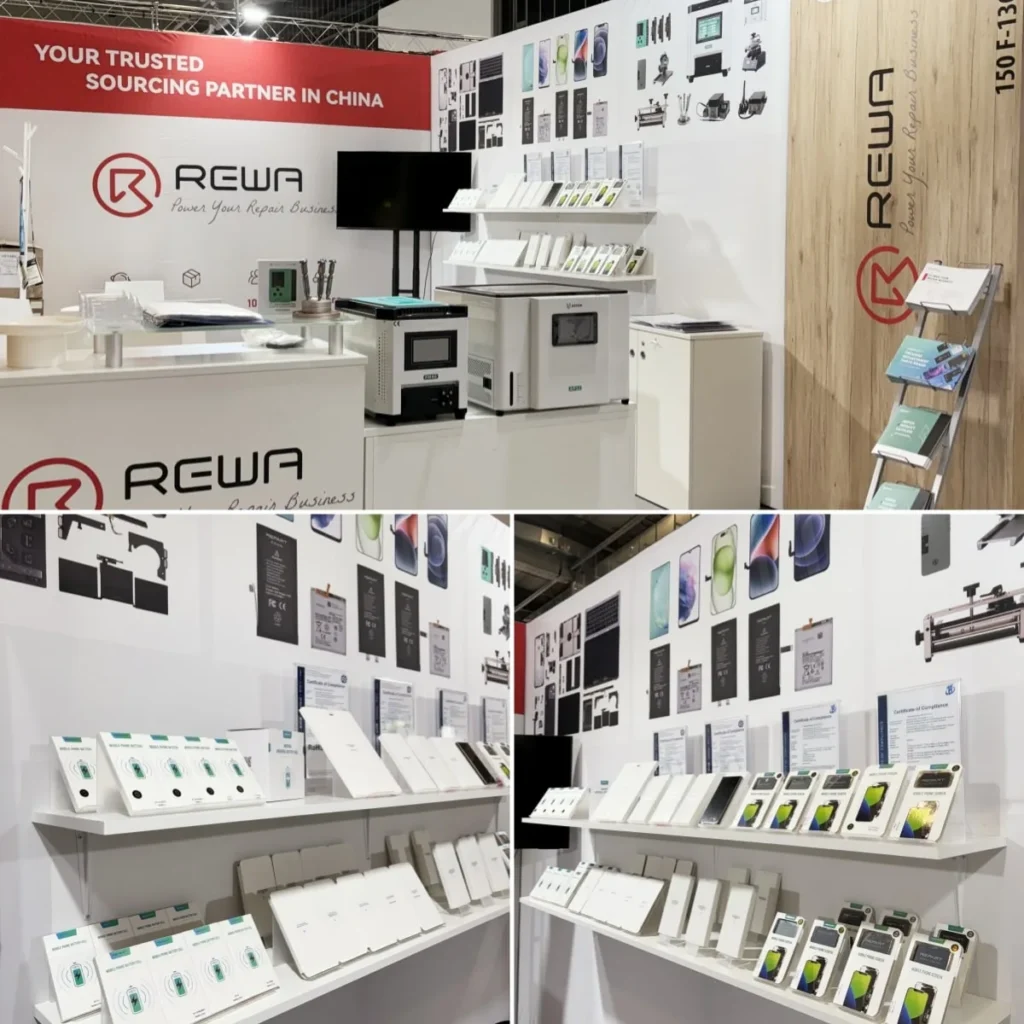
    Del 6 al 10 de septiembre, REWA Tech se complace en anunciar su participación en IFA Berlín 2024. Este año se celebra el centenario de la feria IFA. No solo pone de relieve los últimos avances y tendencias del sector, sino que también ofrece una valiosa oportunidad para interactuar cara a cara con clientes de todo el mundo.

    rewa tech showcases ifa berlin 2024 innovation empowerment 100th
    Figura 1. Espectacular del centenario de la IFA

    Manténgase al día de las últimas tecnologías

    En los últimos años, las innovaciones tecnológicas han crecido a un ritmo vertiginoso. Los fabricantes chinos se han comprometido a estar a la vanguardia de los avances en tecnología de consumo.

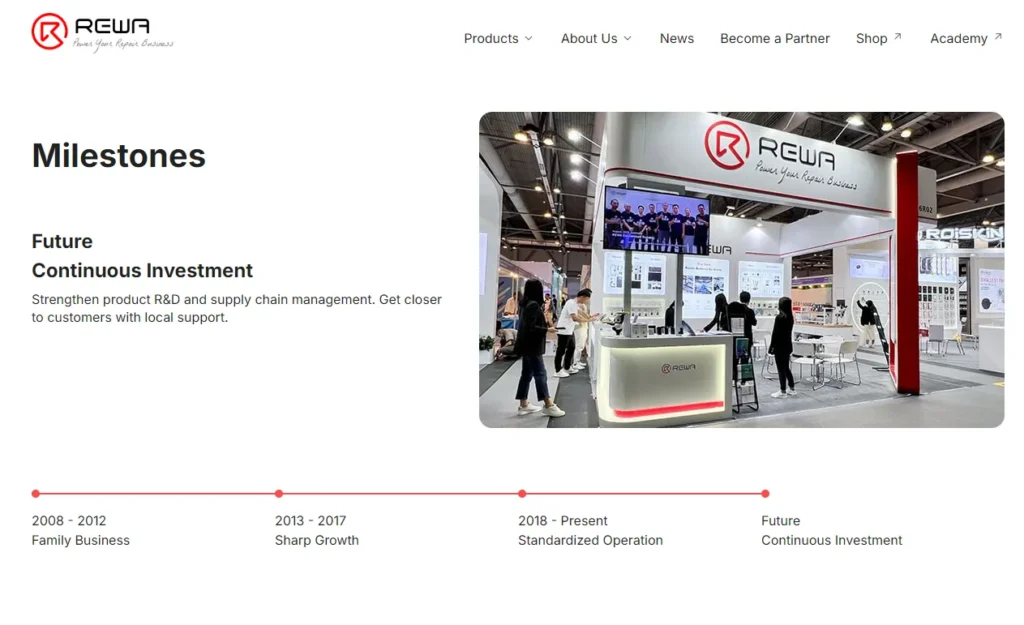
    REWA Tech fue fundada en 2008, que se ha comprometido a convertirse en la marca líder de la industria en la potenciación de las empresas de reparación. La gama de productos REWA Selected incluye conjuntos de pantallas, pilas, piezas pequeñas, máquinas de renovacióny herramientas de reparación, todo ello diseñado para impulsar la innovación y el desarrollo en el negocio de la reparación.

    Con su participación en IFA Berlín 2024, REWA Tech pretende mostrar sus principales puntos fuertes y fomentar profundas colaboraciones con socios y clientes globales.

    rewa tech showcases ifa berlin 2024 innovation empowerment booth no
    Figura 2. Stand técnico de REWA

    Los productos reales demuestran su fuerza

    En la exposición, REWA Tech presentó sus últimas líneas de productos y soluciones tecnológicas, incluidas las principales piezas de teléfonos, máquinas de reacondicionamiento de pantallas y eficaces herramientas de reparación. Nuestros expertos técnicos y representantes comerciales charlaron con los asistentes sobre los últimos avances y retos en la reparación de teléfonos.
    Muchos expositores mostraron gran interés por los productos REWA Selected, y algunos clientes potenciales mantuvieron profundos intercambios con representantes de REWA.

    rewa tech showcases ifa berlin 2024 innovation empowerment communicate
    Figura 3. Comunicarse con los expositores

    Por ejemplo, la REFOX AP32, una pulidora de pantallas de sobremesa con dos ranuras. Está diseñada para eliminar arañazos de forma eficaz a la vez que es fácil de usar. A diferencia de muchos modelos más grandes, la AP32 ocupa poco espacio en las tiendas de reparación. La máquina ha suscitado un gran interés, y muchos clientes han preguntado por detalles y precios. Varios clientes han encargado esta herramienta de inmediato para integrarla en sus negocios.

    rewa tech showcases ifa berlin 2024 innovation empowerment customers
    Figura 4. Los clientes piden detalles y precios de AP32

    Establecer relaciones con clientes de todo el mundo

    REWA Tech pudo relacionarse estrechamente con sus clientes, así como estrechar lazos con los expositores del sector en este evento. Esperan seguir prestando servicios de alta calidad y apoyo a la comunidad mundial de reparadores, impulsando el progreso y el crecimiento del sector.

    rewa tech showcases ifa berlin 2024 innovation empowerment cooperation
    Figura 5. Cooperación y amistad

    Próximos eventos

    Además, REWA Tech participará en MWC 2024 en Las Vegas y GITEX 2024 en Dubai. ¡Hasta entonces!
    Si desea más información, póngase en contacto con nosotros: https://rewawp.iamtareq.com/wholesale/

  • Lanzamiento del nuevo sitio web de REWA: Potencie su negocio de reparaciones

    Lanzamiento del nuevo sitio web de REWA: Potencie su negocio de reparaciones

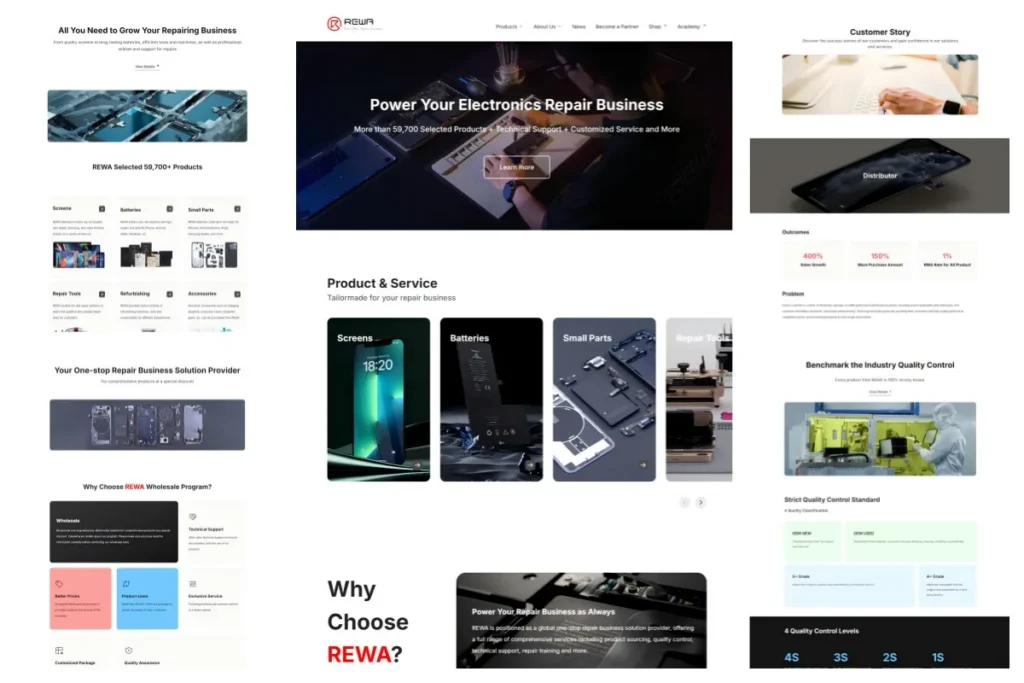
    Nos complace anunciar que Web oficial de REWA Tech ¡ha sido actualizado! Esta actualización está pensada para los usuarios de empresas de reparación telefónica B2B. No sólo se ha mejorado el diseño visual, sino que también ofrece más información sobre productos y servicios. Esto le ayudará a destacar entre la competencia del sector de las reparaciones.

    rewa new website released power your repair business tech

    Amplia información sobre productos y servicios

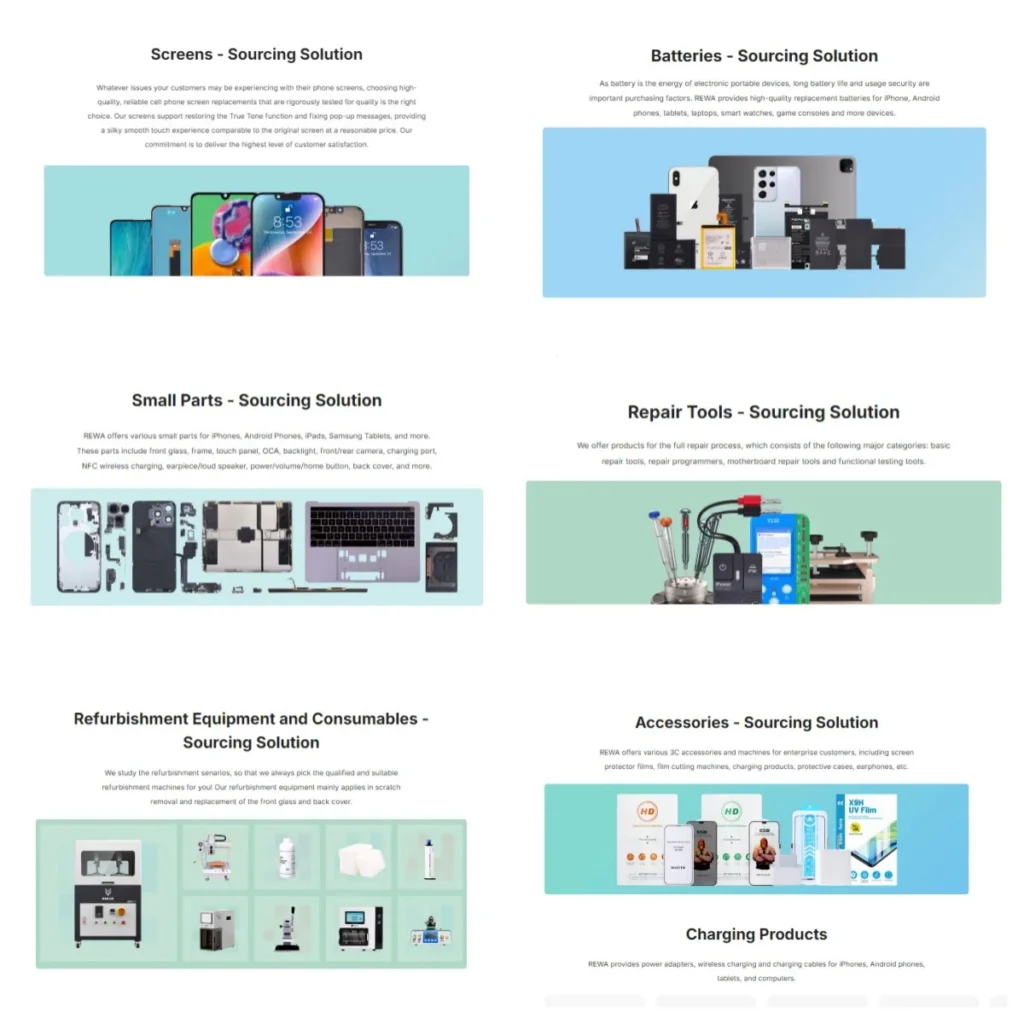
    Como proveedor mayorista de piezas de teléfono, hemos actualizado la página de presentación de productos y servicios para ofrecer una visión más detallada de las soluciones, lo que le permitirá encontrar la que mejor se adapte a las necesidades de su empresa.
    Comprueba los detalles: https://rewawp.iamtareq.com/product/

    rewa new website released power your repair business product

    Nuevo diseño de la interfaz de usuario

    Al adoptar un estilo de diseño moderno, ofrece una experiencia de navegación más profesional y concisa. Disfrute de una navegación fluida y un placer visual tanto si busca información como si explora soluciones.

    Mejorar la experiencia del usuario

    Al optimizar el diseño de los contenidos y la arquitectura del sitio web, también mejora mucho la experiencia de navegación en dispositivos móviles. Esto ayuda a acceder al sitio web de forma más eficiente en cualquier momento y lugar y a tomar decisiones empresariales.

    ¿Por qué elegir REWA?

    Como líder en soluciones empresariales de reparación integral, REWA Tech siempre se ha comprometido a proporcionar a los clientes las soluciones más completas mediante conjuntos de pantalla, pilas, piezas pequeñas, reparar y productos de renovación y asistencia técnica. Esto incluye servicios de formaciónservicios preventa y posventa. Además, hemos actualizado nuestro sitio web para reflejar la actualización de nuestra marca y nuestro conocimiento más reciente de las necesidades de los clientes.

    rewa new website released power your repair business why

    Explorar ahora

    Visite Sitio web oficial de REWA Tech ¡ahora para explorar nuevas soluciones de negocio de reparación!
    Le invitamos sinceramente a visitar el nuevo sitio web oficial para experimentar el nuevo diseño y las nuevas funciones. Si tiene alguna pregunta o comentario, no dude en ponerse en contacto con nosotros. Esperamos trabajar con usted para impulsar conjuntamente su negocio hacia el éxito.

  • Desbloquear US iPhone 15 PM Potencial: Conversión de eSIM a Dual SIM física

    Desbloquear US iPhone 15 PM Potencial: Conversión de eSIM a Dual SIM física

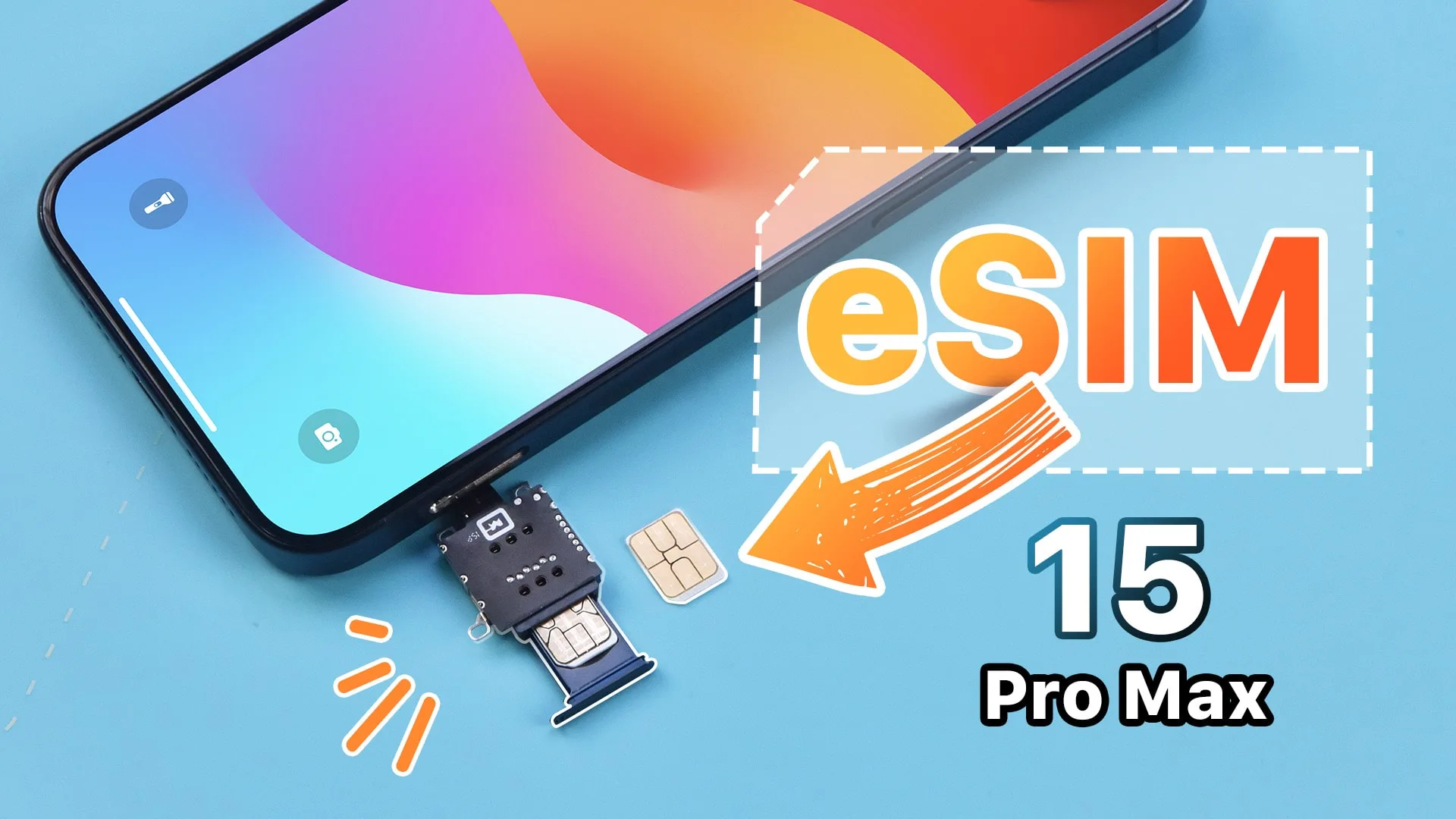
    Debido a la diferente estructura de la placa base entre la versión estadounidense del iPhone 14 Pro Max y el iPhone 15 Pro Max, transformar la eSIM en doble SIM se vuelve más complicado.
    Vamos a compartir con ustedes un nuevo hack sobre cómo convertir eSIM a dual SIM física, pero lo más importante, vamos a discutir si la conversión vale la pena o no.
    Para obtener herramientas de reparación y recambios de cámaras relacionados, puede visitar el sitio web:

    https://rewawp.iamtareq.com/repair-tools/ ; https://rewawp.iamtareq.com/battery/

    Si desea más información, póngase en contacto con nosotros: +852 5167 5273 / sales@rewa.tech

  • Baterías de recambio para iPhone: Producción masiva e inspección profesional

    Baterías de recambio para iPhone: Producción masiva e inspección profesional

    En el blog anterior: Qué debe ser realmente una batería cualificada, REWA explicó cuándo debe sustituirse una batería y qué normas aplicamos a las sustituciones de baterías.

    Ahora mostraremos el proceso de producción detallado y los procedimientos de prueba.

    Las baterías de máxima calidad se fabrican con materiales excelentes, equipos de automatización avanzados y estrictas normas de inspección y ensayo. En las fábricas de primer nivel, la batería del teléfono se lleva a cabo generalmente en equipos altamente automatizados, con materiales de primera calidad aplicados.

    Sin embargo, todavía hay muchos fabricantes más pequeños que utilizan métodos de ensamblaje manual o materiales deficientes, por eso las baterías del mercado varían mucho.

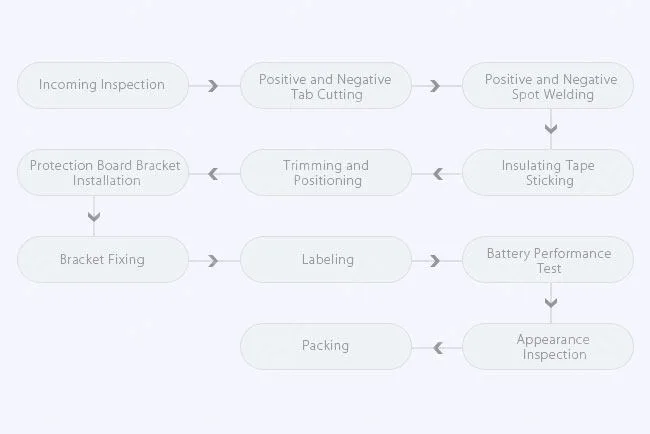
    ¿Cómo debe ser un proceso completo de producción de pilas?

    Proceso de producción

    Proceso de producción

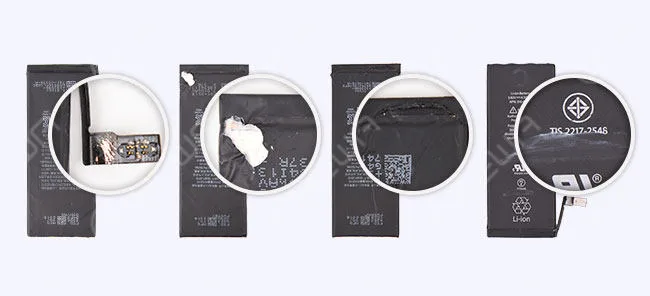
    La inspección del aspecto de la batería es una forma común y fácil de inspeccionar las baterías de su teléfono, pero no siempre funciona, ya que carece de valores y resultados precisos.

    Algunos fallos de las baterías no son tan fáciles de detectar a simple vista. Sin embargo, es necesario someter las baterías de litio a pruebas estrictas para garantizar su seguridad y calidad.

    Aquí demostraremos los procedimientos de prueba profesionales y completos.

    La prueba puede dividirse en tres partes: Inspección de Aspecto, Prueba de Rendimiento Básico y Prueba de Rendimiento Físico.

    Inspección de Aspecto

    Inspección de aspecto: rotura, pérdida de pintura, grieta, corrosión, datos etiquetados

    Inspección de aspecto: rotura, pérdida de pintura, grieta, corrosión, datos etiquetados

    Métodos y procedimientos de ensayo básicos

    Métodos y procedimientos de ensayo básicos

    Procedimientos de las pruebas de rendimiento físico 

    Además, se realizan pruebas de rendimiento físico en situaciones extremas para comprobar si la batería se dobla, se deforma, se incendia o explota en distintos entornos de simulación.

    1. Prueba de simulación de baja presión a gran altitud 

    Este procedimiento es para probar el rendimiento de seguridad de transporte aéreo de la batería a una presión inferior a 11,6kPa.

    Resultado: Después de 360 minutos, todas las muestras funcionan con normalidad, sin incendio ni explosión. /Las muestras no explotan ni se incendian.

    2. Temp. y humid. Test 

    Esta prueba es para verificar la adaptabilidad a la temperatura de la batería, procesada a una temperatura extrema de 72±2℃ y -40±2℃. 

    Las baterías se almacenan durante 6 horas a 72±2℃, luego 6 horas a -40±2℃, para un total de 10 ciclos.

    Resultado: Después de 10 ciclos, todas las muestras funcionan con normalidad. No se producen abombamientos, incendios ni explosiones./ Las muestras no explotan ni se incendian.

    3. Prueba de vibración 

    La prueba de vibración se utiliza para verificar el rendimiento antivibración de la batería durante el transporte y el uso. La prueba es un barrido sinusoidal: 7Hz - 200Hz, 15 min/barrido, 12 veces, 3 horas en total

    Resultado: Todas las muestras funcionan normalmente

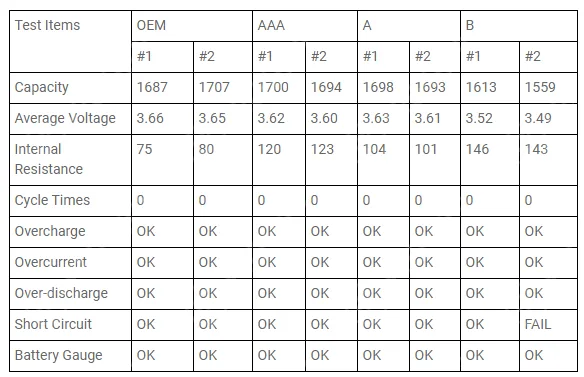
    4. Prueba de capacidad 

    Esto es para probar la capacidad real de la batería

    Resultado: OEM es el que obtiene mejores resultados. Las de grado AAA y A ocupan el segundo lugar, y los valores están muy próximos. Las pilas de grado B son mucho peores que las de los 3 tipos anteriores.

    5. Prueba de impacto 

    La prueba de impacto simula el impacto y el golpe de la batería.

    Aplique un impacto de aceleración de 561,5 cm/s2 a la batería para comprobar si se aplastará o deformará al sobrecargarse.

    Resultado: Las baterías de grado B tienen problemas de curvatura y deformación. Las demás muestras funcionan con normalidad.

    6. Prueba de cortocircuito externo 

    Esta prueba simula un cortocircuito externo a los terminales de la celda o batería. Cuando la temperatura sube a 55℃, encienda el interruptor para provocar un cortocircuito y, a continuación, compruebe si la batería explota.

    Resultado: Tras 2 horas en reposo, todas las muestras funcionan con normalidad. No hay incendio ni explosión. /Las muestras no explotan ni se incendian.

    7. Prueba de caída 

    La prueba de caída se realiza a una altura de 1,2 metros para comprobar la dureza de la batería y su capacidad antideformación.

    Resultado: Las baterías de grado B tienen problemas de curvatura y deformación. Las demás muestras funcionan con normalidad.

    8. Prueba de aplastamiento 

    A cada batería se le aplica una fuerza de aplastamiento de 1,3kN durante 0,1s. Transcurridos 30 minutos, se comprueba si la batería se dispara, explota o se deforma.

    Resultado: Todas las muestras funcionan con normalidad.

    9. Prueba de abuso térmico 

    El propósito de las pruebas de uso indebido es verificar que la pila no representa un peligro para el usuario, ya sea por abuso térmico accidental o deliberado, en cualquiera de las condiciones de uso imaginables.

    Después de que el aumento de temperatura durante 26 minutos, mantenga a 130℃ durante 10 minutos, compruebe la batería para ver si se dispara o explota

    Resultado: Todas las baterías tienen el problema de abombamiento, no hay incendio o explosión

    10. Prueba de combustión 

    El propósito de este procedimiento es probar el rendimiento de seguridad de la batería. Coloque la batería en la máquina, enciéndala para probar si la batería explotará y si las cenizas están en grumos.

    Resultado: Después de 30 minutos, las pilas se quemaron completamente, sin explosión, quedando cenizas grumosas

    Todas las baterías de REWA deben superar rigurosas pruebas de rendimiento básico y físico, y sólo los productos cualificados pueden entregarse en el almacén. Esto es para asegurar que cada batería que reciba sea superior, segura y fiable.

    Certificaciones

    Desde hace años, nuestra empresa se basa en el lema "La calidad por encima de todo". Las baterías de REWA pasaron una serie de certificaciones autorizadas internacionales, tales como UL, CE, FCC, etc..

    De todos los resultados y análisis de las pruebas anteriores, podemos sacar la conclusión de que las pilas OEM, AAA y de grado A son mucho mejores y más seguras que las de grado B.

    Ahora que hay escasez de pilas OEM, las económicas pilas de grado AAA y A se convierten sin duda en su primera elección.Cada pila de REWA ha sido rigurosamente probada.

    Nuestro equipo técnico y de control de calidad puede ofrecerle las soluciones adecuadas a sus necesidades y aconsejarle los recambios de baterías más adecuados y económicos.

    Si tiene alguna pregunta o demanda, no dude en ponerse en contacto con nosotros.

  • Cómo solucionar que la batería del iPhone X se agote rápido: el fallo se esconde bajo el lector de tarjetas

    Cómo solucionar que la batería del iPhone X se agote rápido: el fallo se esconde bajo el lector de tarjetas

    The iPhone X battery is draining fast with an overheating issue. After measurement, the motherboard is found to have a current leakage. Since the current is too small, rosin detecting is unable to find the fault. Therefore, we use a thermal imager to find the faulty part. After multiple checks, the faulty part is found to be under the card reader.

  • Prueba de compatibilidad de pantalla y batería de iPhone Aftermarket en iOS 13

    iPhone Aftermarket Screen & Battery Compatibility Test On iOS 13

    iOS 13 has been officially released for a month. In order to provide our clients with featuring stable quality, REWA LAB has conducted a series of compatibility tests for iPhone series from iPhone 6s to iPhone X with OEM NEW, A+Grade Aftermarket Screens and Aftermarket Batteries respectively. Now, Let’s take iPhone 6s, iPhone 8P, and iPhone X as examples and show you how the test goes.

    Consejos: iOS 13 sólo es compatible con el iPhone 6s y modelos posteriores.

  • Comparativa batería iPhone 13 vs iPhone 12

    Comparativa batería iPhone 13 vs iPhone 12

    Apple despachó cuatro iPhone 13, iPhone 13 MINI, iPhone 13 Pro y iPhone 13 Pro Max en 2021, a pesar del desarrollo de la batería.

    Tiene también adquirió una tonelada de mejoras junto a actualizaciones de la batería con una batería de mayor duración. Veamos las diferencias en comparación con el iPhone 12.

    El modelo iPhone 13 de Apple es indistinguible de la apariencia del iPhone 12, lo que importa es que el iPhone 13 tiene un grosor de 0,25 mm contrastado con el iPhone 12, que básicamente se ve impactado por una batería de mayor capacidad y otro módulo de cámara.

    iPhone 13 Grosor: 7,65 mm 

    iPhone 12 Grosor: 7,4 mm 

    iPhone 13 capacidad de la batería se eleva, 8% incremento en el iPhone 13, 9% del iPhone 13 y el iPhone 13, donde la capacidad de la batería del iPhone 13 Pro Max es el más alcanzado por 18%, pero además el El iPhone tiene por primera vez una batería de más de 4000mAh de capacidad.

    iPhone La capacidad de la batería de 13 mini es de 2406 mAh 

    iPhone 13 la capacidad de la batería es de 3095mAh 

    iPhone La capacidad de la batería del 13 Pro es de 3095mAh 

    iPhone La capacidad máxima de la batería del 13 Pro es de 4352mAh 

    iPhone 13 Comparación de la duración de la batería con el iPhone 12

    Como se indicó en el evento "California streaming" totalmente digital de Apple el 14 de septiembre, la duración de la batería del iPhone Serie 13 sobre la fortificación 1,5 horas a 2,5 horas más que el iPhone Serie 12, la información es la siguiente por lo siguiente:

    iPhone La batería del 13 mini dura 1,5 horas más que la del iPhone 12 mini 

    iPhone 13 duración de la batería es superior en 2,5 horas al iPhone 12 

    iPhone 13 Duración de la batería Pro para impulsar 1,5 horas que el iPhone 12 Pro 

    iPhone La batería del 13 Pro Max dura más de 2,5 horas que el iPhone 12 Pro Max 

    La serie iPhone 13 mejora por completo la capacidad de la batería y está equipada con 5 chips biónicos A15 en versión nanomejorada para reducir el consumo de energía, lo que escriba a Batería del iPhone 13 fortalecimiento de la vida.

    grosor de 0,25 mm contrastado con el iPhone 12, en el que incide básicamente una batería de mayor capacidad y otro módulo de cámara.

    Grosor del iPhone 13: 7,65 mm 

    Grosor del iPhone 12: 7,4 mm 

    La capacidad de la batería del iPhone 13 se eleva, 8% incremento en el iPhone 13, 9% del iPhone 13 y el iPhone 13, donde la capacidad de la batería del iPhone 13 Pro Max es más en conjunto alcanzado por 18%, sin embargo, además, el iPhone tiene por encima de 4000mAh enorme capacidad de la batería por primera vez.

    La capacidad de la batería del iPhone 13 mini es de 2406 mAh 

    La capacidad de la batería del iPhone 13 es de 3095 mAh 

    La capacidad de la batería del iPhone 13 pro es de 3095mAh 

    La capacidad de la batería del iPhone 13 Pro Max es de 4352mAh 

    iPhone 13 Comparación de la duración de la batería con el iPhone 12

    Según lo indicado por Apple totalmente digital "California streaming" evento el 14 de septiembre, el iPhone 13 Series duración de la batería en la fortificación de 1,5 horas a 2,5 horas ampliado que el iPhone 12 Series, la información es la siguiente:

    La batería del iPhone 13 mini durará 1,5 horas más que la del iPhone 12 mini 

    La batería del iPhone 13 dura 2,5 horas más que la del iPhone 12 

    La batería del iPhone 13 Pro durará 1,5 horas más que la del iPhone 12 Pro 

    La batería del iPhone 13 Pro Max dura más de 2,5 horas que la del iPhone 12 Pro Max 

    La serie iPhone 13 mejora por completo la capacidad de la batería, y está equipada con 5 chips biónicos A15 en versión nano-mejorada para reducir el consumo de energía, lo que hará que la vida de la batería del iPhone 13 se fortalezca.

  • How to improve iPhone battery life!

    How to improve iPhone battery life!

    Watching videos on YouTube, reading news, playing games and replying email will all consume the battery life greatly.

    There are many ways that can be used to save power. Some are not very convenient or not effective, while some are useless on the latest operating system, but below are proven ways to extend battery life.

    Turn off auto- brightness

    The brighter the screen, the faster the power consumed by the iPhone battery.

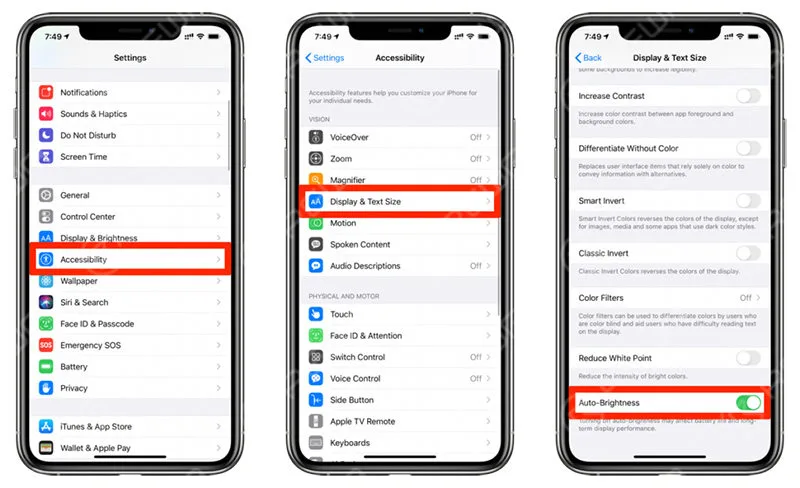
    Turn off auto- brightness

    Go to Settings > Accessibility > Display & Text Size > Auto-Brightness.

    The brightness of the screen depends on the surrounding environment. Turning off this feature can avoid unnecessary power consumption. In the future, if you want to change the brightness, open the control center and use the slider to control the screen brightness.

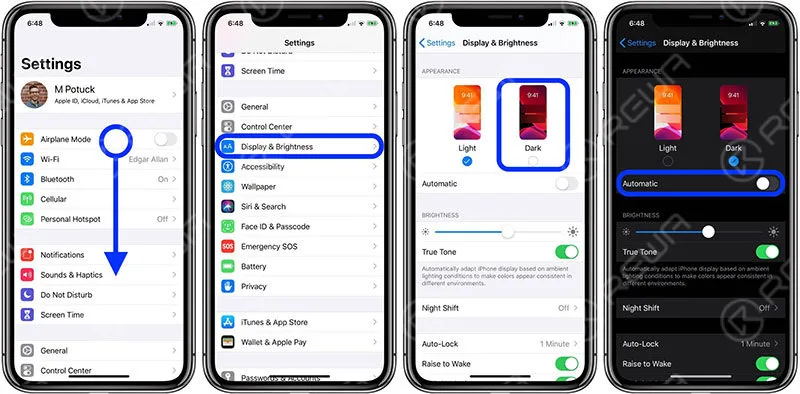
    Switch to dark mode

    Dark mode is a feature starting from iOS 13. It browses the part that is displayed in the white so far and switches to color matching in black.OLED’s iPhone will help increase the battery. OLED does not use the power to display in black, so dark mode is used to increase the battery time.

    The corresponding model is as follows

    iPhone X

    iPhone XS / XS Max

    iPhone 11 Pro / Pro Max

    iPhone 12/12 Mini / 12 Pro / 12 Pro Max

    Setting – display and brightness, light and dark, switch here

    Switch to dark mode

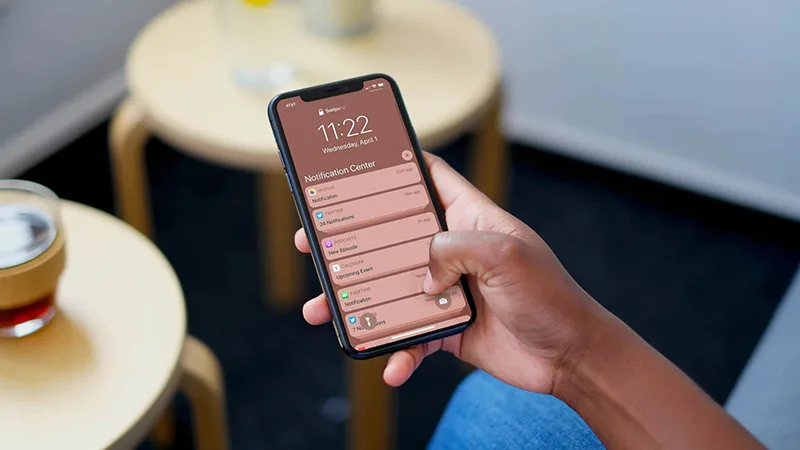
    Reduce unnecessary notifications

    When the iPhone receives the notification, the battery is powered by the battery, so you can manage the battery consumption by managing the required and unnecessary notifications.

    Which application notification is not important, turn off the notice.

    Reduce unnecessary notifications

    Open the “Settings” app and proceed to “Notification”. Then select the app from the list and switch off “Allow notification” and disable it.

    Conclusión:

    This time, we introduced settings to suppress the battery consumption of the iPhone.

    By customizing the 3 choices introduced above, the battery consumption of the day is considerably reduced.